





CIUDAD GOBIERNO
The Costa Rican government sought to consolidate several ministries on MOPT-owned land between Plaza Víquez and the Pacific Station, in a district of southern San José undergoing slow transformation. The scale of the program posed the central design problem: how to absorb that much built area without withdrawing from the city.
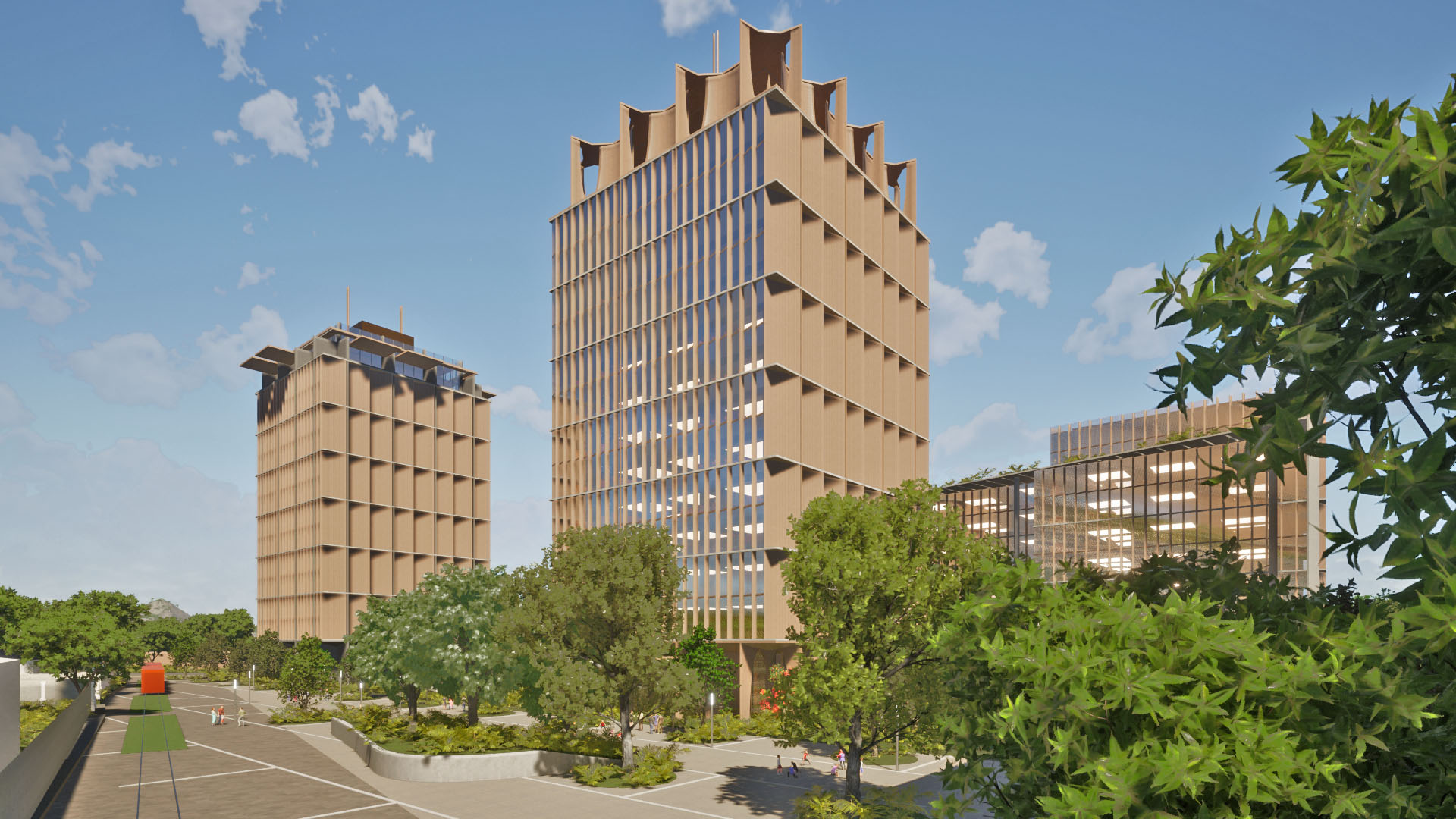
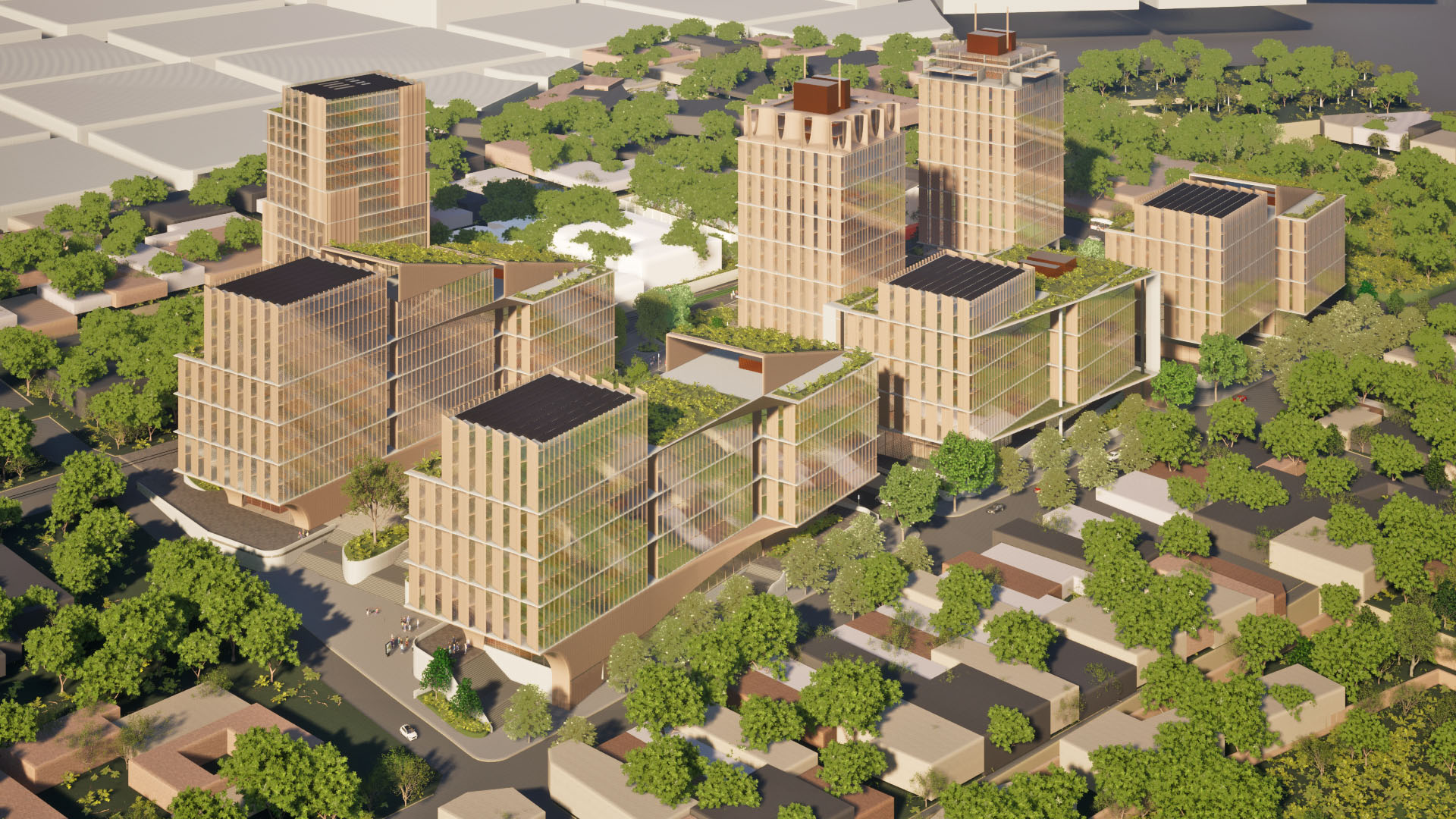
The proposal rejects both extremes — full perimeter block and isolated towers in a plaza — in favor of a hybrid. Lower buildings define Avenida 22, maintaining street continuity and pedestrian scale; taller, more punctual volumes address Avenida 20, where the electric train corridor, the farmers’ market, and the heritage buildings of the Liceo de Costa Rica frame a more open condition. Between the two bands, a linear park creates a third urban space — a passage and gathering ground connecting the two streets.
Three urban moves structure the public realm: a biological corridor linking the María Aguilar River to Parque de la Paz through underused infrastructure; the repositioning of the electric train stop east of Plaza Víquez to better distribute pedestrian flow and connect to the city center; and the recovery of the Pacific Station heritage buildings as a cultural and commercial hub, with INCOFER parking relocated to free the historic structure for people rather than vehicles.
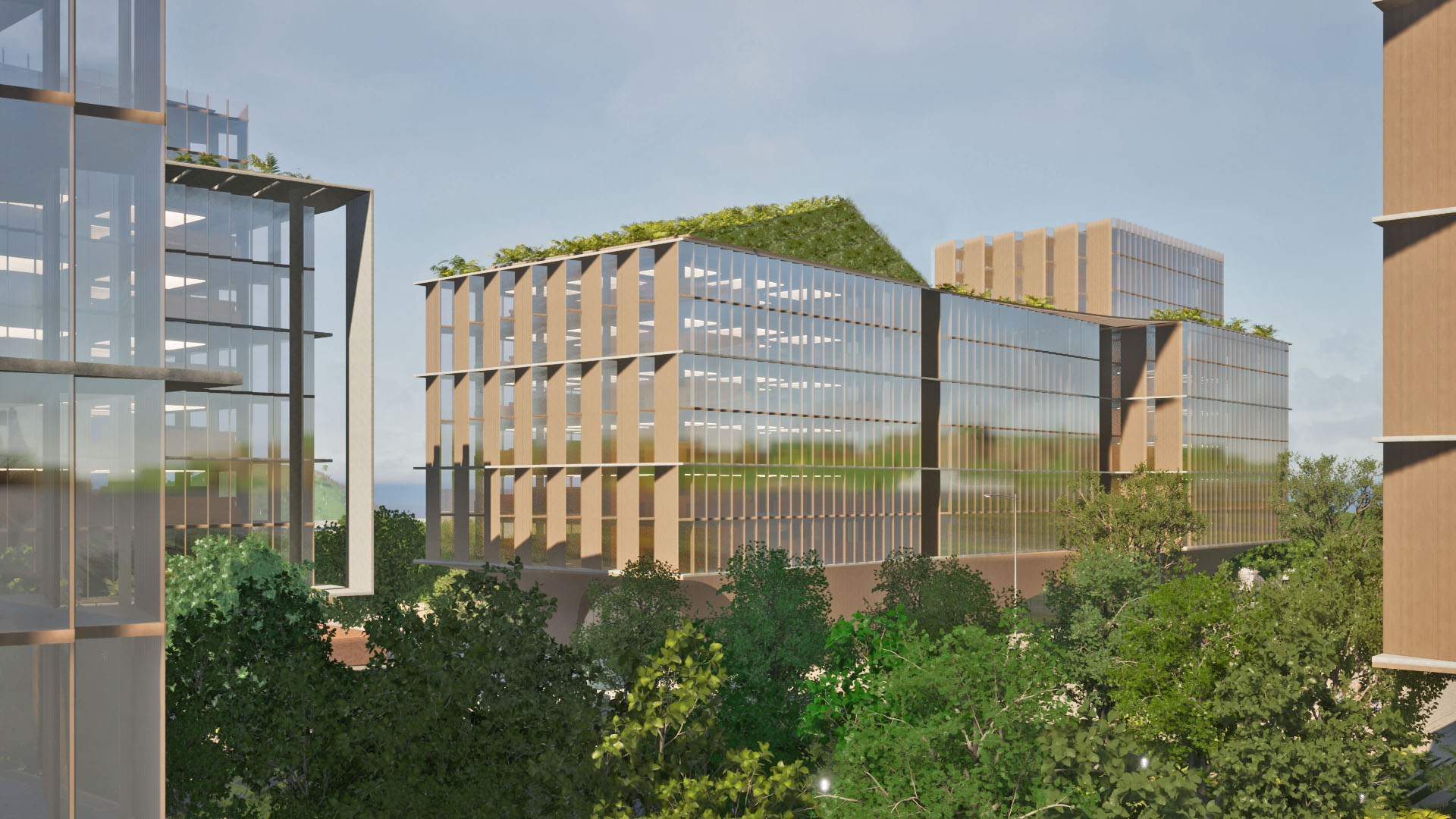
Each building follows a consistent vertical logic in three sectors. The first two floors — shared canteens, auditoriums, meeting rooms, and street-facing commercial space — belong equally to the ministries and the public, animating the three urban frontages beyond office hours. The middle floors are purely operational: efficient, flexible, high-performance workspace. The top two floors shift in height, angle, and material, housing shared programs and inter-ministerial spaces, and entering into a formal dialogue with the ground level that gives each building its civic expression.
The buildings rotate off the urban grid to place glazed facades in optimal north-south orientation, resolving natural light on the difficult east and west exposures while creating rhythm and porosity along the street edges. Green roofs, solar panels, permeable surfaces, and laminated timber partitions reduce the thermal and environmental load of what would otherwise be a concrete island in the middle of the city.


Client
Proyectos Completos
Project Date
2017
Category
Institutional · Masterplanning · Mixed Use · Residential · Urban Design