
Ruhl-Linden House
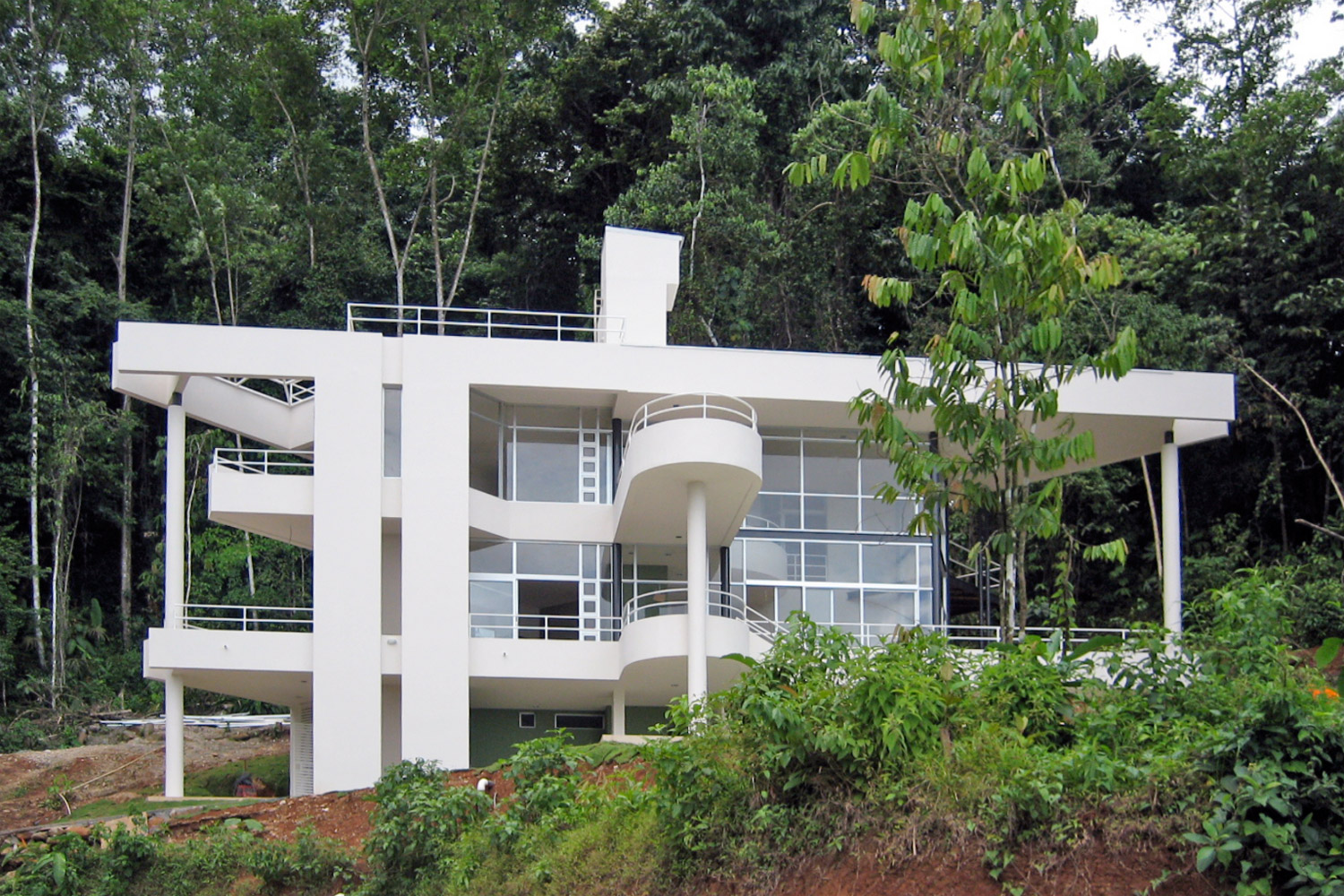
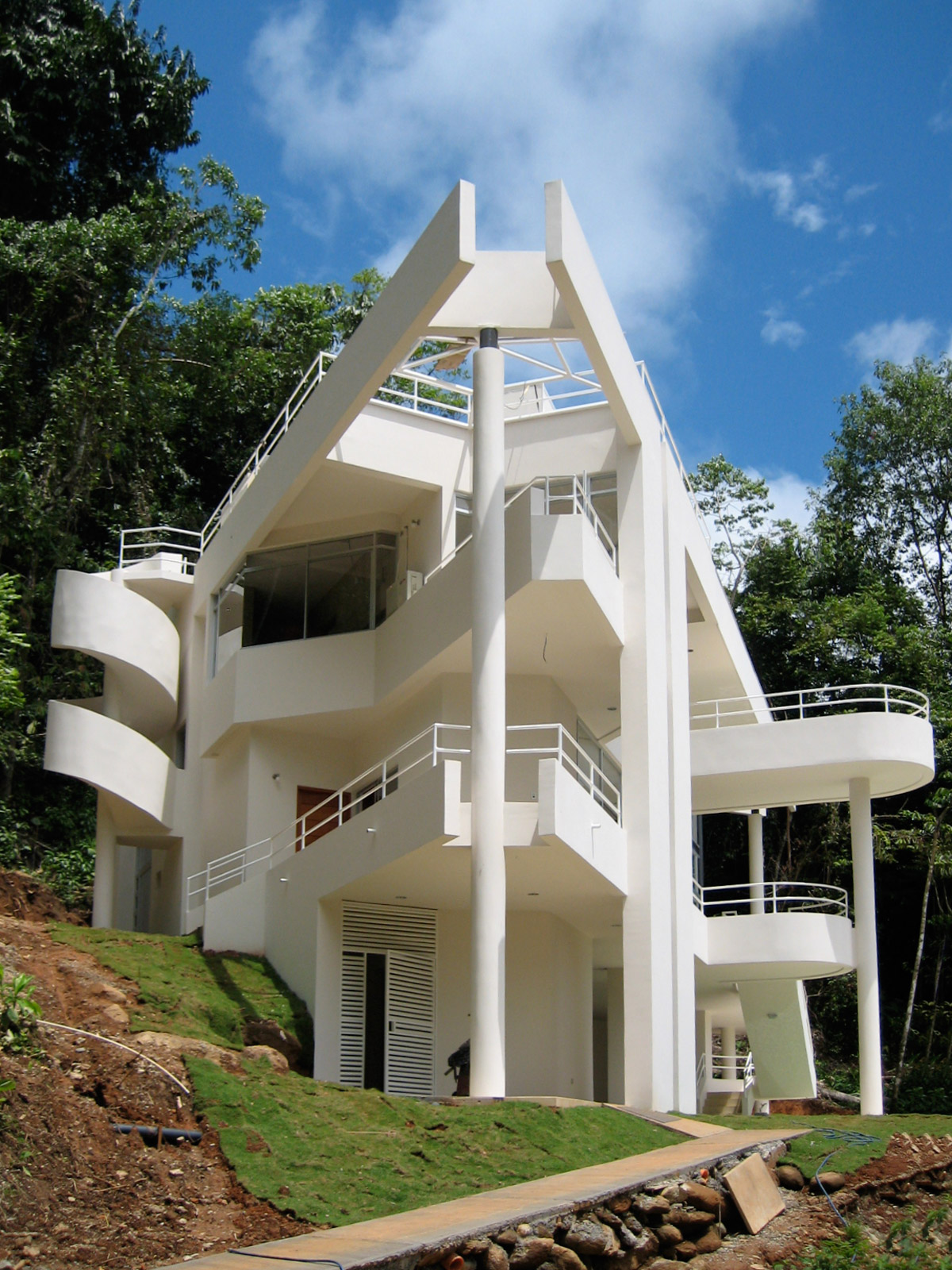
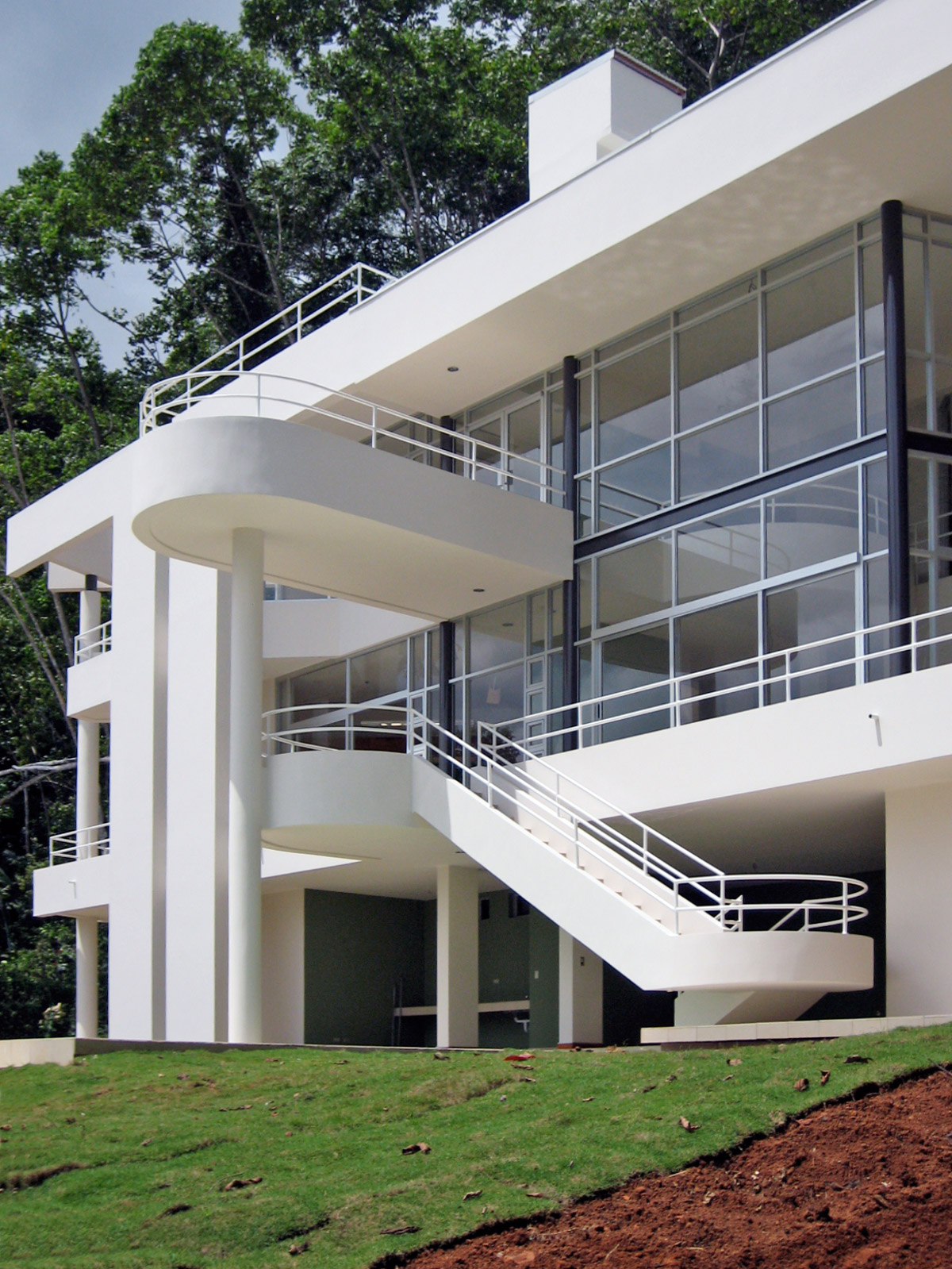
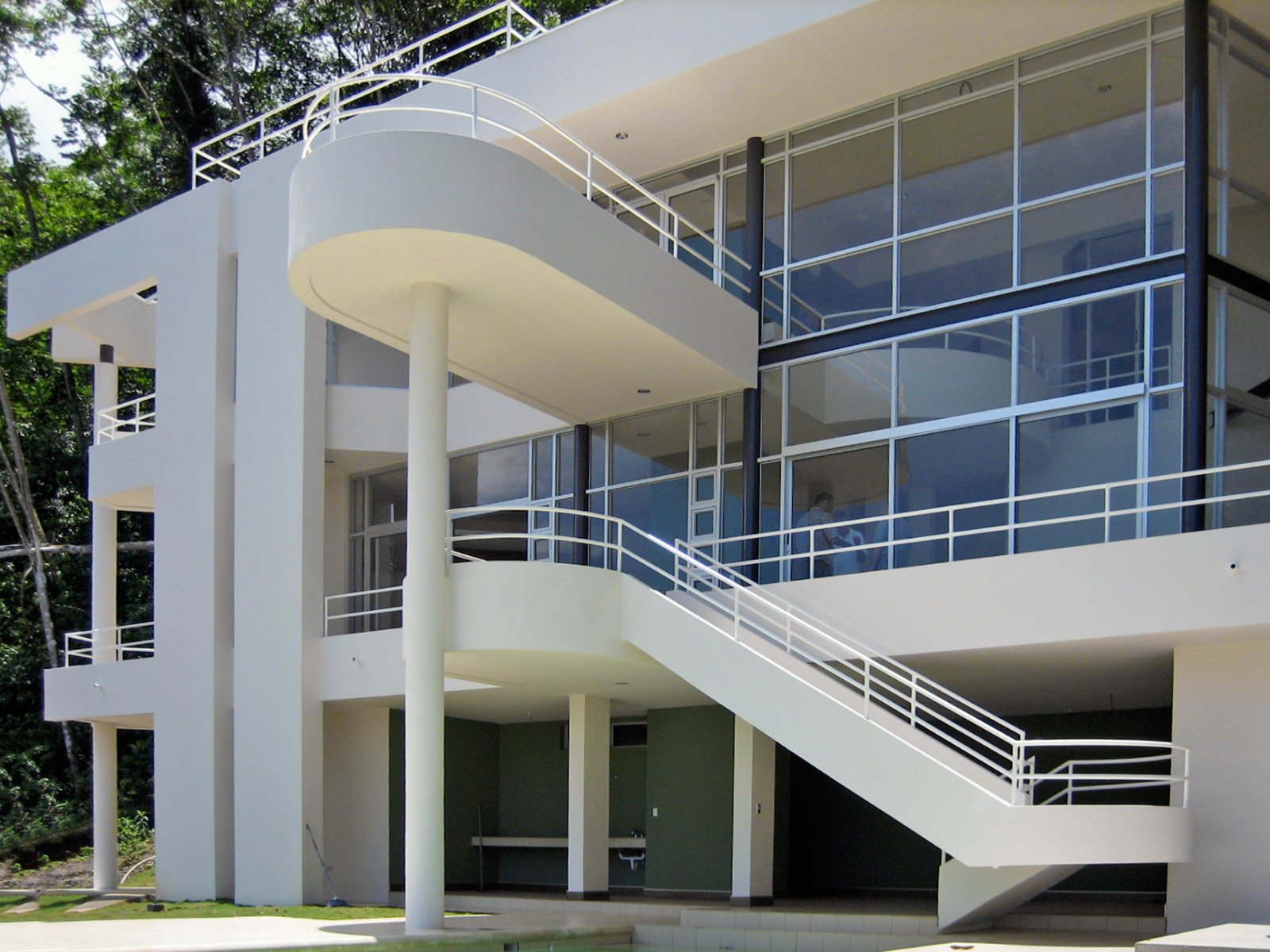
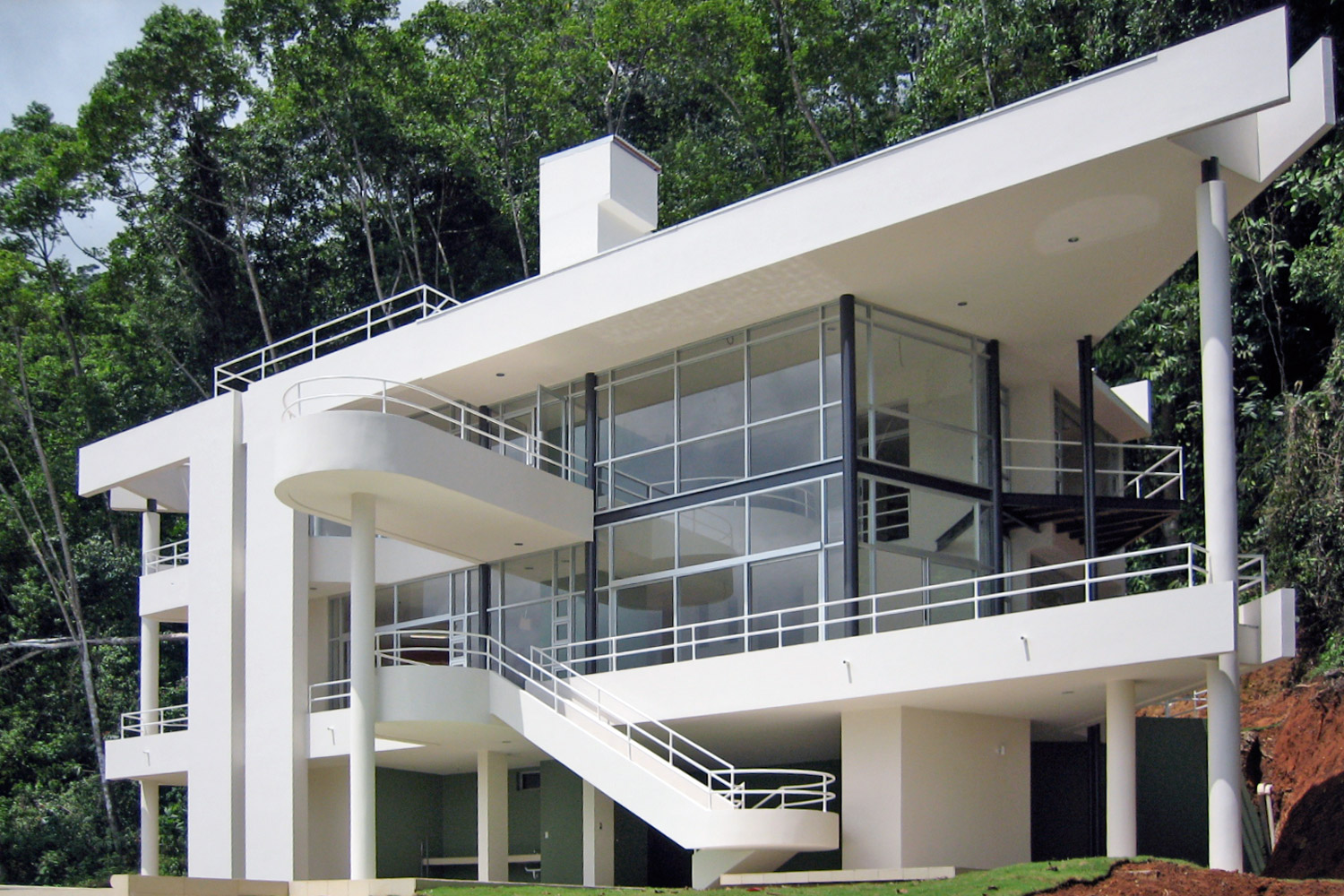
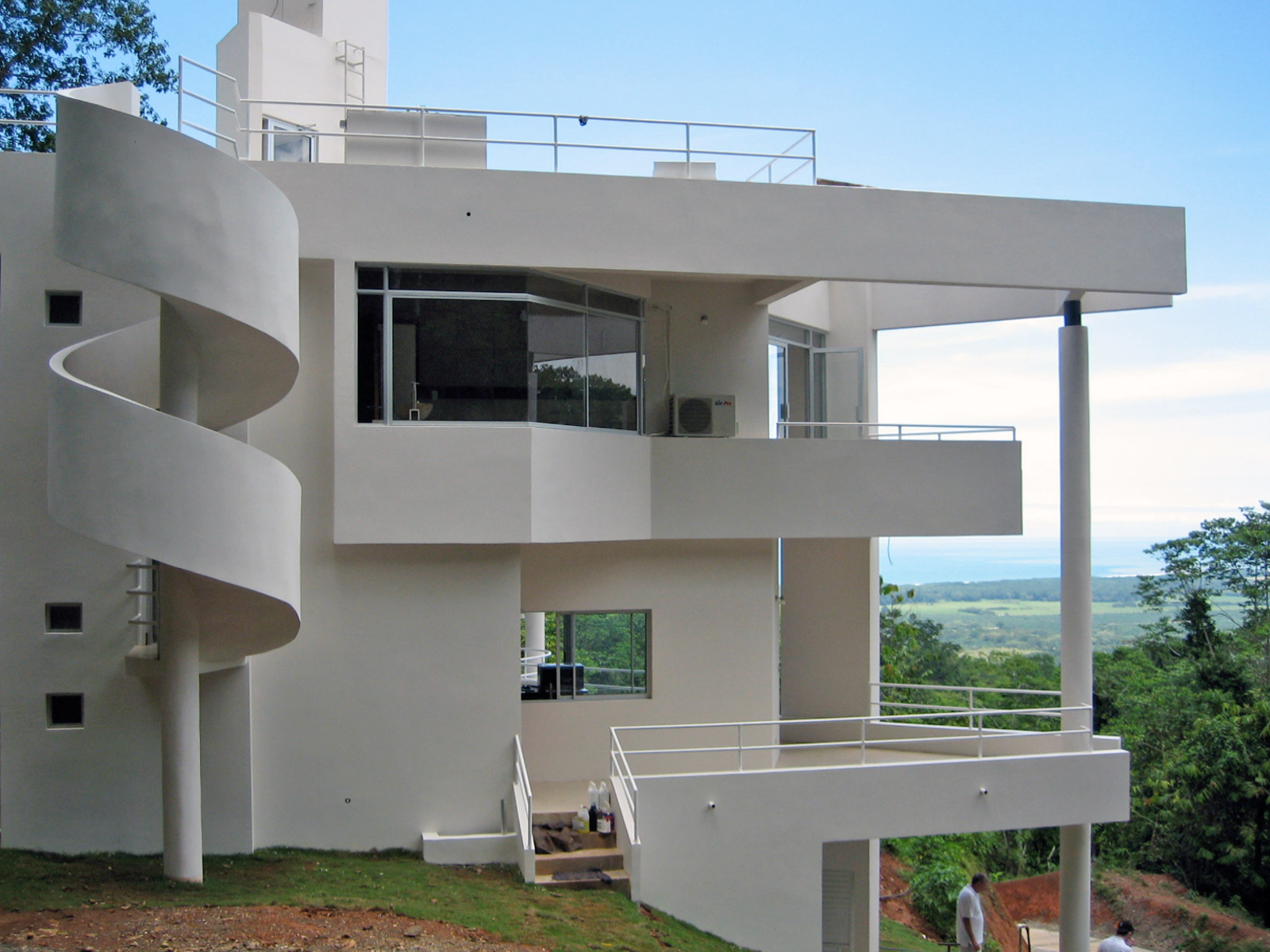
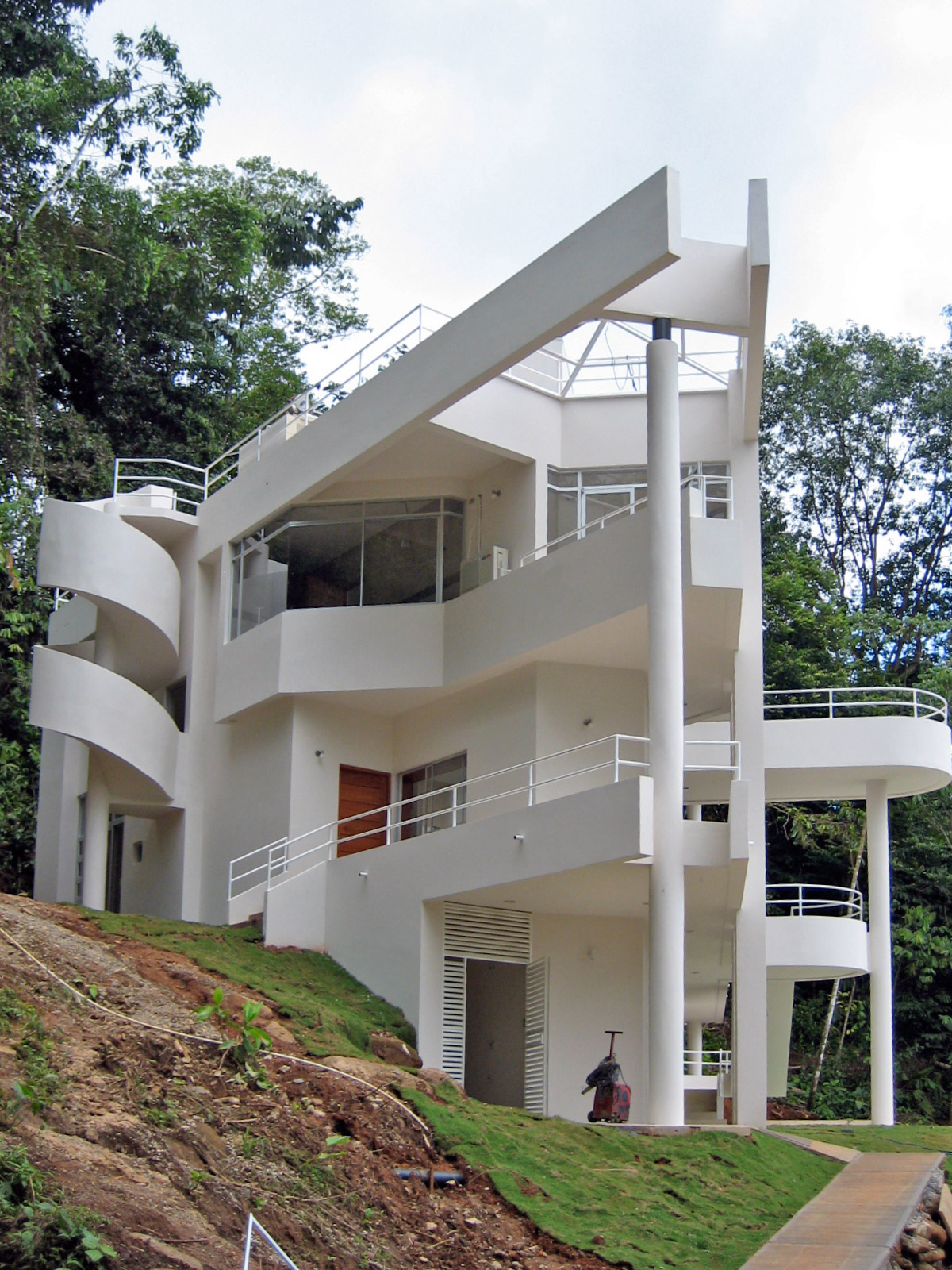
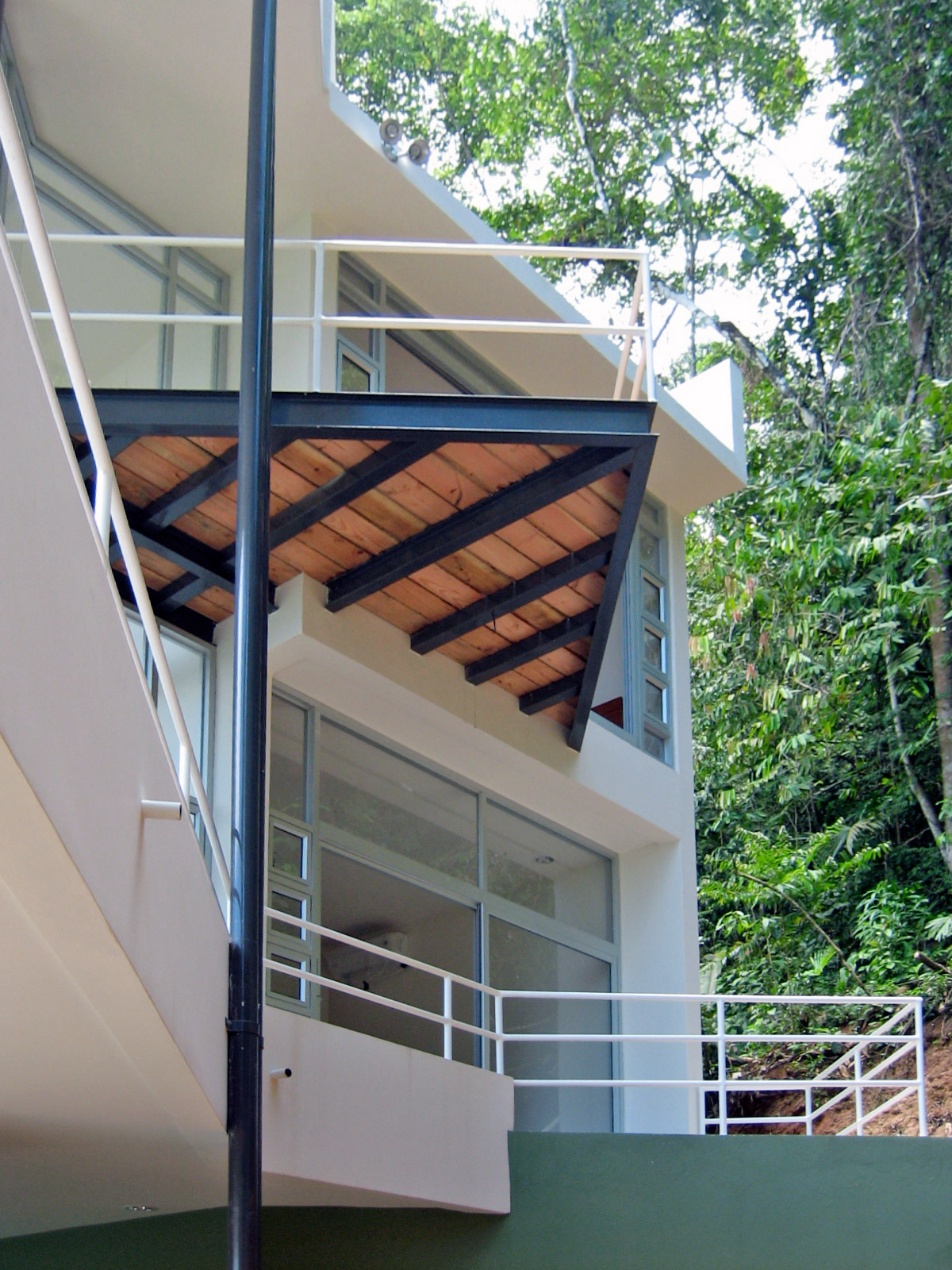
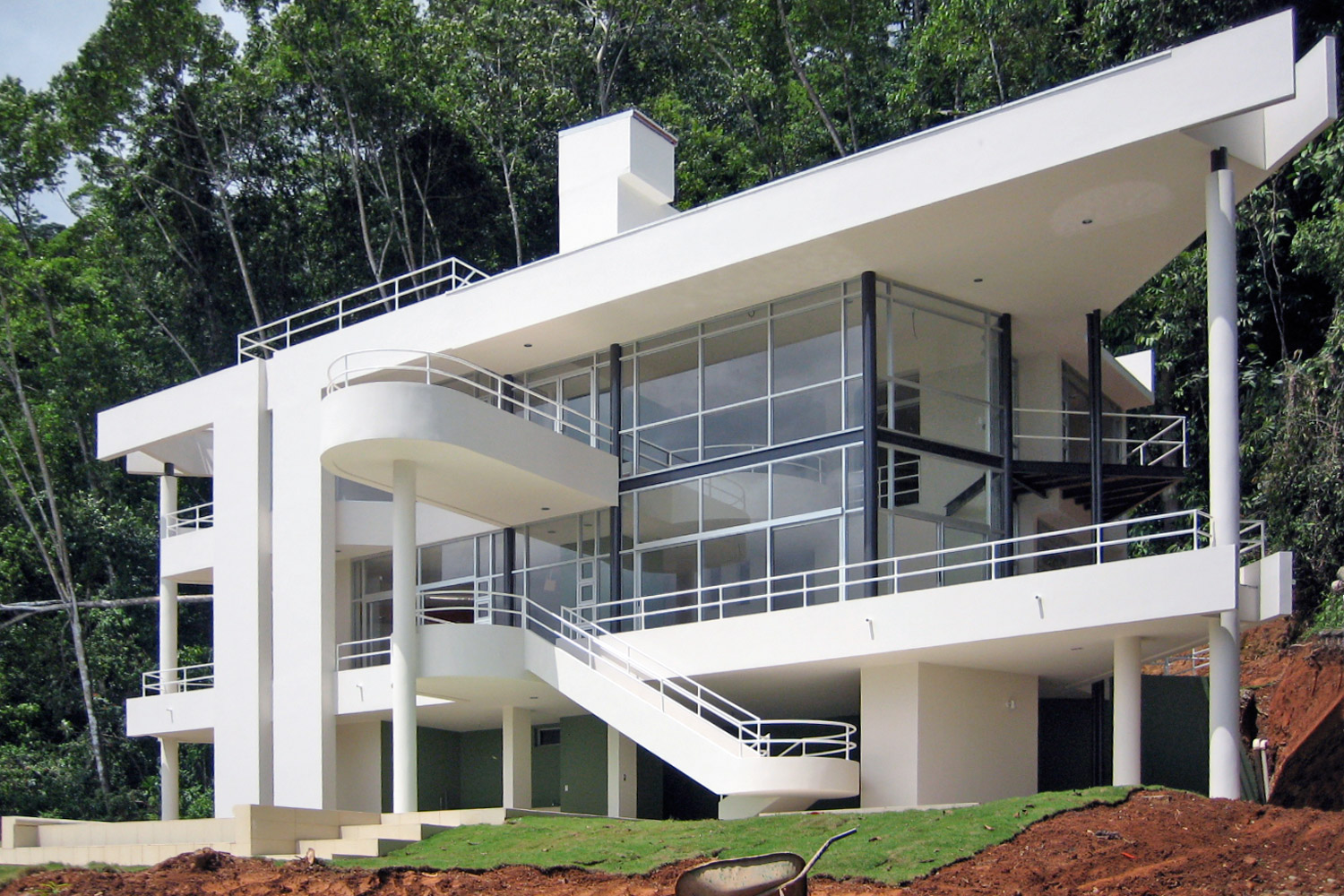
The house sits hidden in the forest of Portalón, on a site defined by steep topography and dense native vegetation. Four floors of cantilevered volume minimize the building’s footprint and its disturbance to the land beneath.
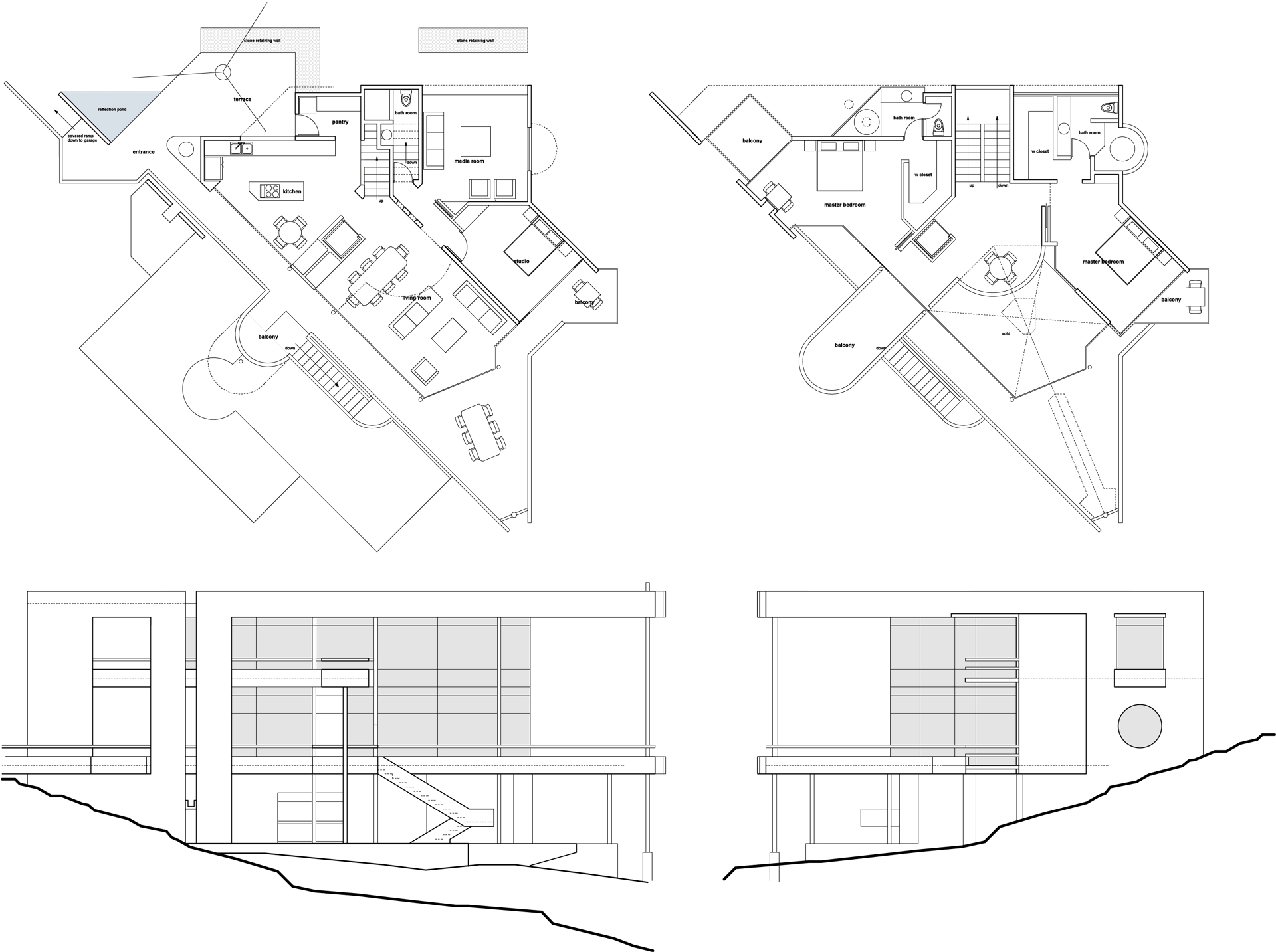
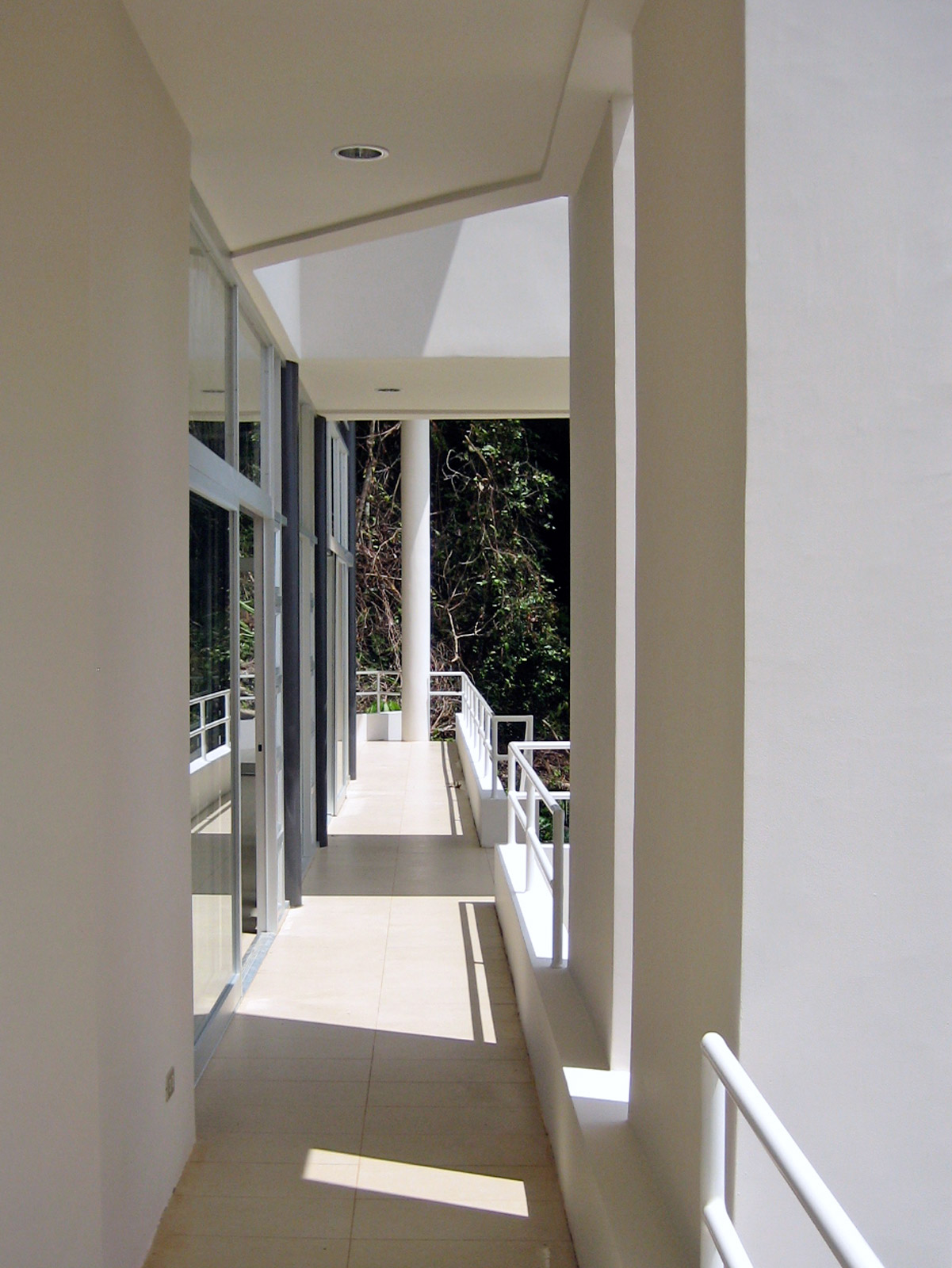
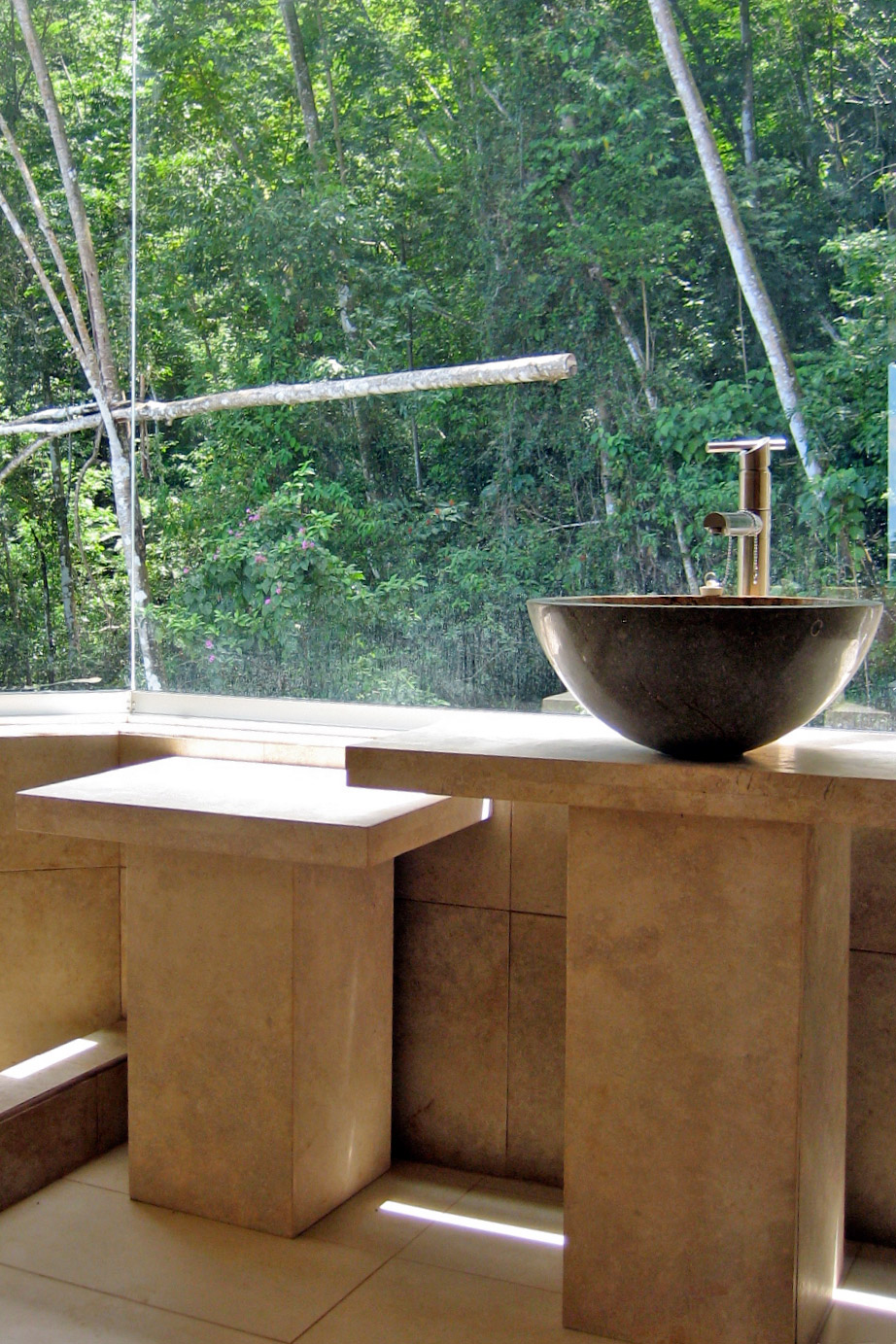
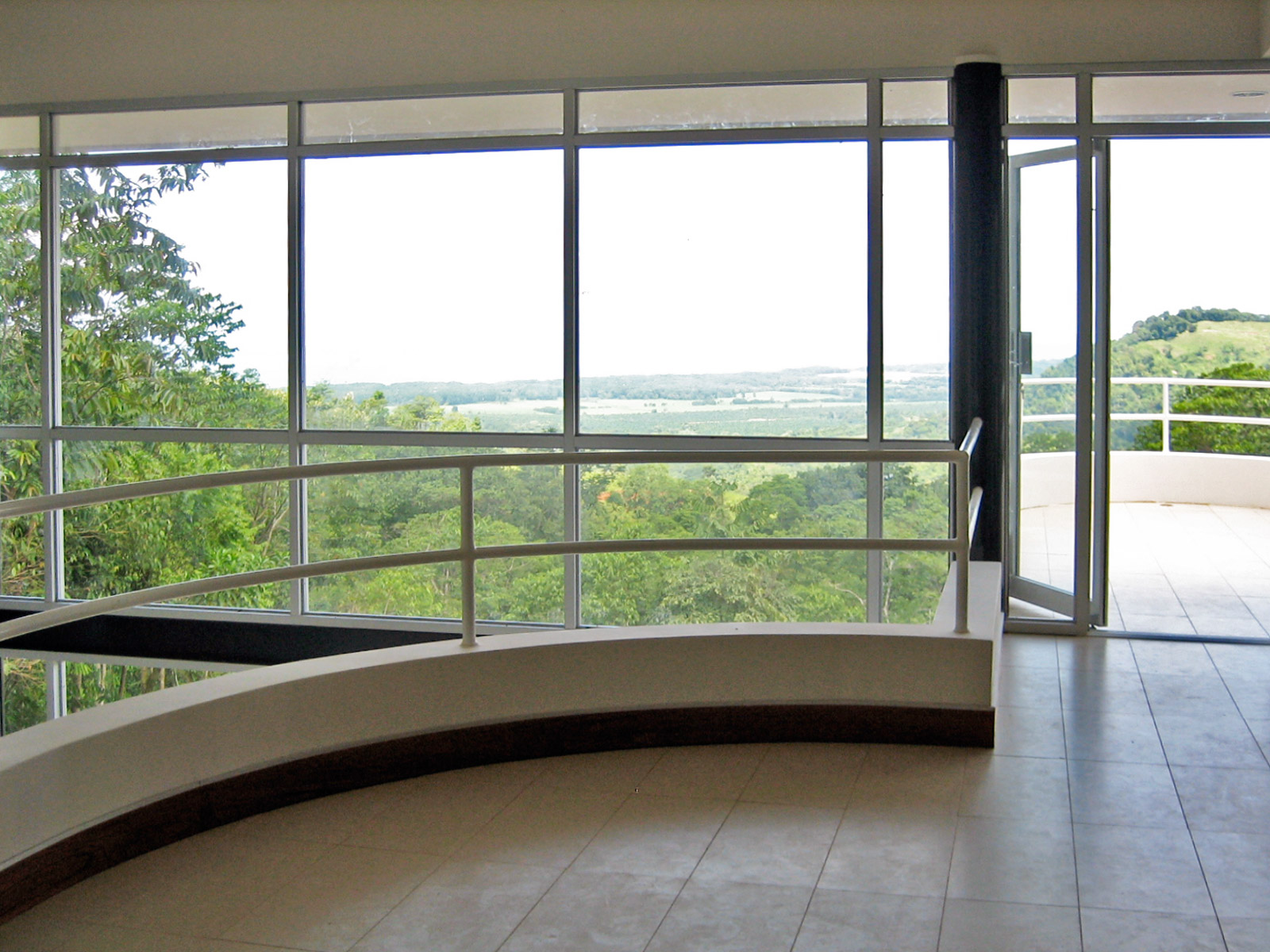
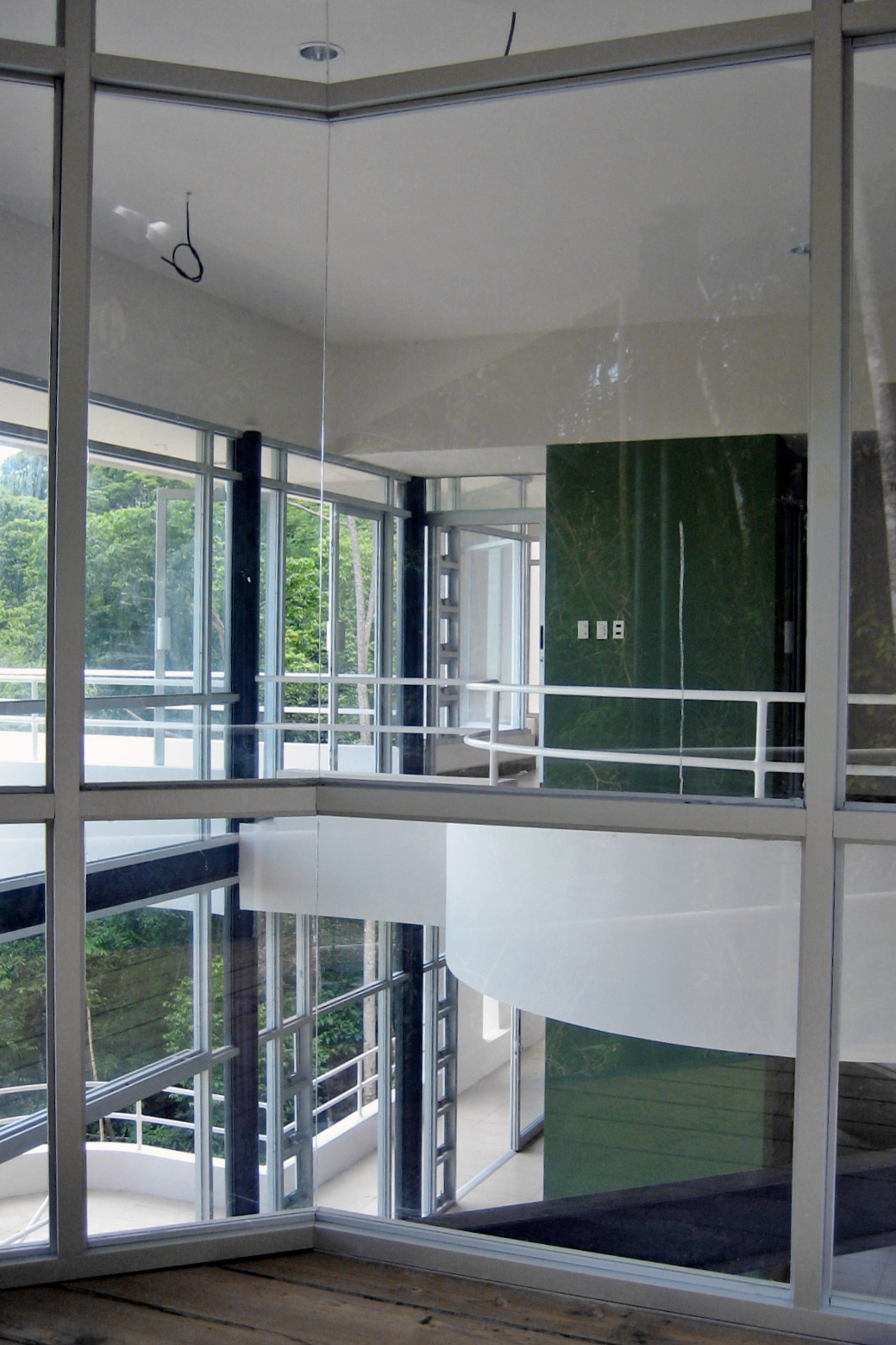
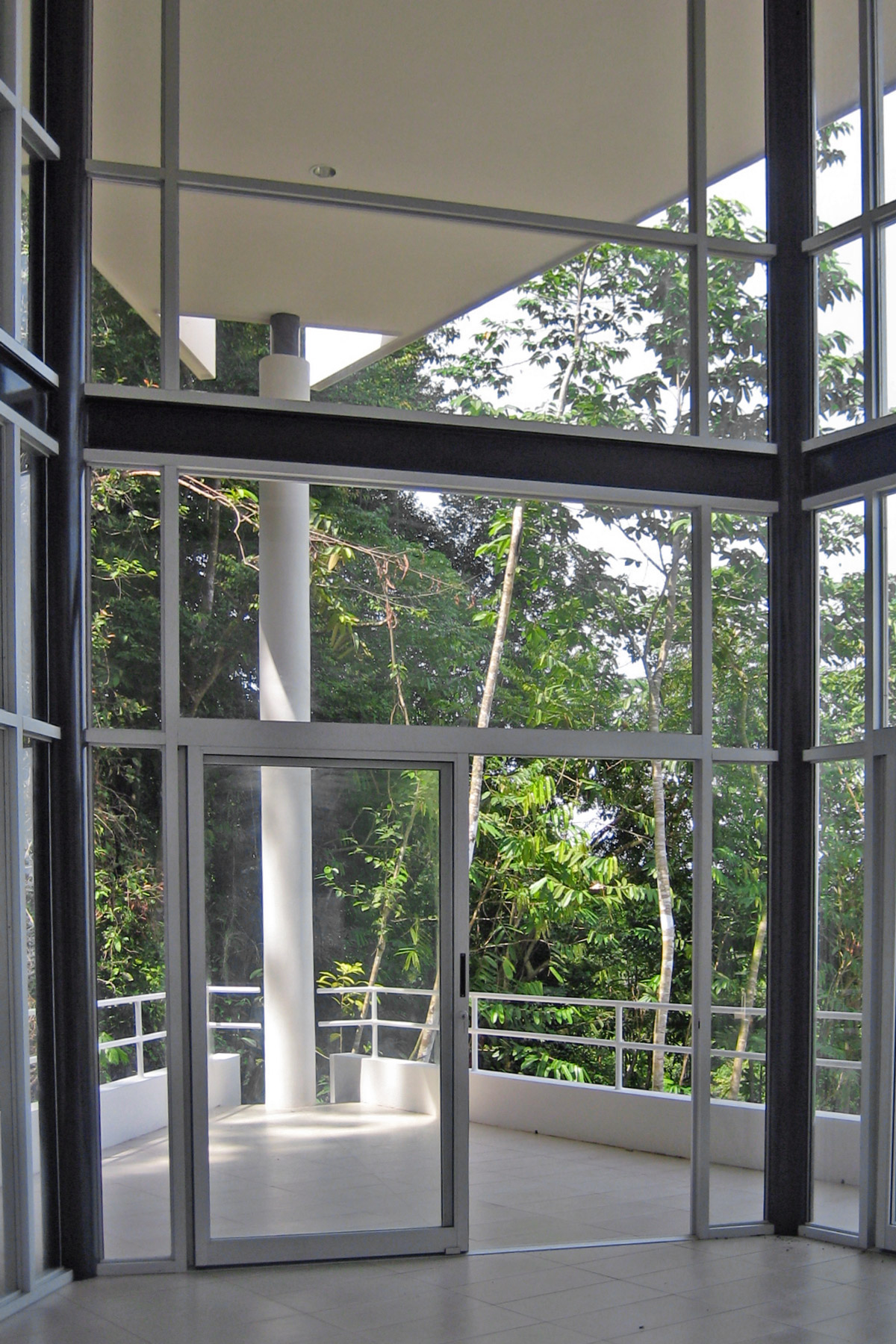
The plan is triangular. The long side — the hypotenuse, in a square-root-of-two proportion — faces the valley and the Pacific horizon, giving the panoramic facade forty percent more area than either of the other two sides. The geometry does more than maximize the view: every principal space opens simultaneously in two directions, one toward the panorama and one toward the forest, creating cross-ventilation through a zone of high humidity and layering the spatial experience with two distinct relationships to the exterior. Each space also has its own terrace, providing immediate contact with the outside and shading the large glazed facades from direct light.
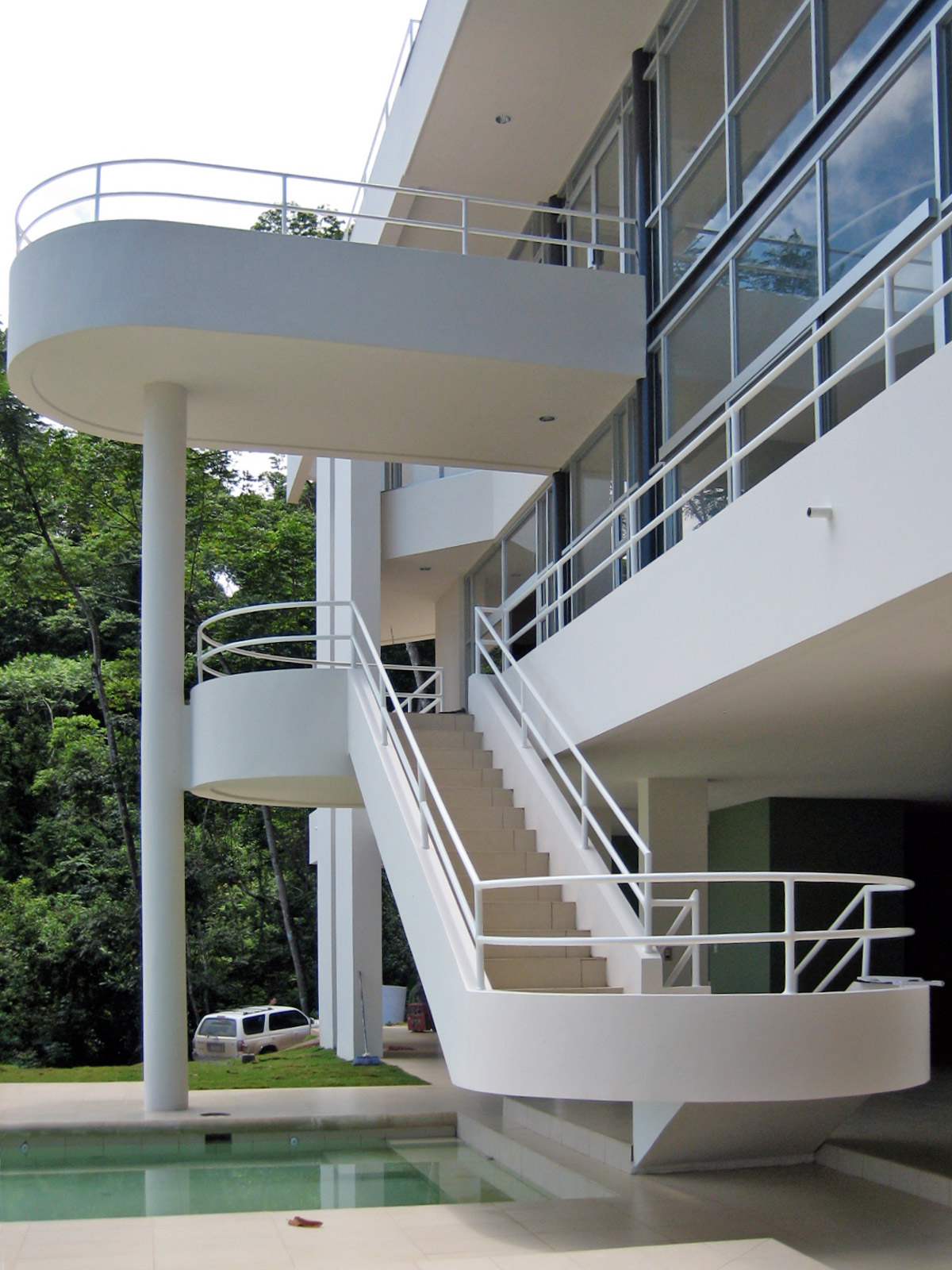
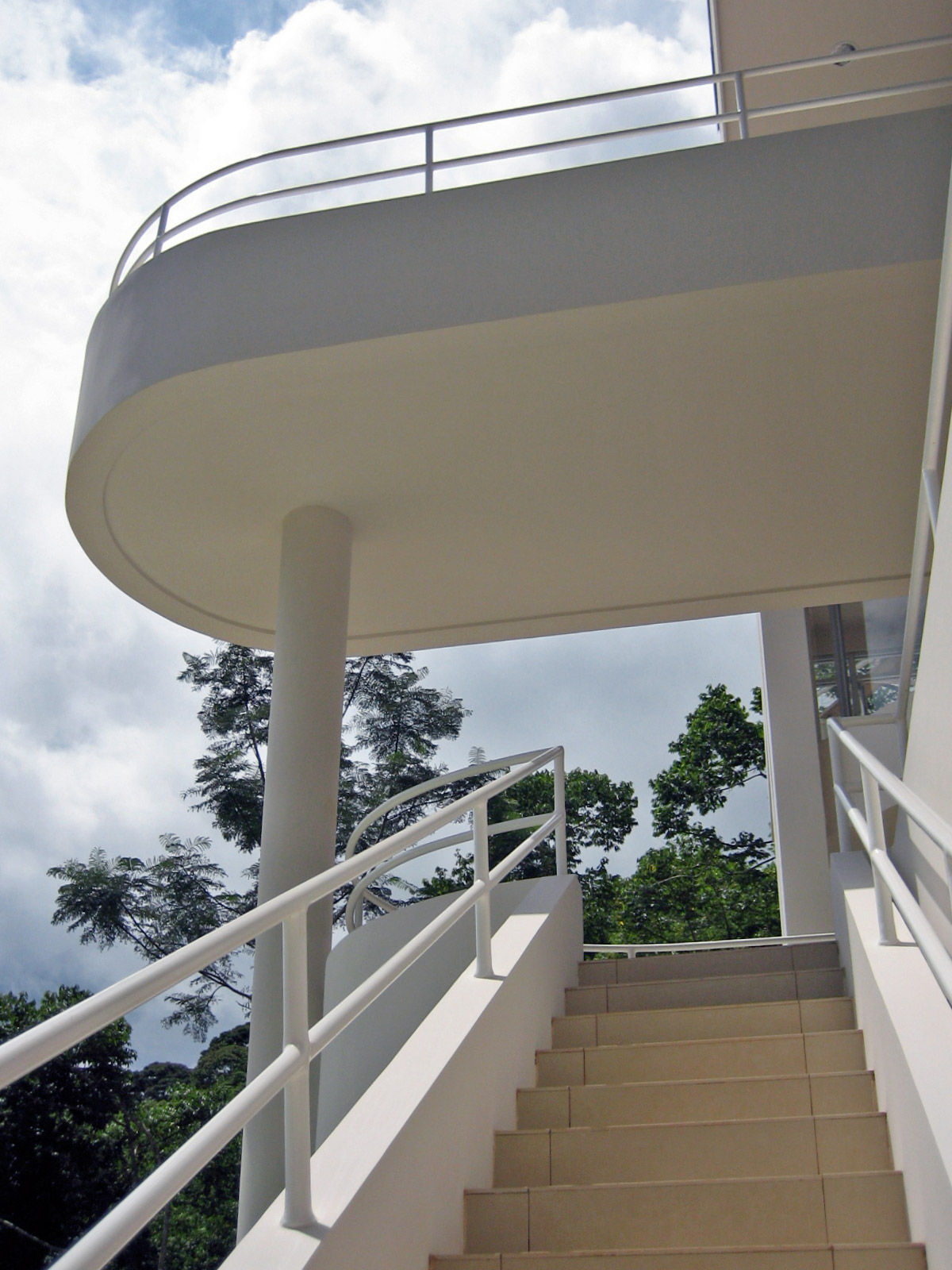
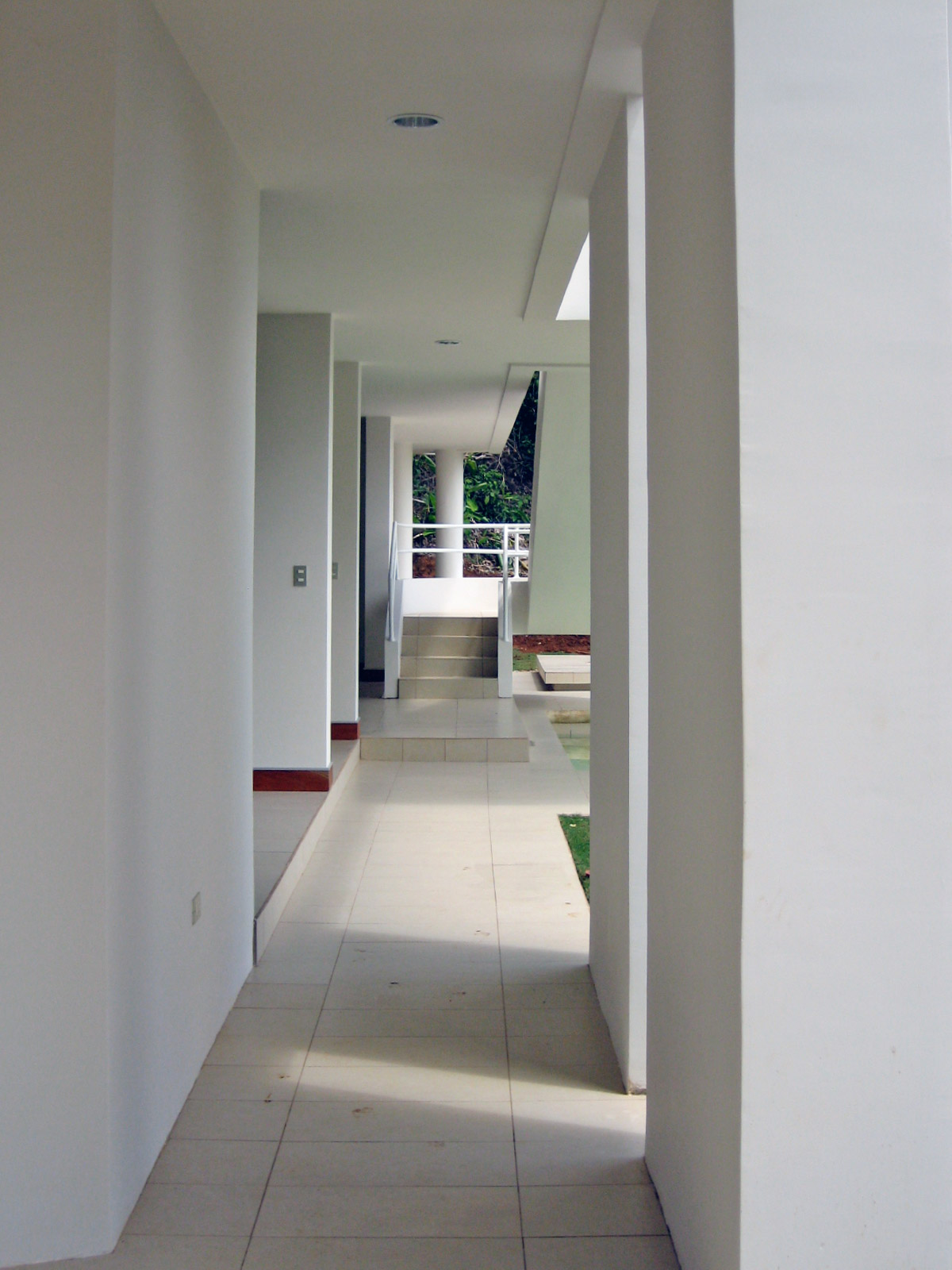
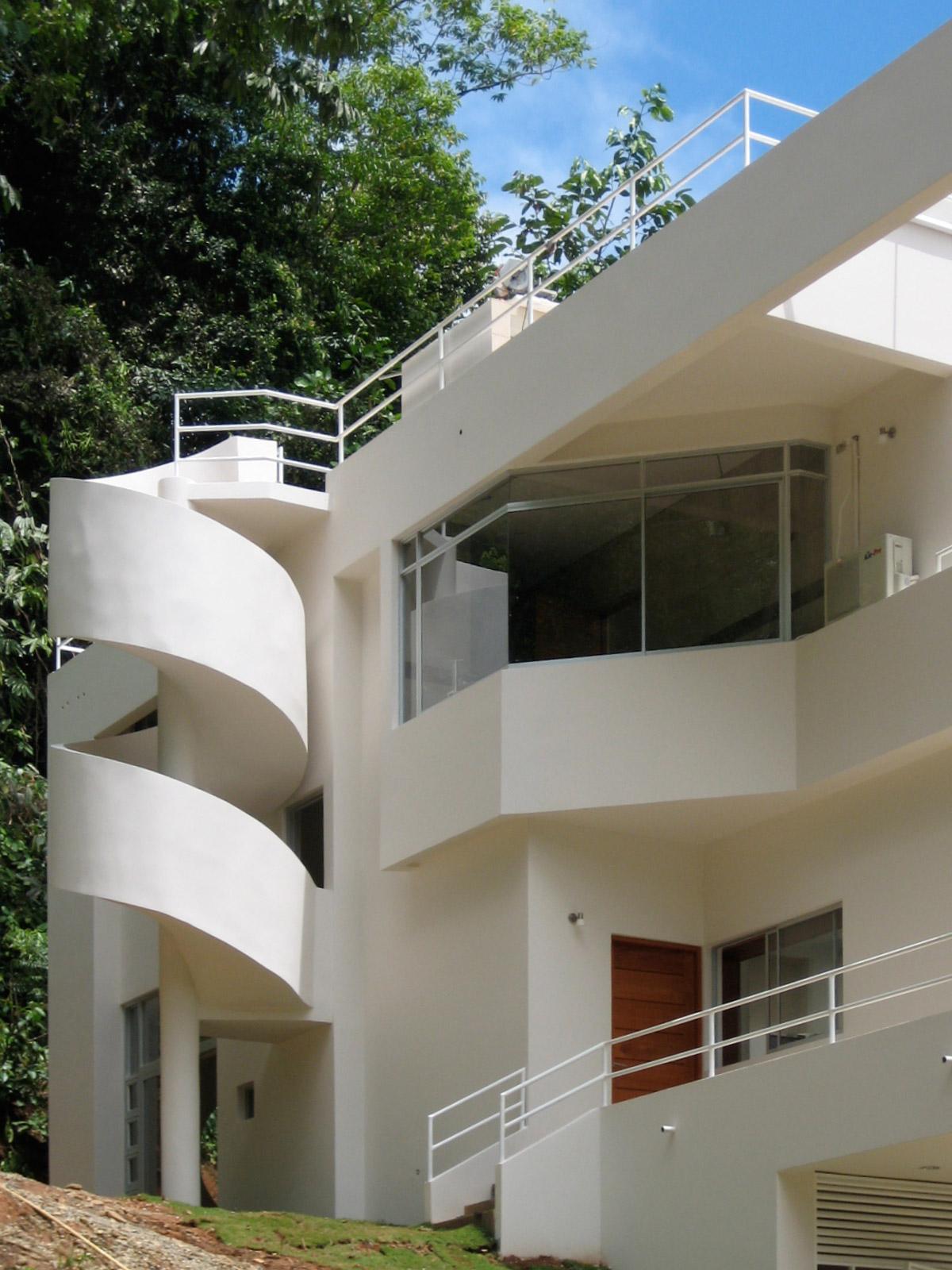
The sequence through the house is deliberately complex. It begins at the pool, where an exterior stair floats over the water — its straight treads contrasting with a curved landing — leading up to an external balcony that terminates in a triangular terrace. A second stair, this time interior, reveals the double height of the living room on the way up, and offers the option to step out onto a terrace that appears to hover over the valley on a single slender column. A third stair, curved and exterior again but on the forest side of the plan, climbs to the top floor — an open rooftop terrace that returns the full 360-degree view and places you level with the forest canopy.
Location: Quepos, Puntarenas, Costa Rica
Area: 750m2
Status: Built