
Perro Loco House
Perro Loco House
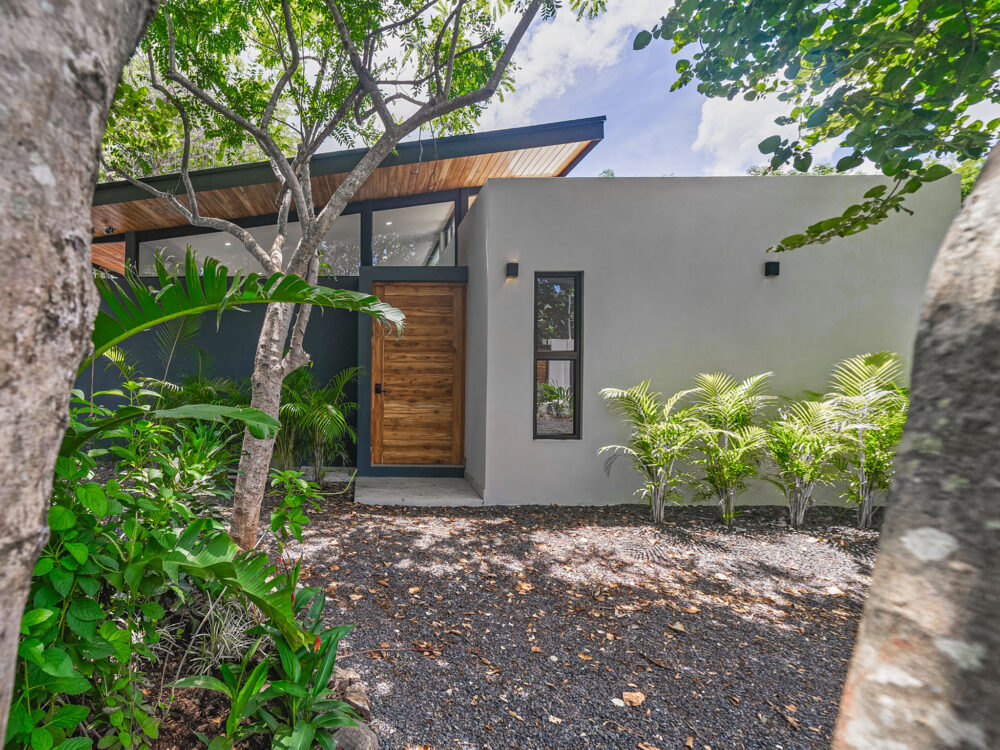
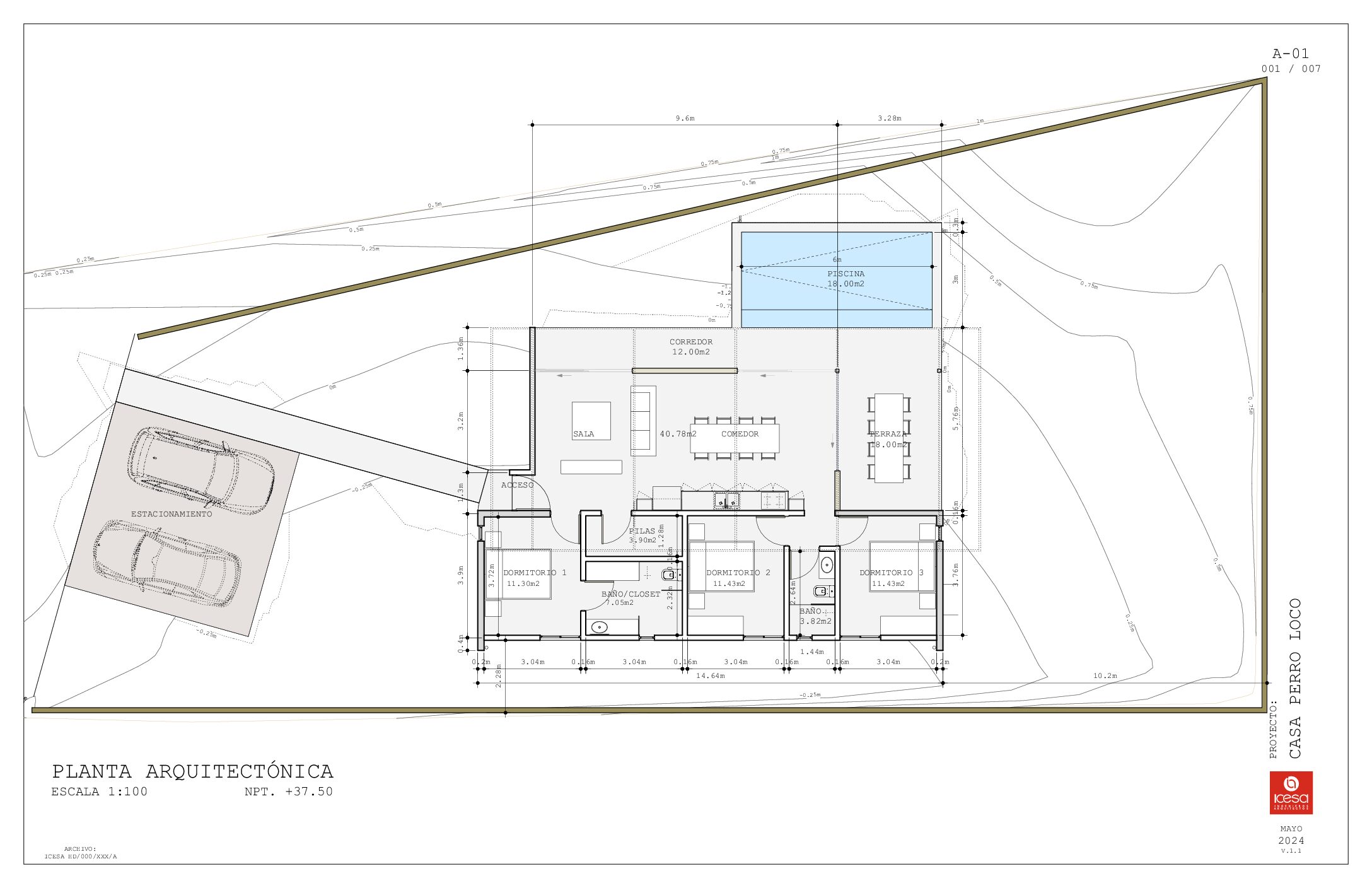
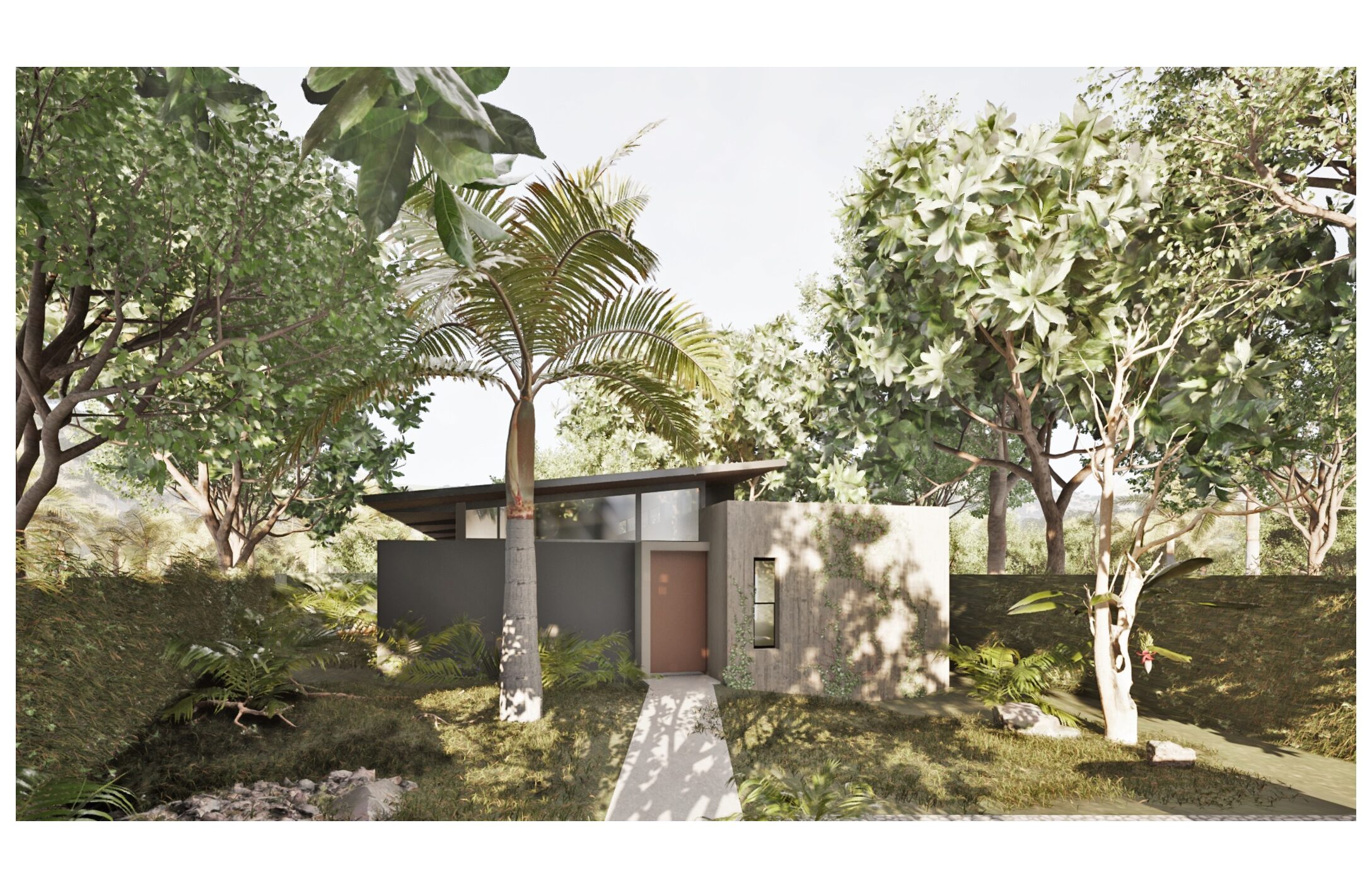
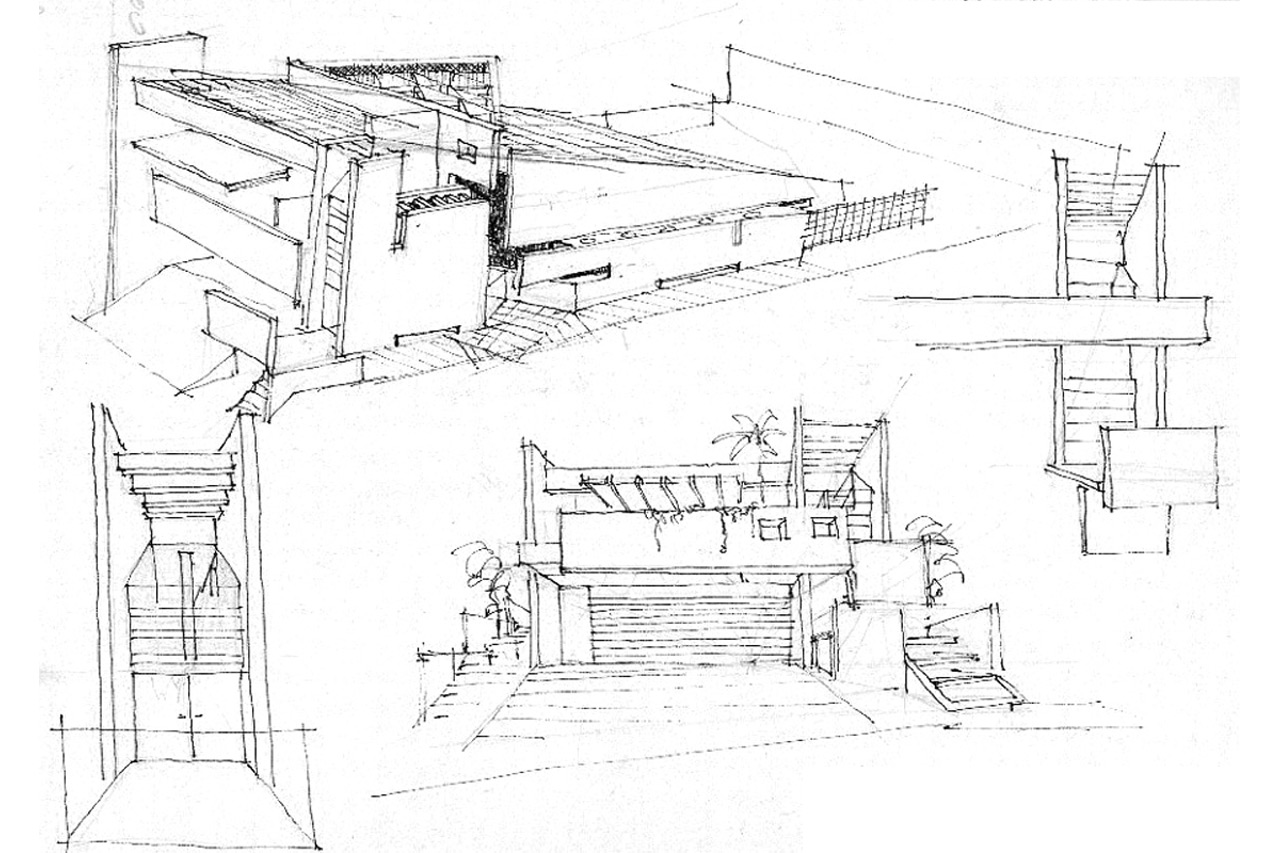
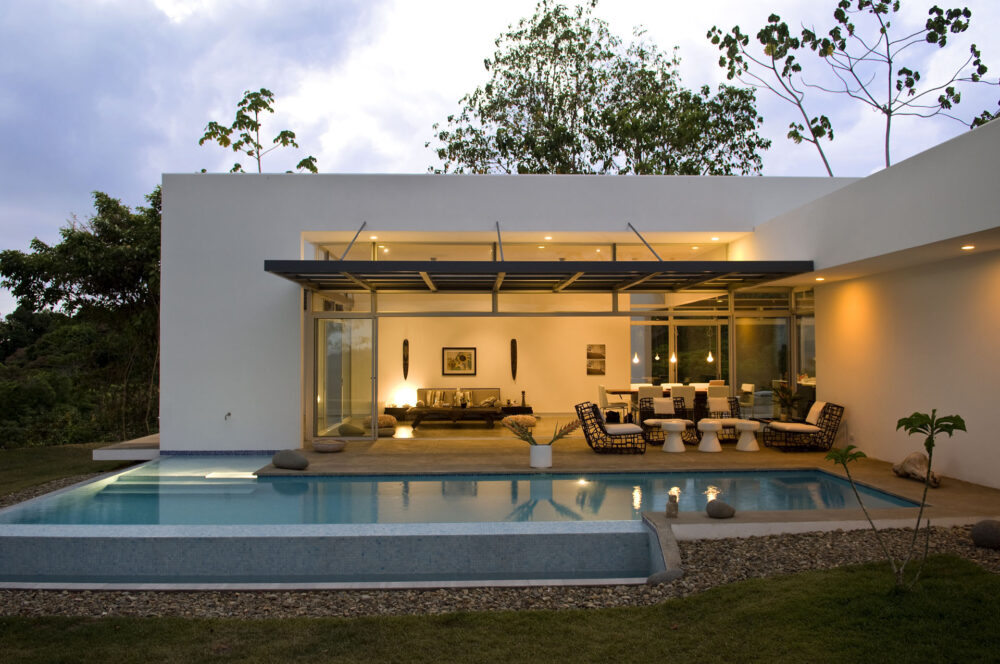
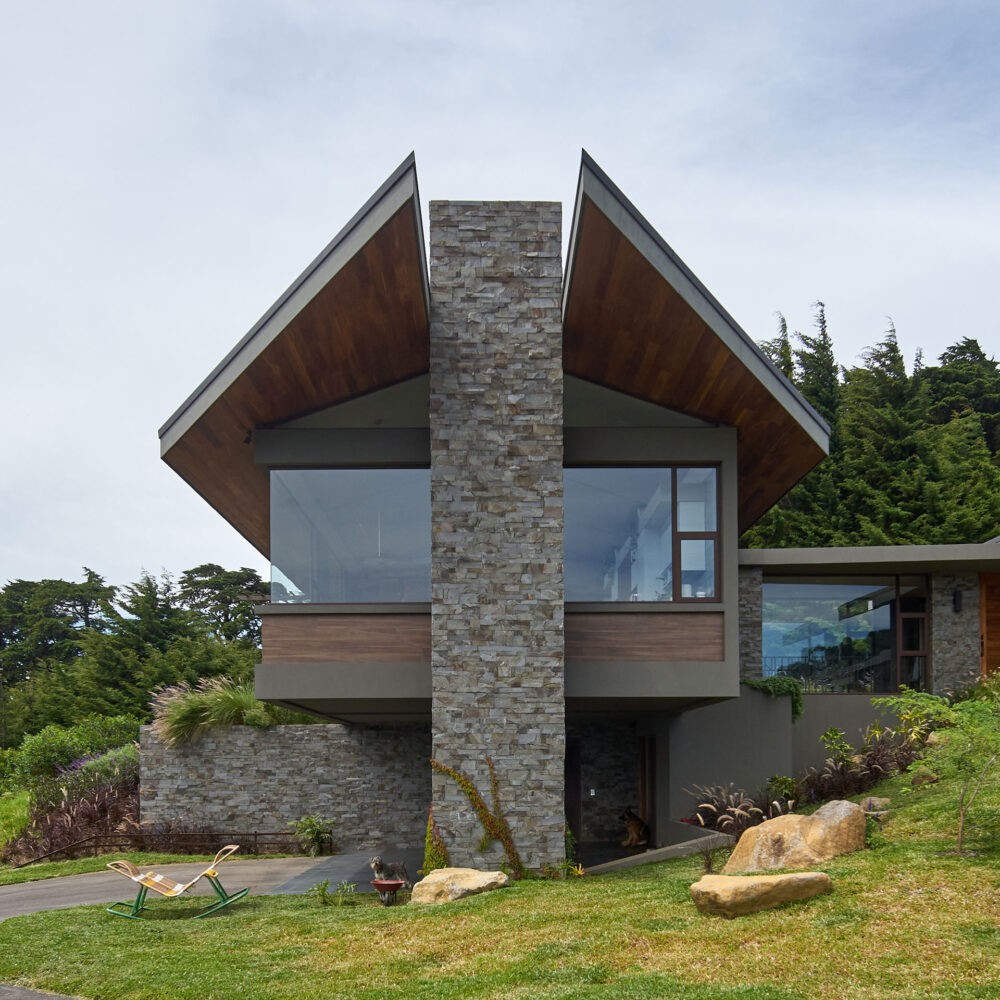
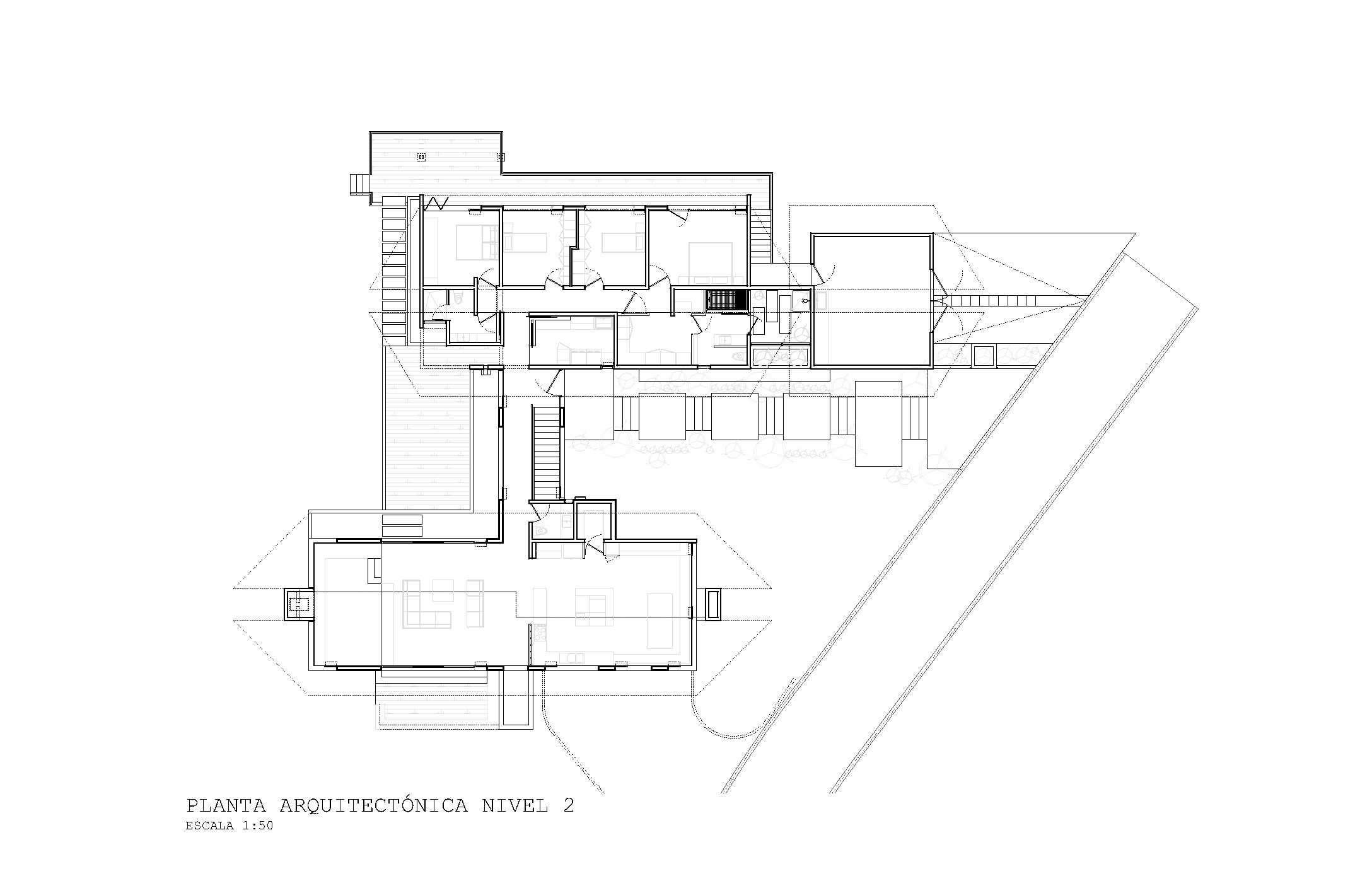
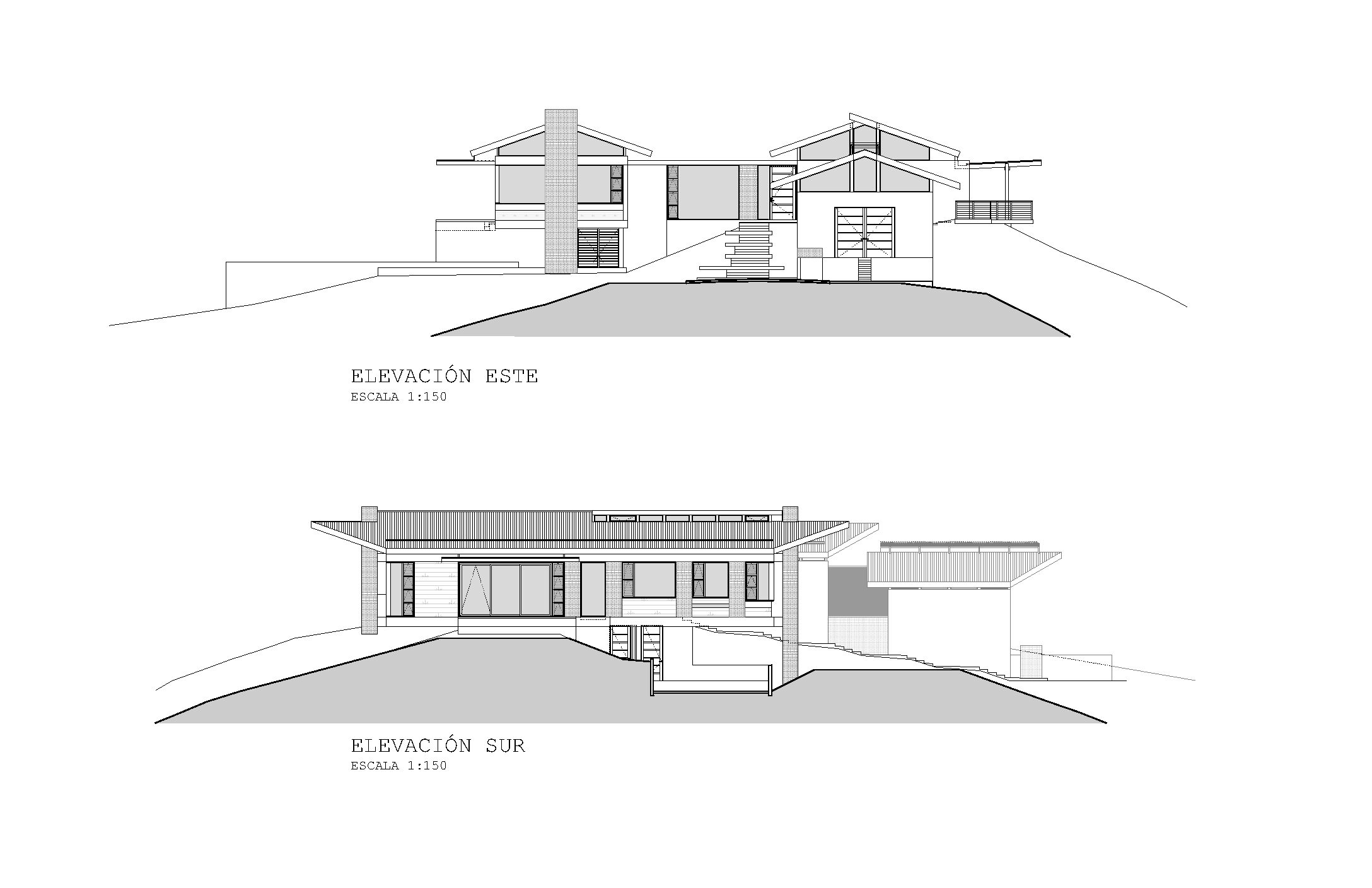
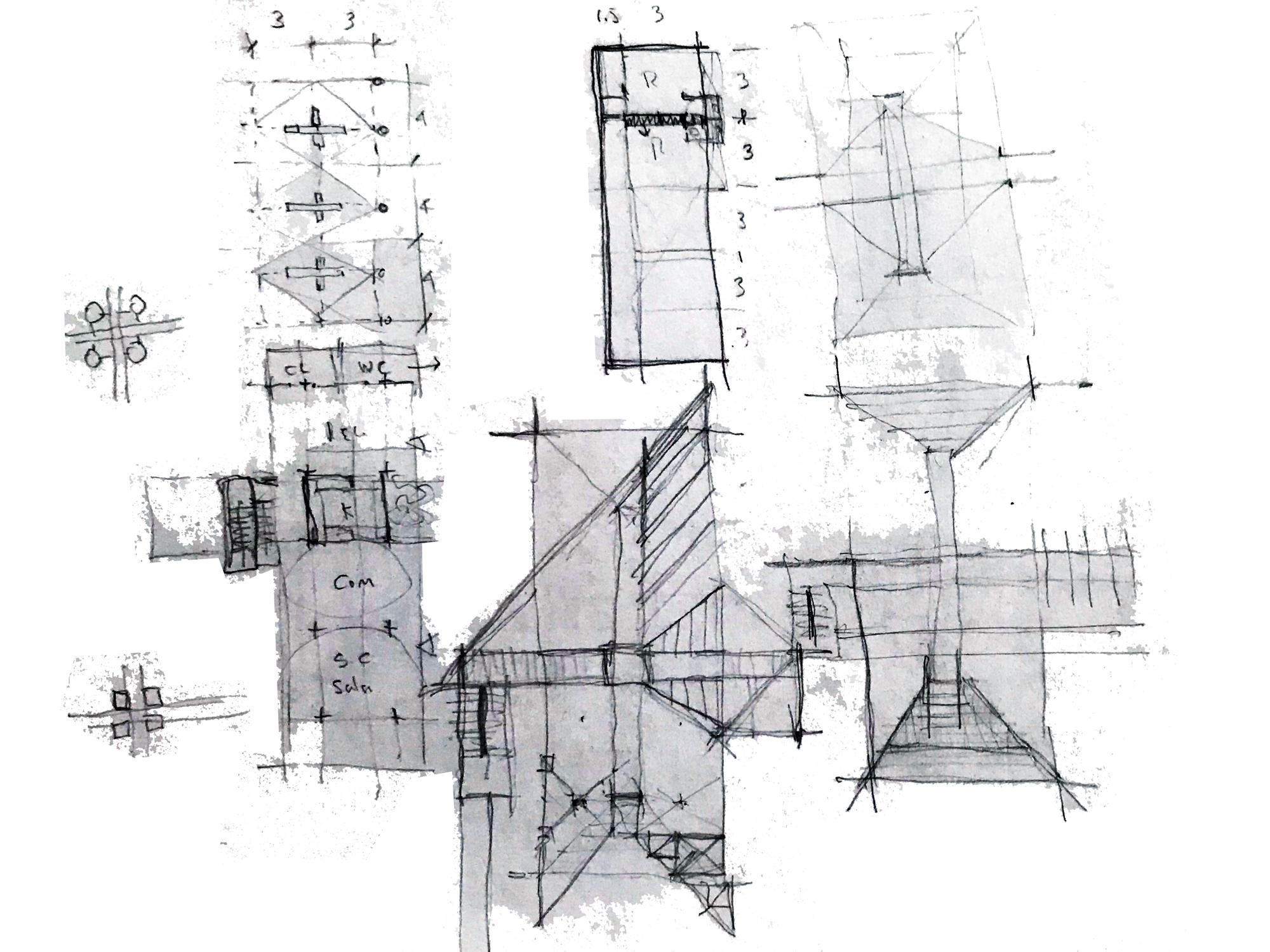
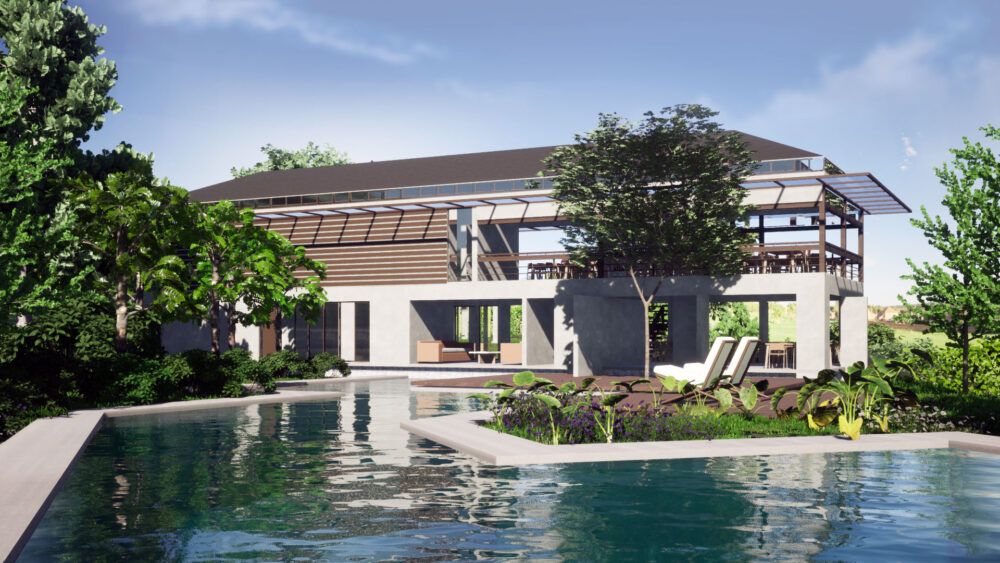
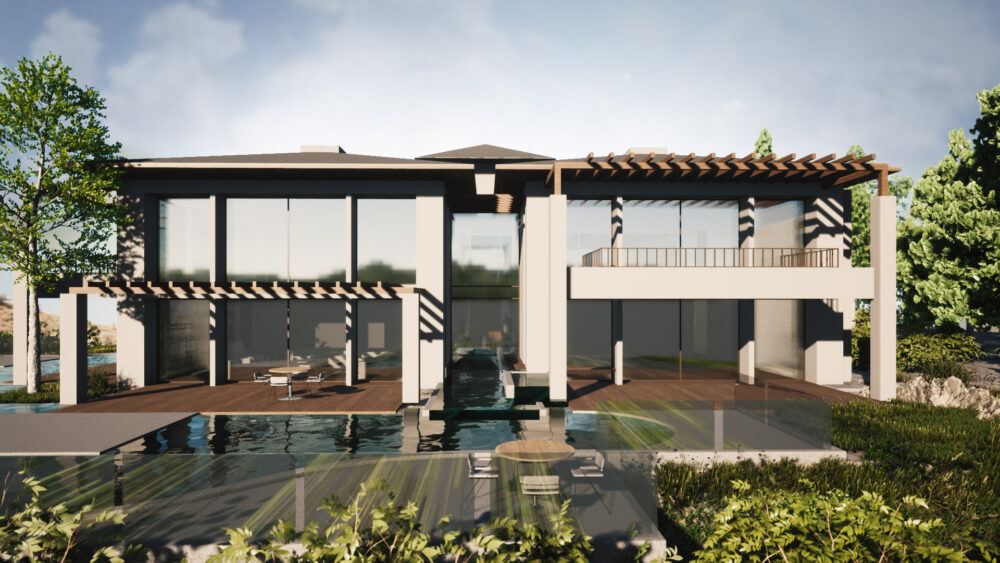
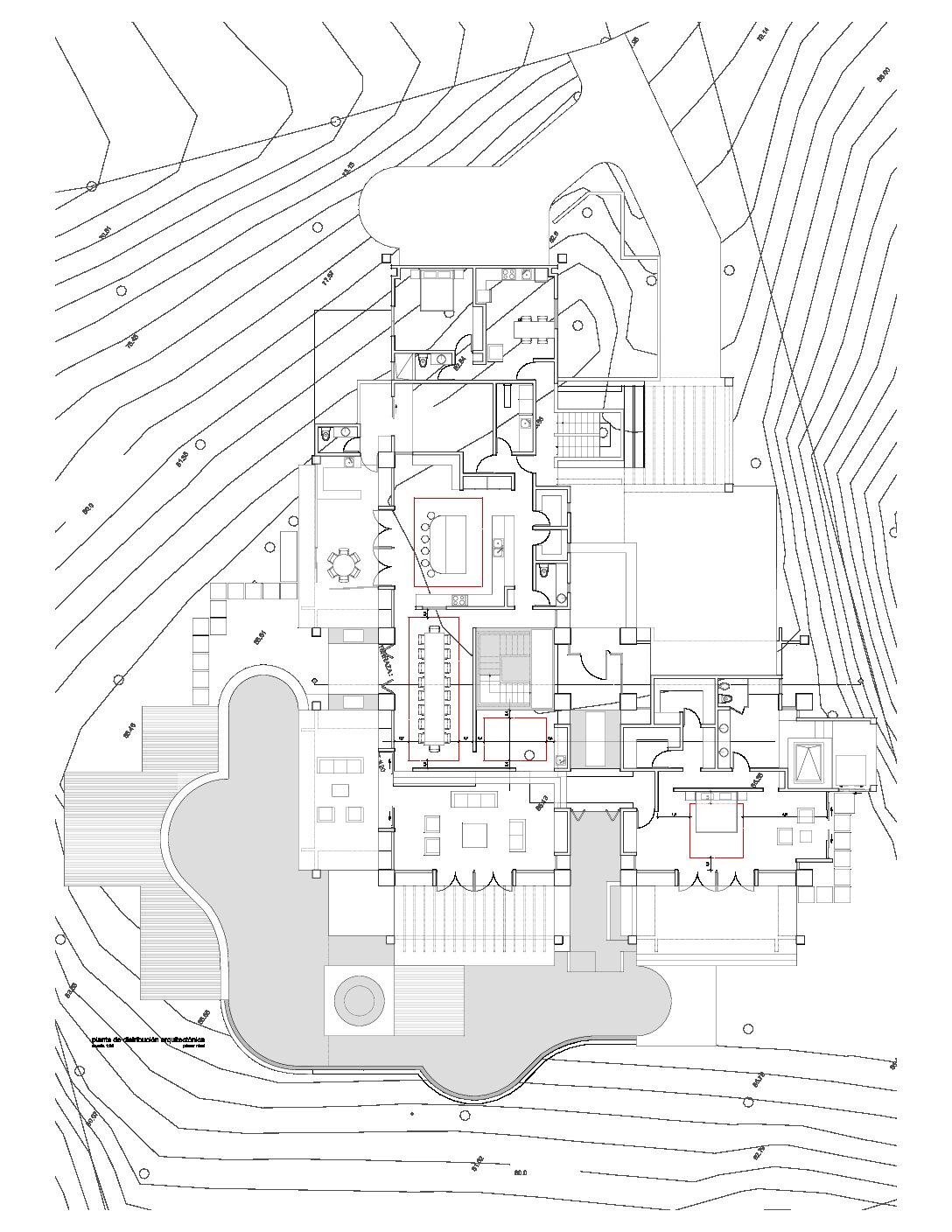
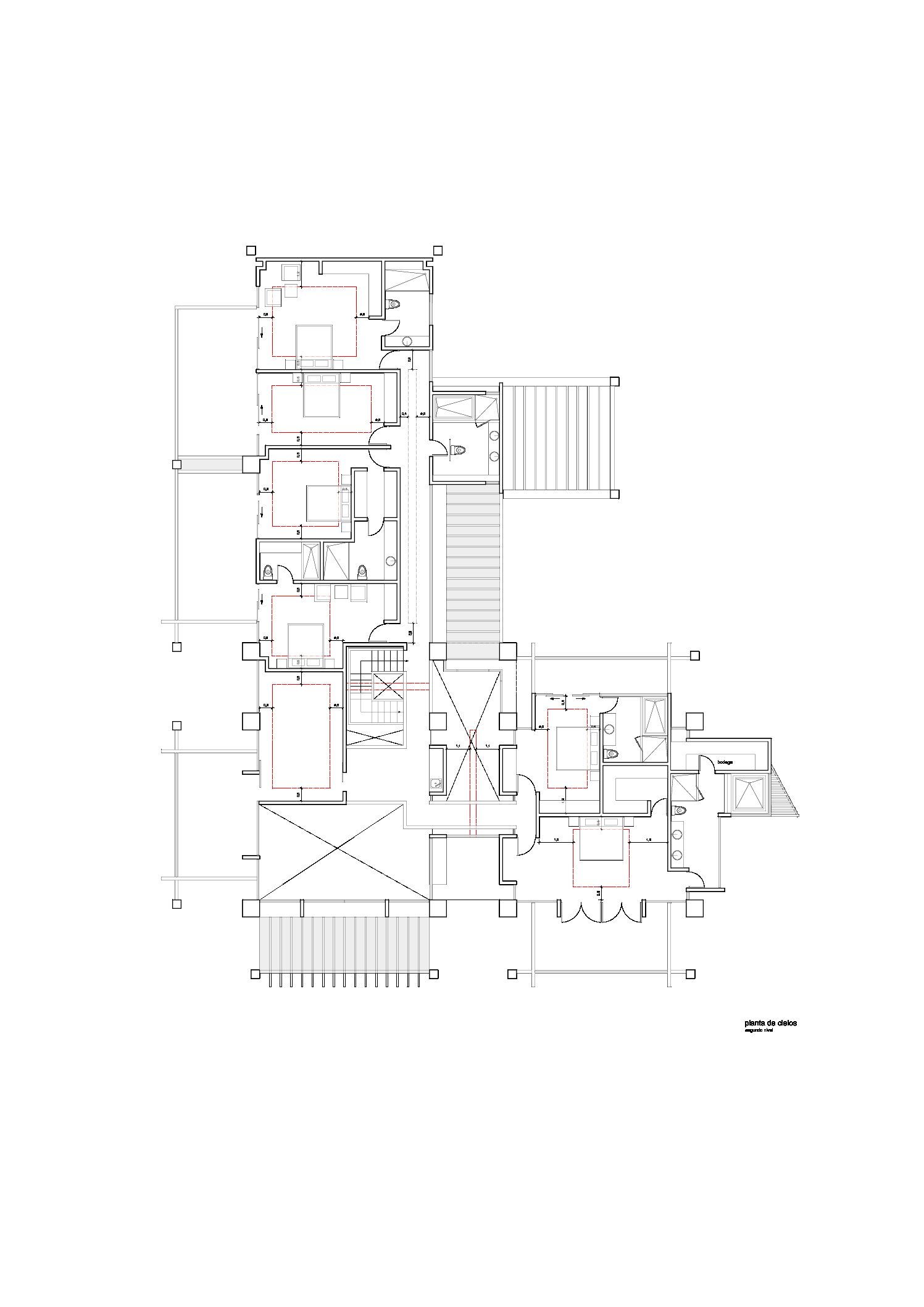
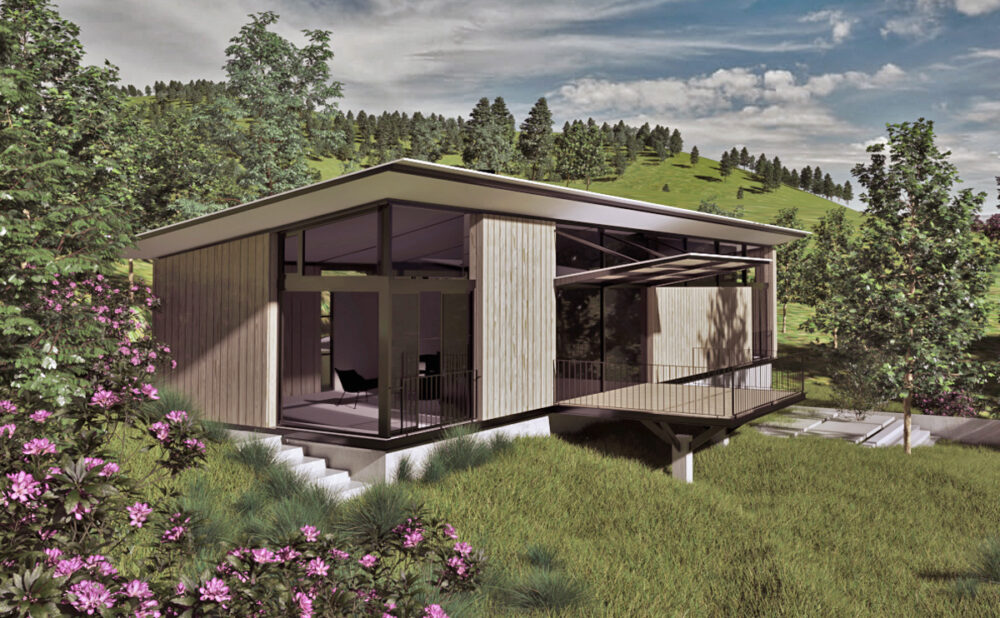
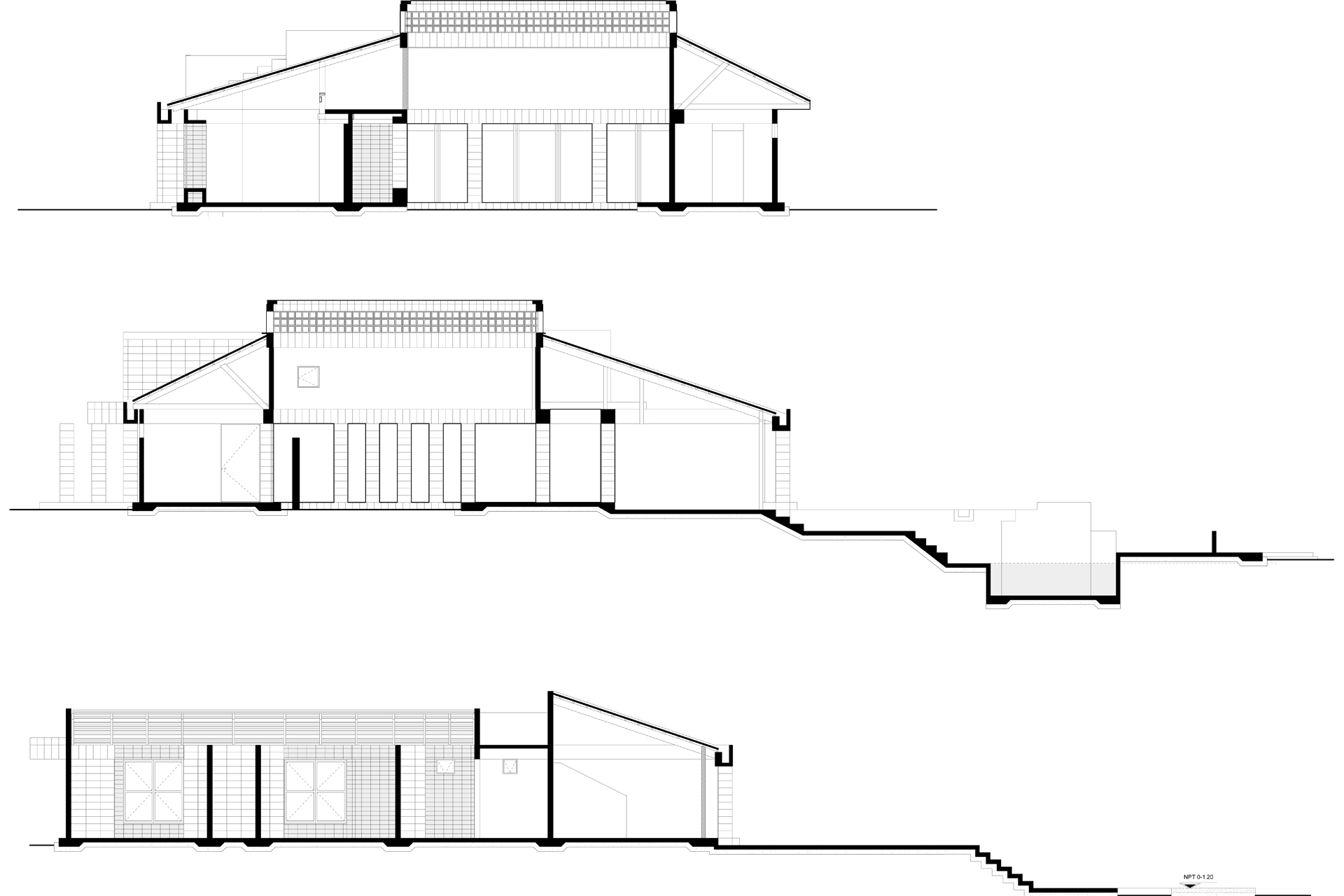
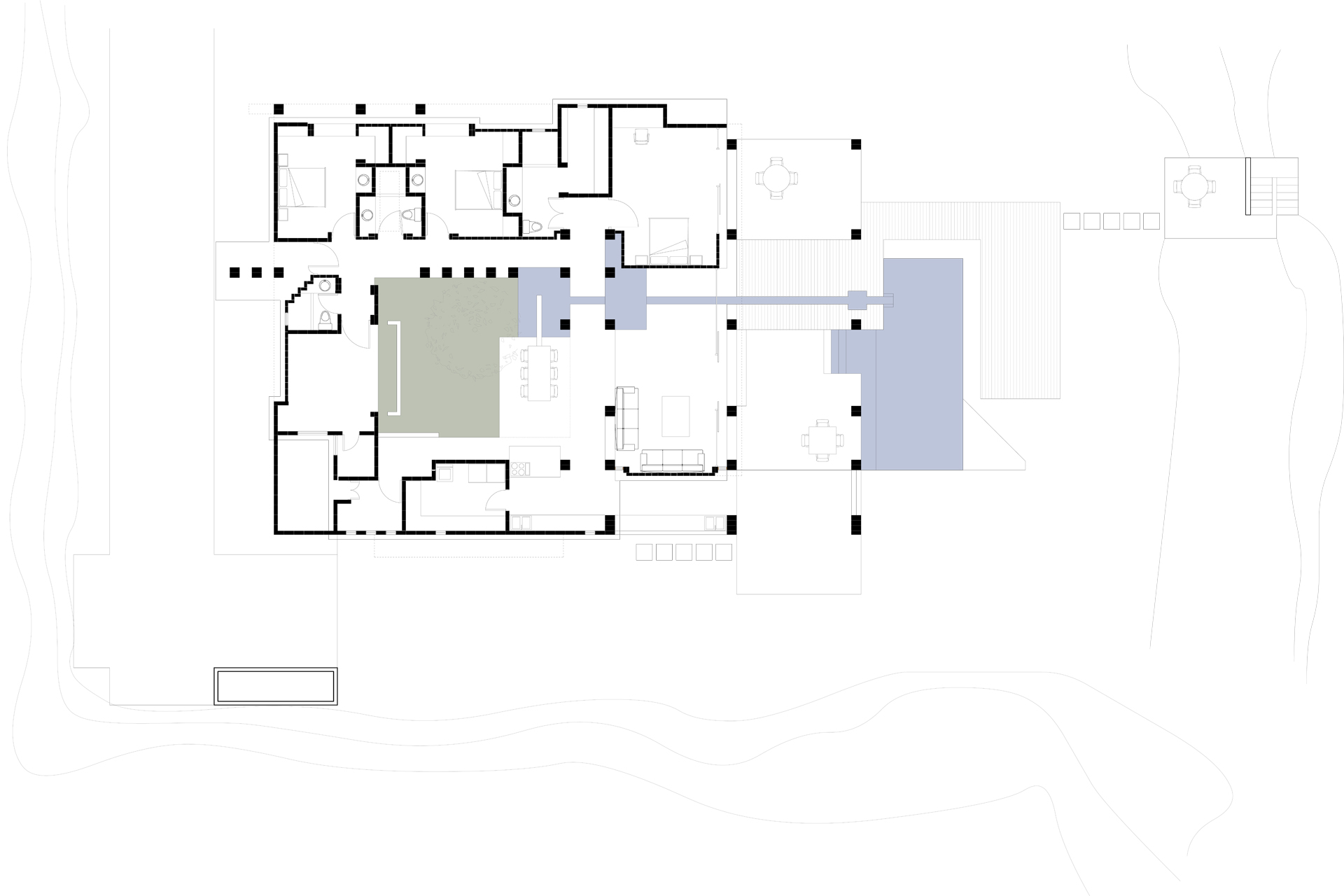
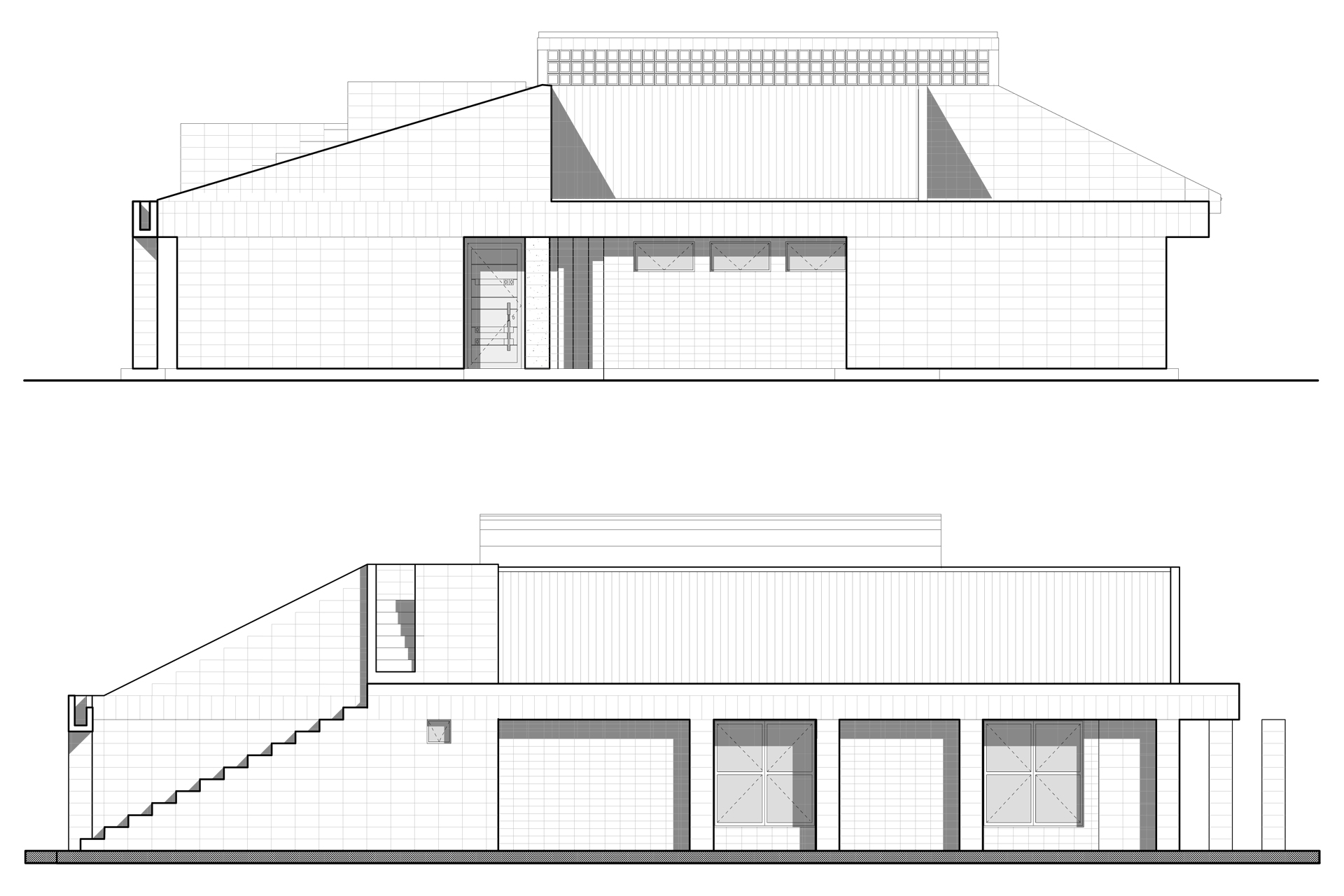
Perro Loco House is organized as two parallel volumes that negotiate the conditions of the dry tropical landscape in Guanacaste. A compact, solid bar contains the three bedrooms, bathrooms, storage, and technical spaces. This volume is intentionally quiet—its roof concealed, its openings controlled, and its material expression restrained to emphasize privacy and thermal stability.
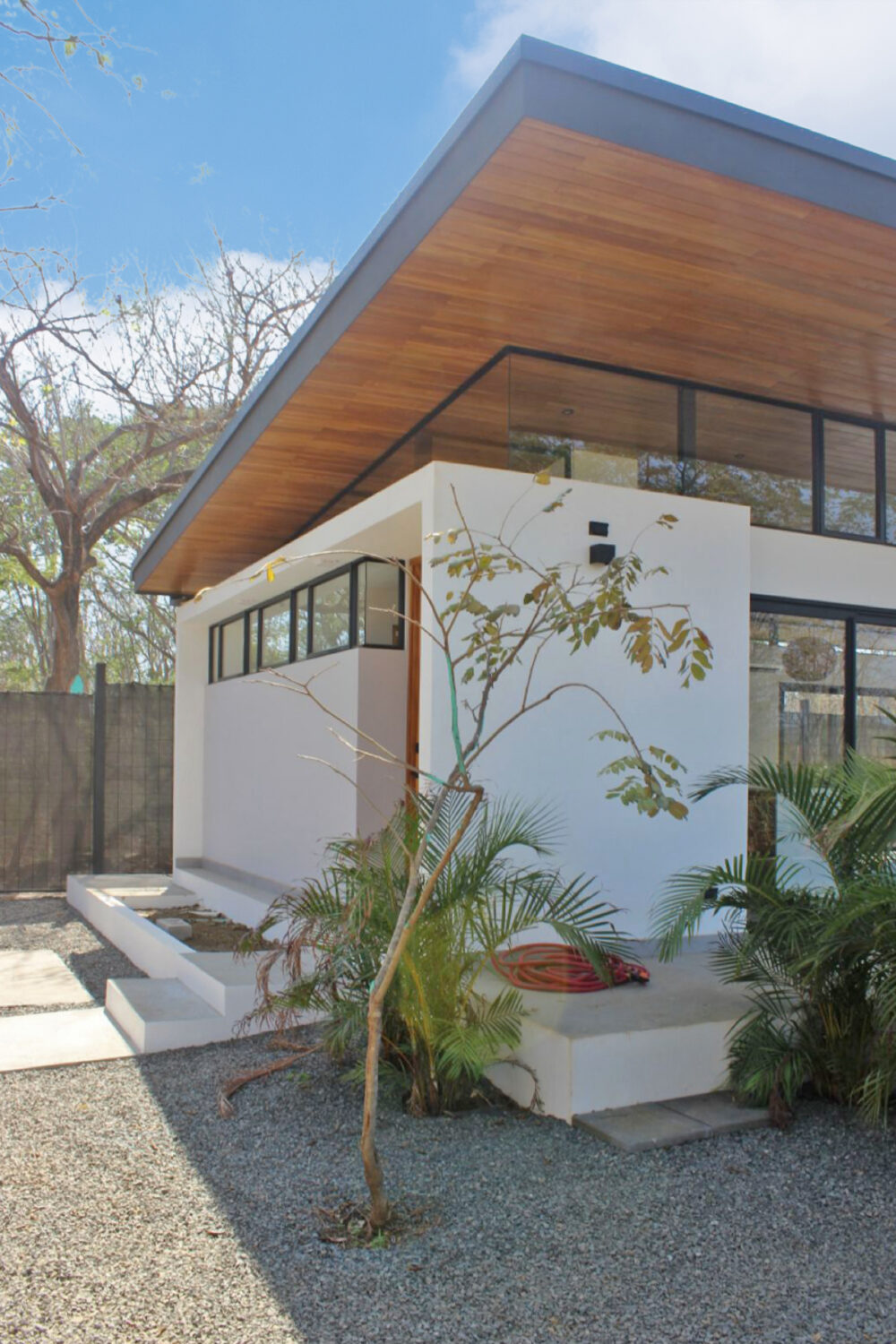
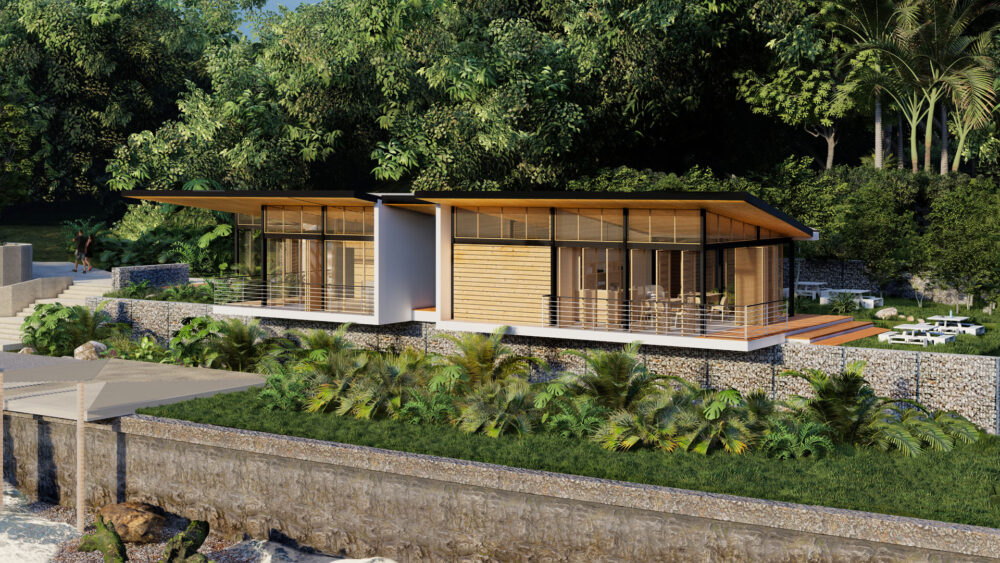
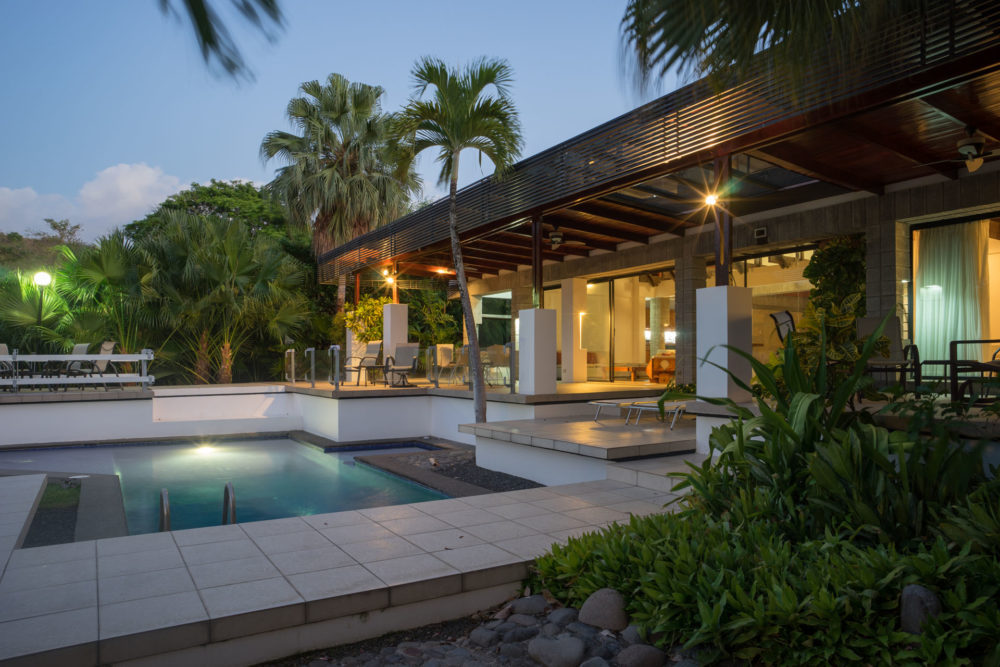
Running alongside it, a lighter and more open structure accommodates the social areas. Here a single floating roof defines the character of the space, extending beyond the glass enclosure to create a deep shaded terrace. The roof’s height and slender steel supports allow generous cross-ventilation and daylight while maintaining protection from the climate. Large sliding fronts dissolve the limit between interior and exterior, with the pool and garden becoming an integral part of daily occupation.
Material decisions remain calm and durable: teak ceilings and cabinetry, neutral stone floors, matte black metalwork. These elements frame the vegetation and the shifting quality of tropical light without competing with them. The spatial relationship between the two volumes—one compact and introverted, the other elevated and permeable—gives the house its architectural clarity despite its modest scale.
The project works through proportion, shade, and openness rather than through expressive gestures. In doing so, Perro Loco House establishes a measured, grounded presence within its site while offering a simple and comfortable structure for coastal living.
Client
Guntanis
Project Date
2025
Category
CoopeAnde Nicoya – Plaza Amara
Coopeande Nicoya - Plaza Amara
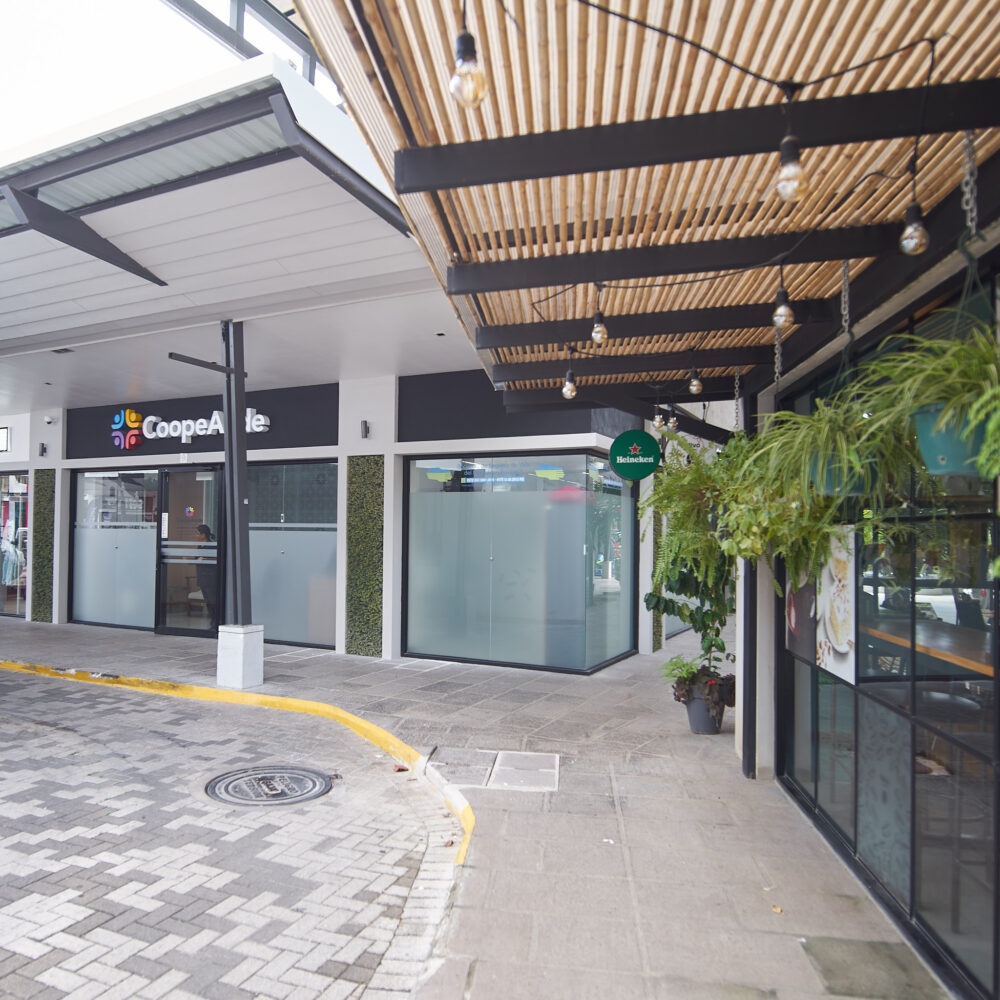
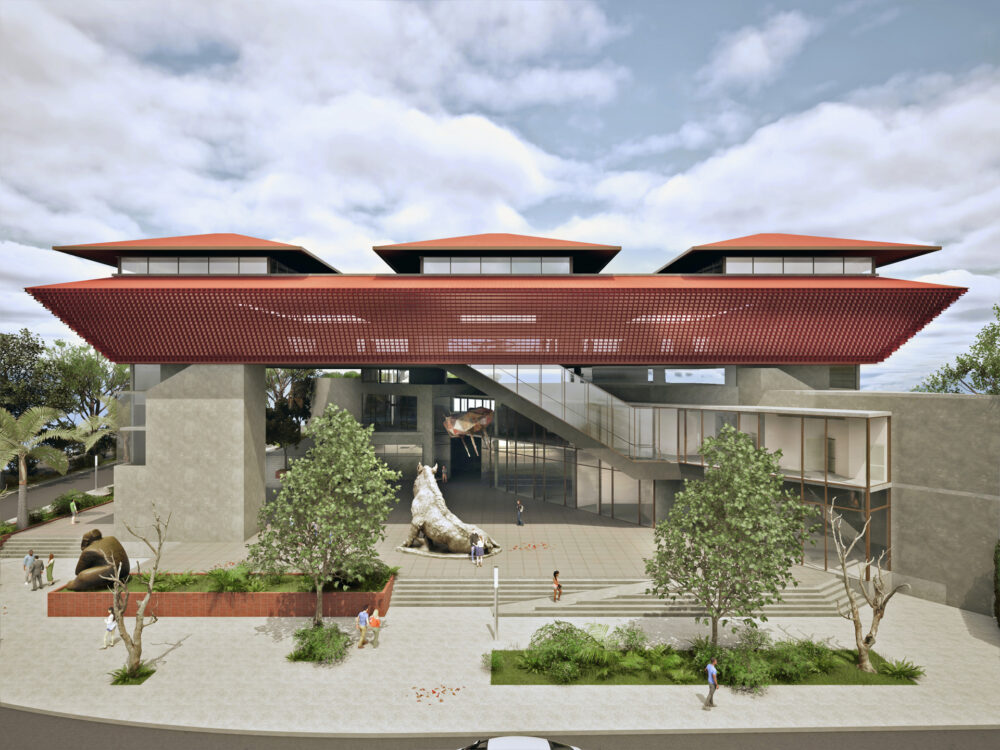
The CoopeAnde branch at Plaza Amara consolidates services for members of CoopeAnde Nº1 R.L. and the Magisterio Nacional under one roof in central Nicoya. The design prioritizes natural light and visual connection to the exterior, keeping the interior open and legible for a program that handles continuous public flow throughout the day.
A dedicated coworking area for members extends the branch beyond transactional banking, providing a flexible workspace for independent work and meetings. The spatial layout and material palette are kept straightforward — transparency, accessibility, and comfort over formal gesture — in line with the institution’s role as a cooperative serving the Guanacaste region.
Gallery Notice : Images have either not been selected or couldn't be found
Casa Sanabria
Casa Sanabria
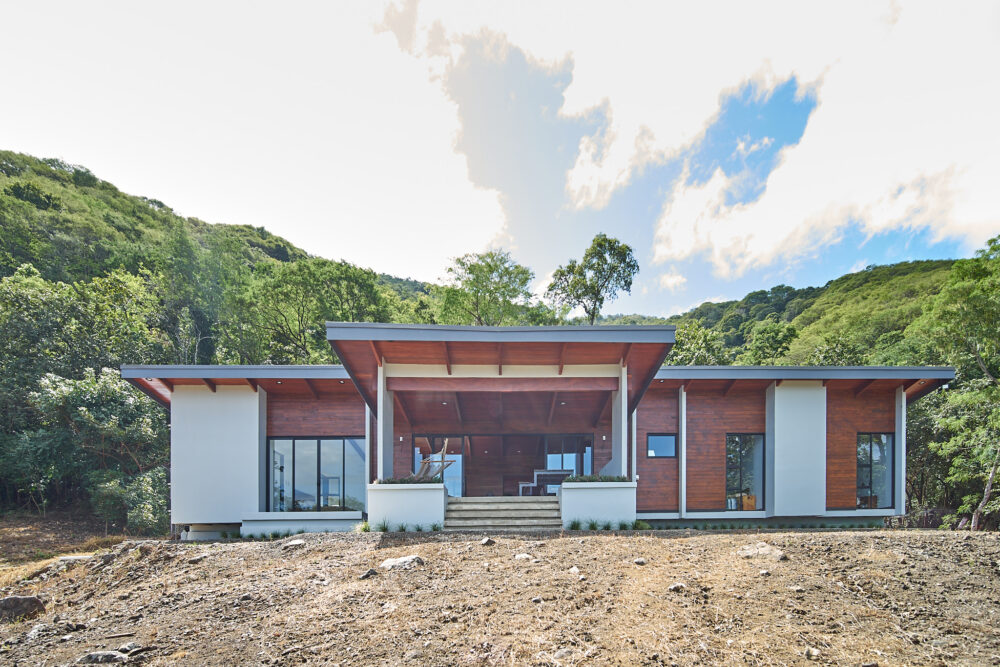
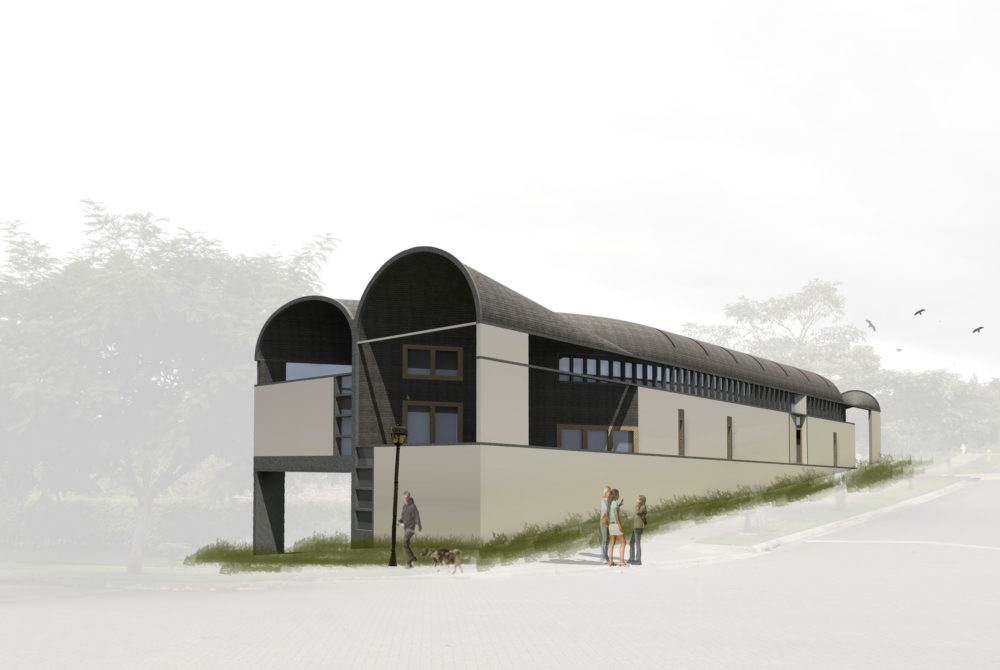
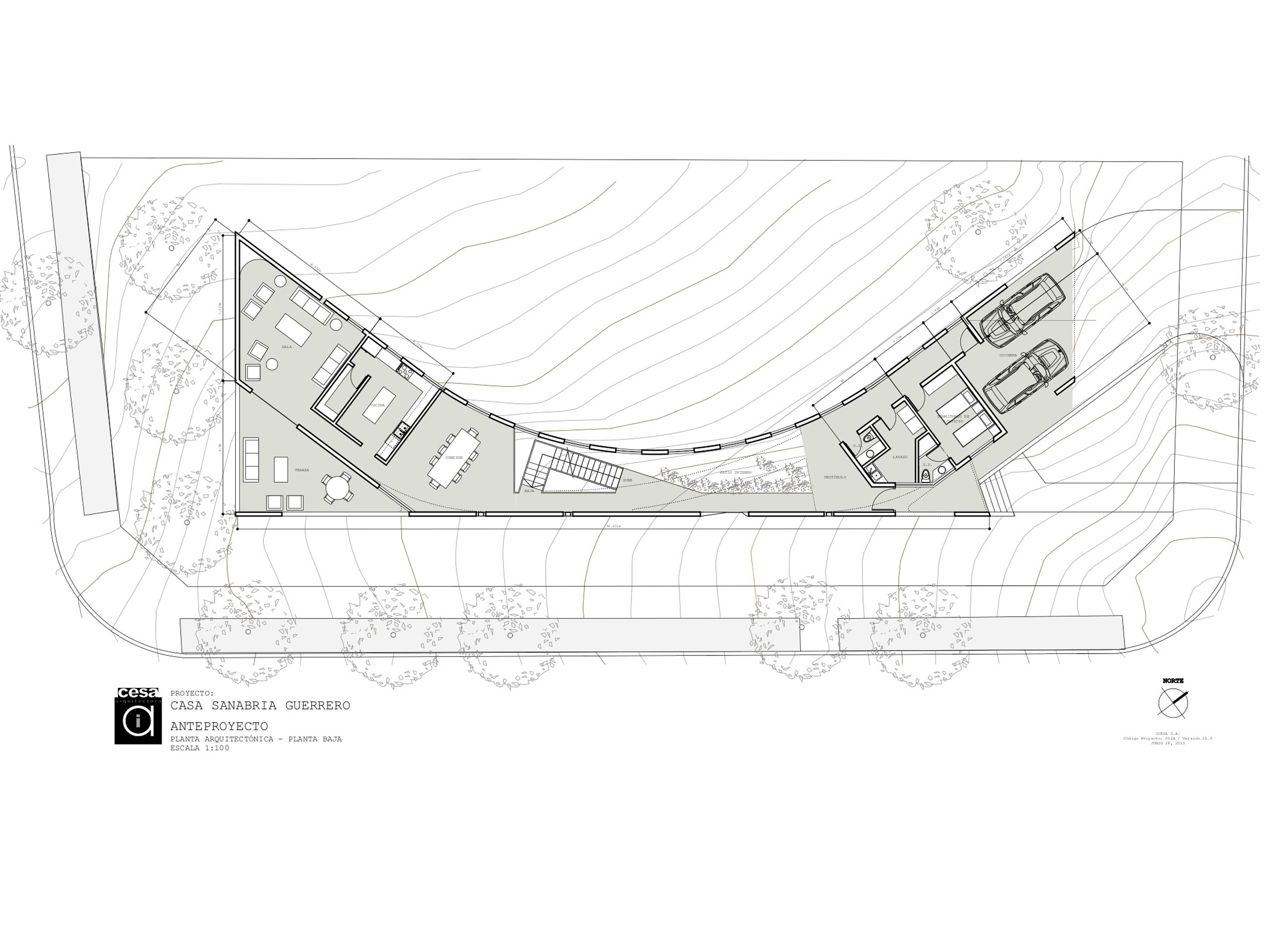
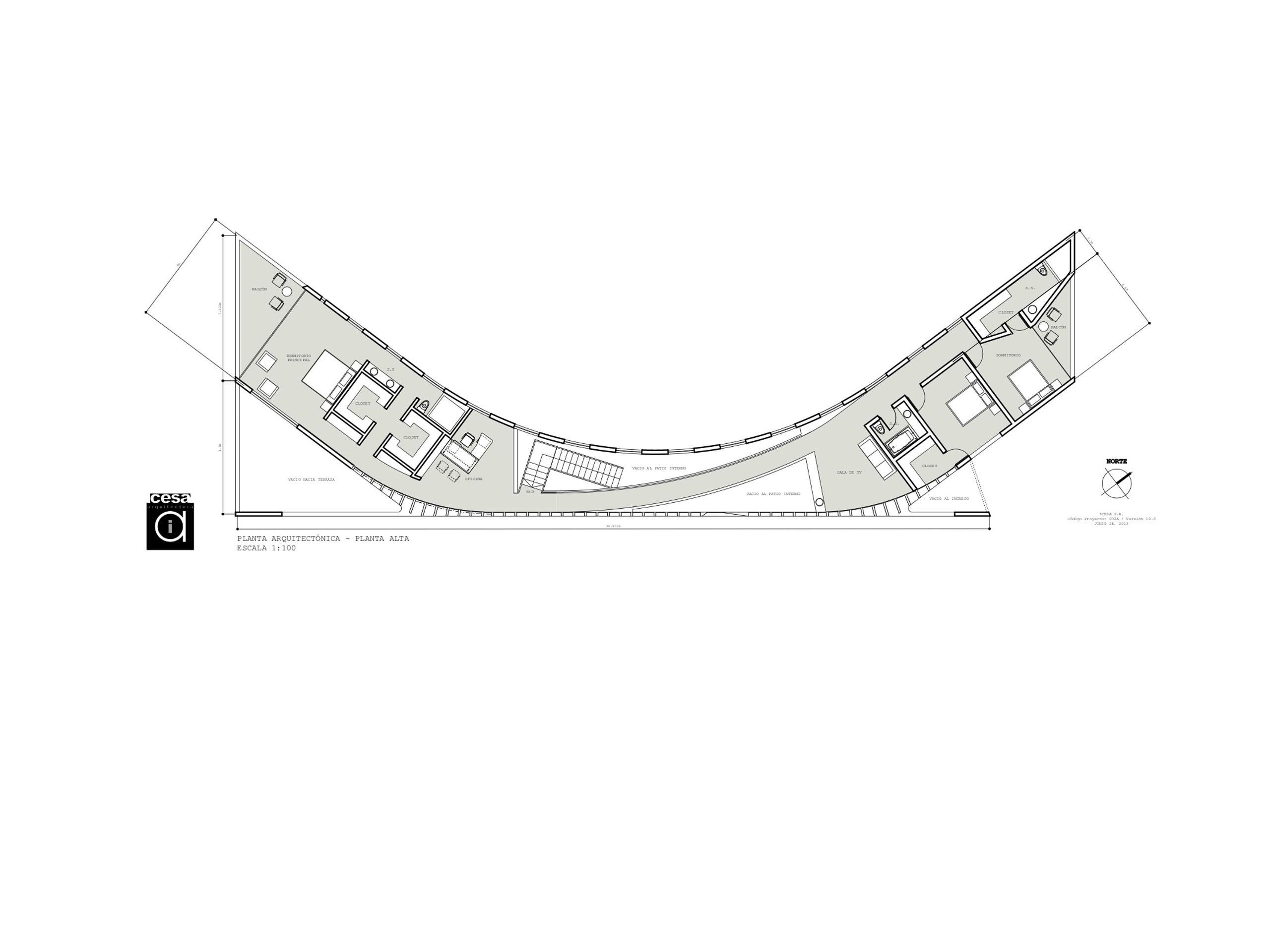
Casa Sanabria sits at the edge of the grasslands bordering a protected forest within Hacienda Don Carlos, Nicoya, Guanacaste. The 160m² house is built entirely from solid timber sourced from certified plantations within the same hacienda — eliminating transport distance from the material chain and keeping the construction within the ecological logic of the site.
The building rests on an existing artificial plateau of cracked stone, avoiding new ground disturbance. A lightweight timber structure on mini-piles preserves the subsoil beneath untouched. The single-sloped roof and north orientation work together to minimize heat gain in Guanacaste’s dry climate while maximizing natural cross-ventilation through the interior, reducing dependence on mechanical cooling to a minimum.
The linear plan opens the main facades toward unobstructed views of the Nicoya Valley and Cerro Caballito. Large openings are positioned and sized to frame these views while maintaining sufficient shade to keep the interior comfortable through the hottest months. Timber carries through from structure to partitions to envelope — a material that is at once the construction system, the finish, and the primary spatial experience of the house.
Edificio Asouna
Edificio ASOUNA
Asouna Building
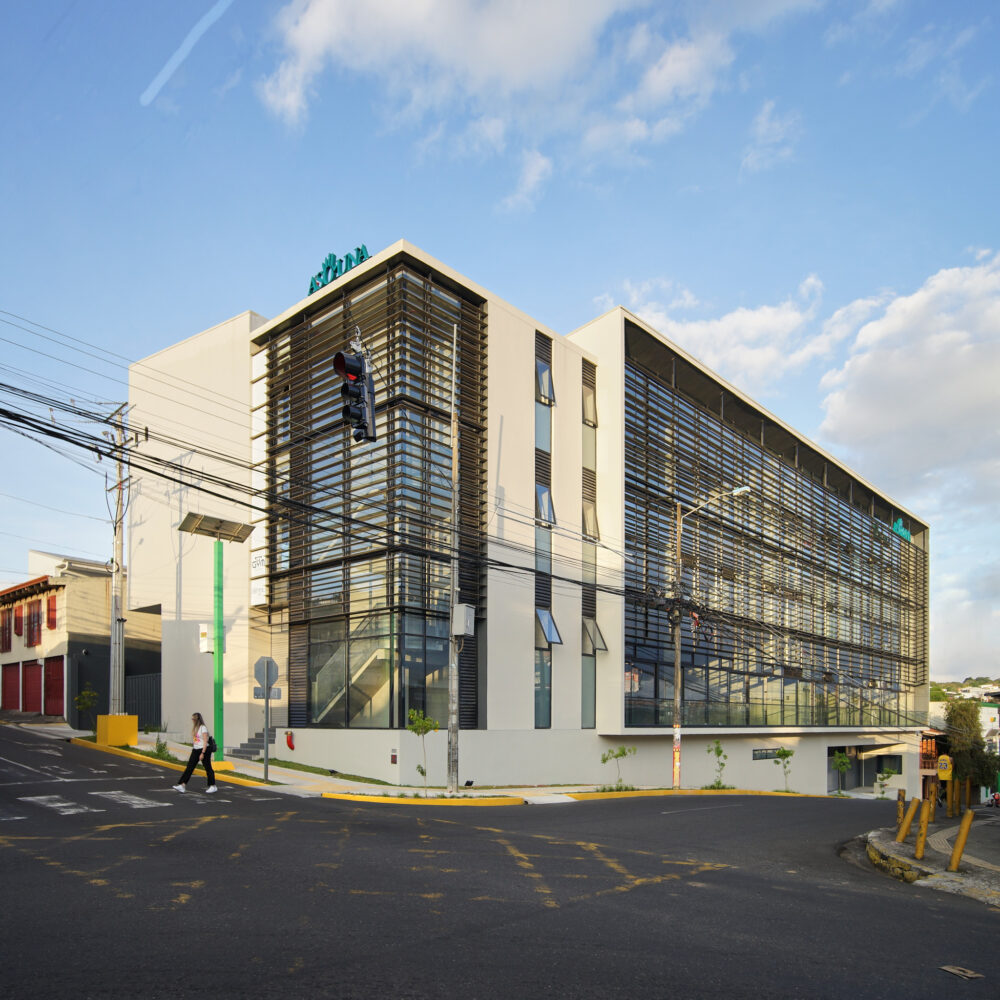
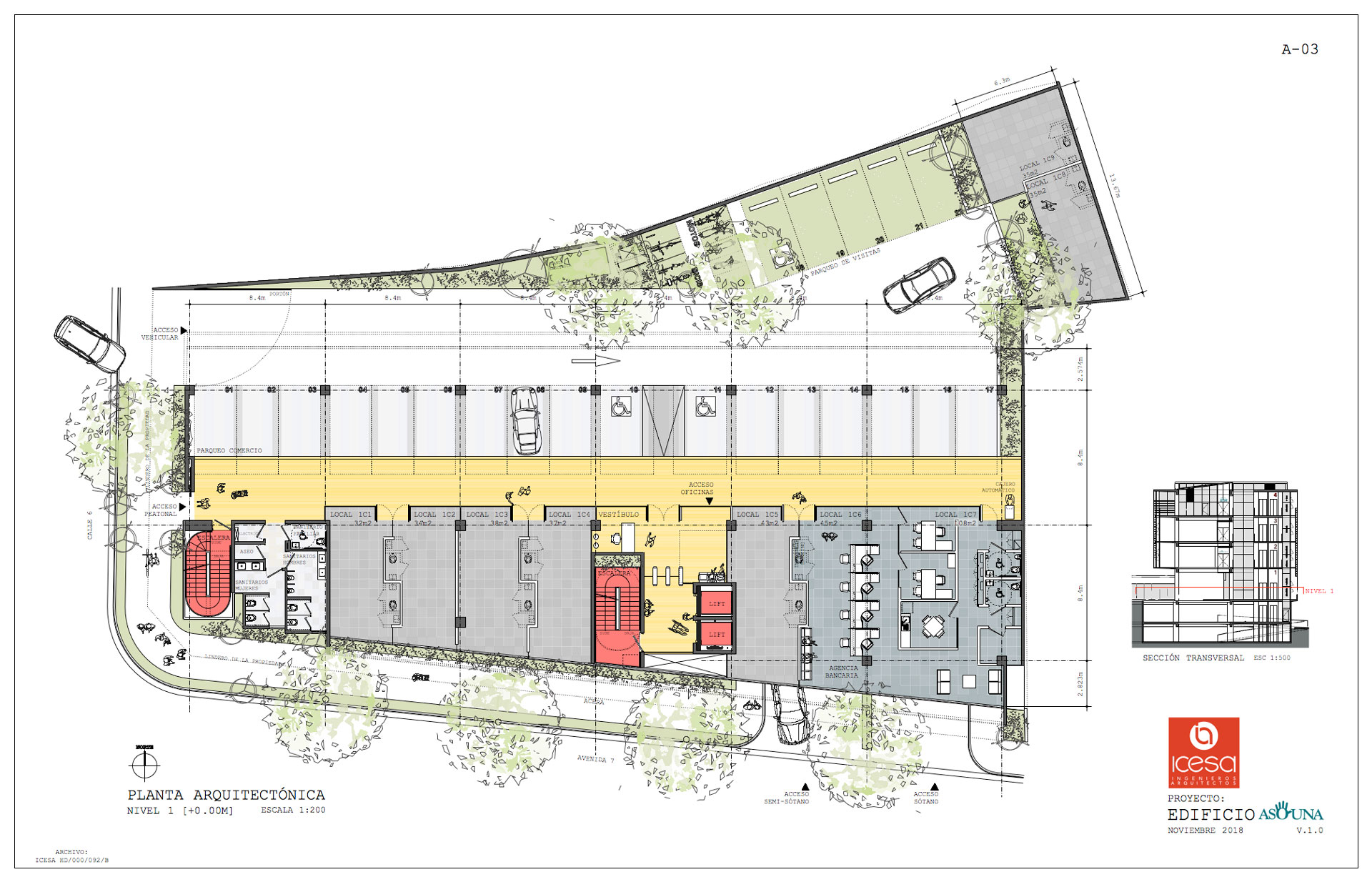
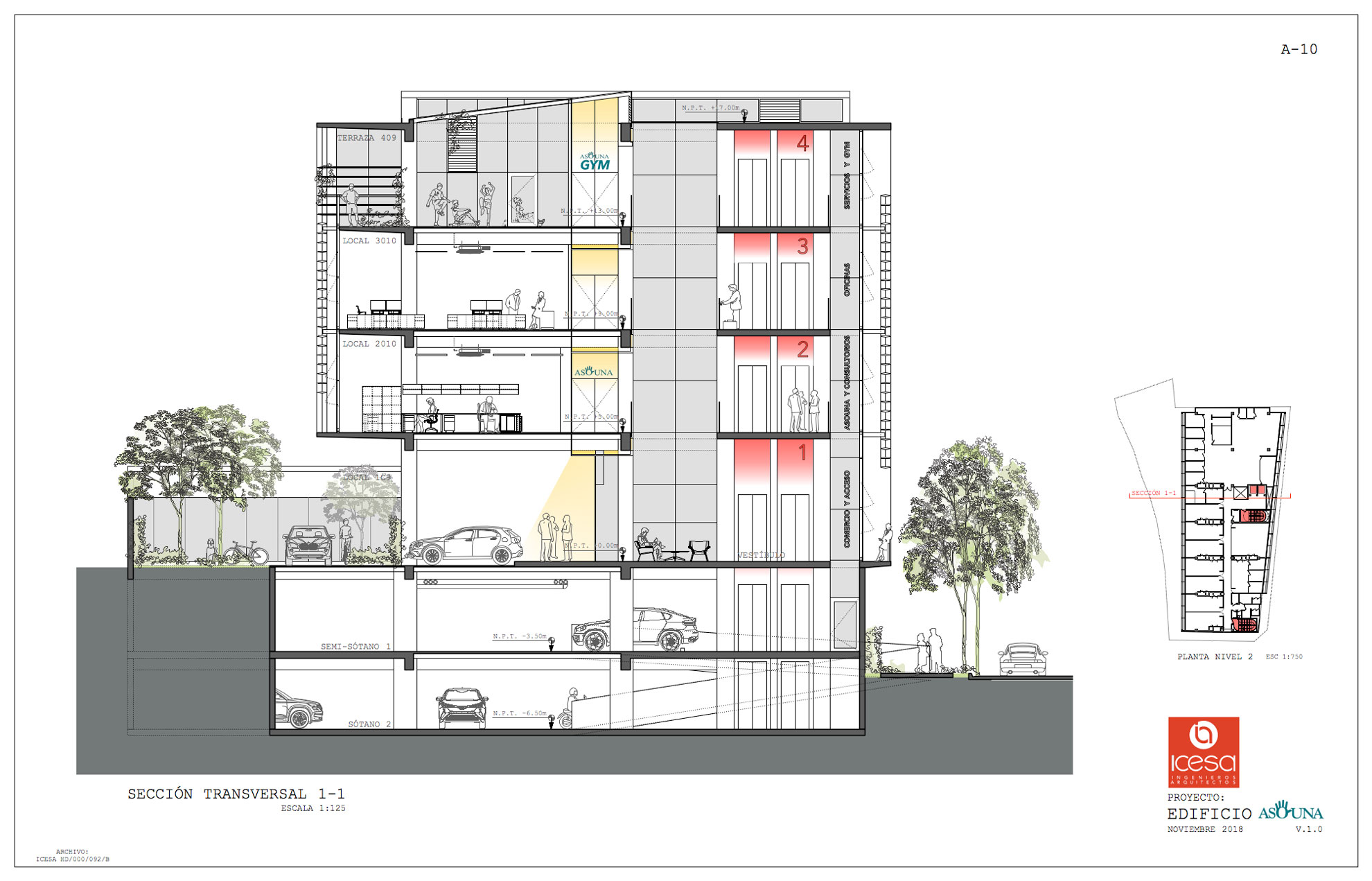
The Asouna Building occupies a strategic corner at the entrance to Heredia’s historic grid, built for the employee solidarity association of the Universidad Nacional. The program stacks four levels: ground-floor retail reinforcing the pedestrian continuity of the street, corporate offices above, and a wellness floor — gym, dental clinic, spa — at the top, oriented toward the mountain views. Parking is resolved in basement and interior lot, preserving the pedestrian scale of the surroundings.
The corner plot allowed the long facades to face north and south, securing quality natural light across the office and wellness floors. Both are protected by horizontal louvers that filter direct sun without severing the visual connection to the exterior. At the corner itself, the staircase and service elements shift toward the west facade — acting as a thermal buffer against afternoon radiation while freeing the interior floor plates from fixed elements that would compromise spatial flexibility.
First place in the ASOUNA Design Competition
Client
Edificio Asouna
Project Date
2019
Category
Featured · Institutional · Interior · Masterplanning · Mixed Use
Caño Negro Lodge
Caño Negro Lodge
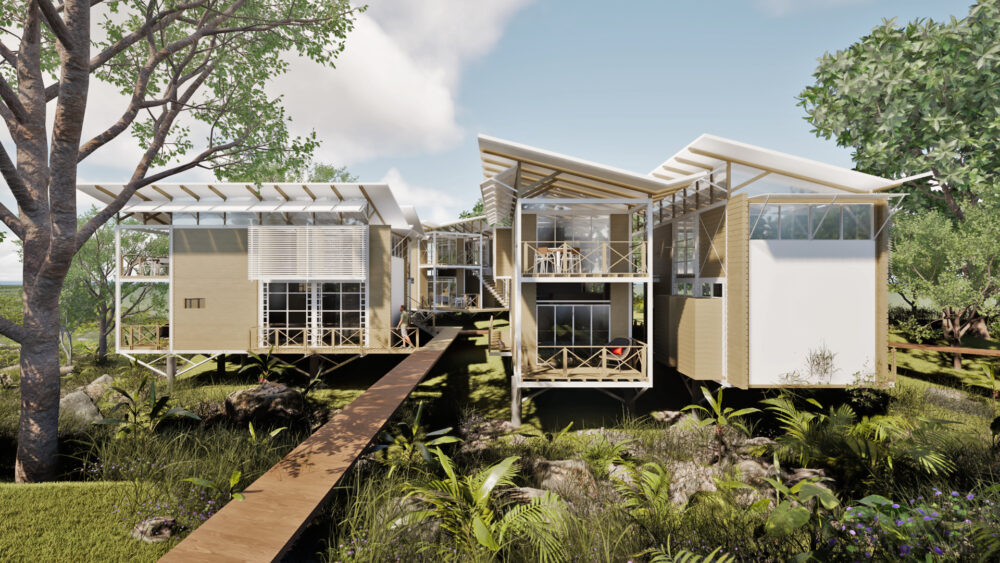
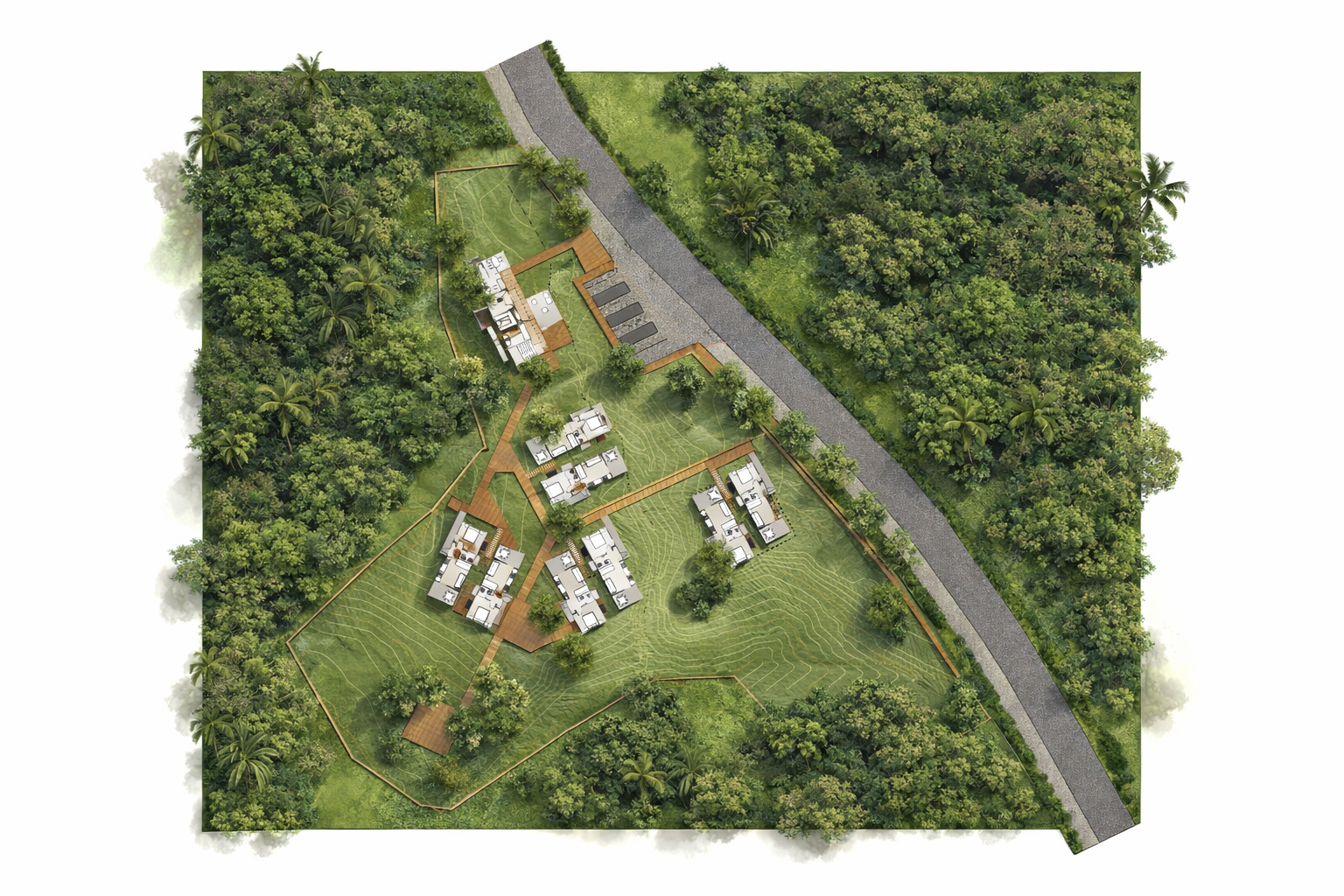
Caño Negro Lodge is a small boutique hospitality project located in Cocles, Limón, set within the Costa Rican Caribbean forest on a site defined by irregular geometry and complex topography. The project is conceived as a series of elevated units, lifted from the ground on concrete piloti to reduce impact on the terrain and preserve existing vegetation.
The buildings use a prefabricated steel structural system combined with local wood decks and wall cladding, balancing construction efficiency with a warm, regional material character. The architectural language draws from Caribbean vernacular traditions through window protections, lightweight balustrades, and a permeable envelope that promotes natural ventilation, shade, and a close relationship with the surrounding forest.
Client
P. Crephead
Project Date
2009
Category
Plaza Ojochal – Integral Health Center
The Plaza Ojochal Integral Health Center
Plaza Ojochal is a mixed-use health and wellness center in Ojochal, Osa, on Costa Rica’s southern Pacific coast, within walking distance of Bahía Ballena beach and its national park. The program brings together a training facility, healthy food café, spa, beauty salon, physiotherapy, traditional medicine center, and laboratory under a single roof — a concentration of services that did not previously exist at this scale in the area.
The design takes the site’s existing stream and mature trees as its point of departure, organizing the building around these natural elements rather than displacing them. Biophilic strategies govern the spatial layout, keeping vegetation, water, and natural light central to the experience of every space. Bioclimatic design for the tropical climate — cross-ventilation, shading, and thermal mass — reduces energy consumption while maintaining comfort without reliance on mechanical cooling.
The result is a building that frames the boundary between constructed and natural environment as the project’s primary architectural condition rather than a secondary concern.
Gallery Notice : Images have either not been selected or couldn't be found
Client
Proyectos Completos
Project Date
2017
Category
Casa Beer Fuscaldo II
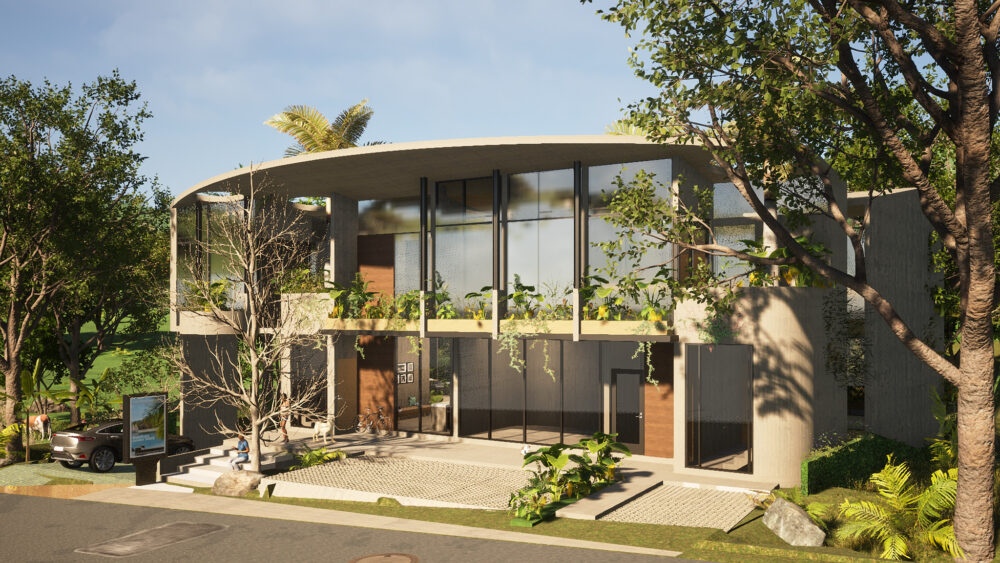
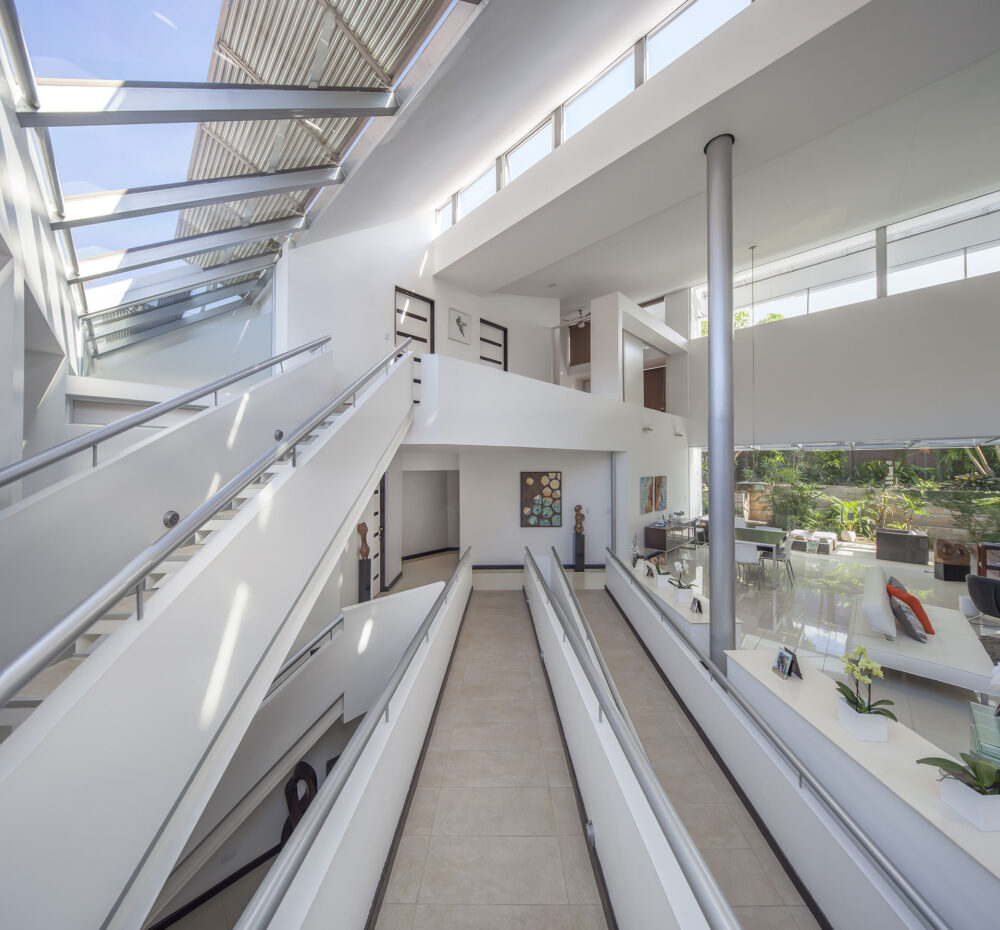
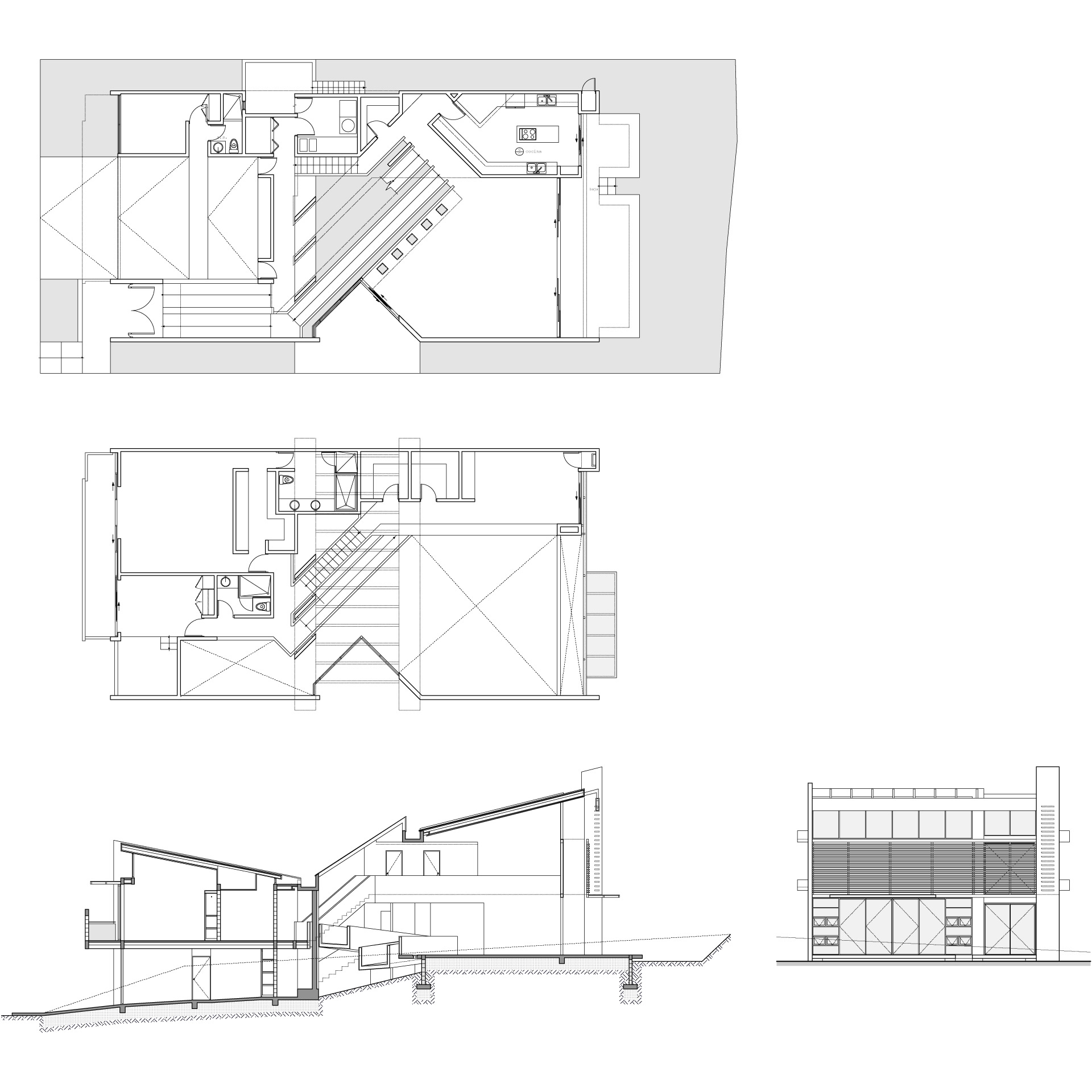
Casa Beer Fuscaldo II is a party-wall house in the hills of Escazú, home to architect Franz Beer and artist Margarita Fuscaldo. The narrow rectangular lot organizes into four sub-levels split between a front and rear sector, connected by a ramp that climbs diagonally across the plan — the one element that breaks the strict orthogonality the site imposes.
The front volume holds the private program. It separates from the social spaces through a sequence of diagonal walls that form an internal facade, lit from above by a large glass skylight over the ramp — an atrium that pulls daylight into the center of the house. The smooth white walls are treated as proportional fields, each one calibrated to organize the large rectangular openings that alternate in position from room to room — a direct application of Beer’s intuitive geometric field research, here translated into the domestic section. The walls also serve as the primary surface for the couple’s collection of Costa Rican art, principally Margarita Fuscaldo’s own paintings. The one exception is the garden wall, which floats free of both floor and ceiling, the only surface kept clear of art, giving the space a sense of lightness at its far end. Where bioclimatic control or artwork protection requires it, horizontal louvers filter the light through the large glazed openings without interrupting sightlines between spaces.
The rear volume opens into the main living space, which conceals its true scale from the outside: it only reveals itself once you’ve climbed from the entry vestibule into the full height of the salon, watched over by the architect’s studio on the mezzanine above.
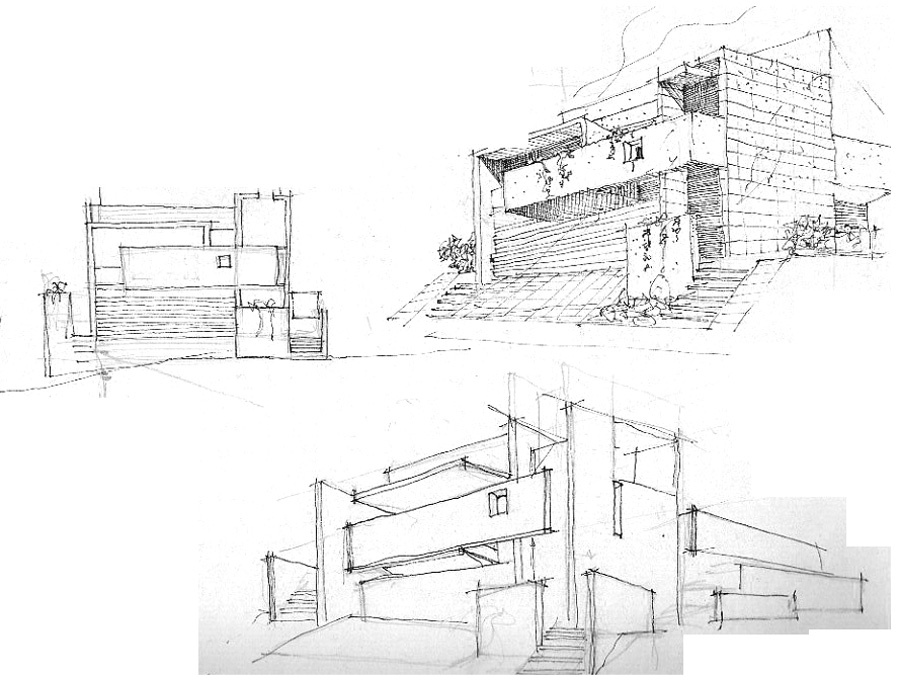
The street facade composes around two elements: a horizontal plane that allows views from the bedrooms out to the valley without exposing the interior, and a vertical volume marking the entrance — a deliberate response to the massing of the neighboring house.
Callejones Beach Community
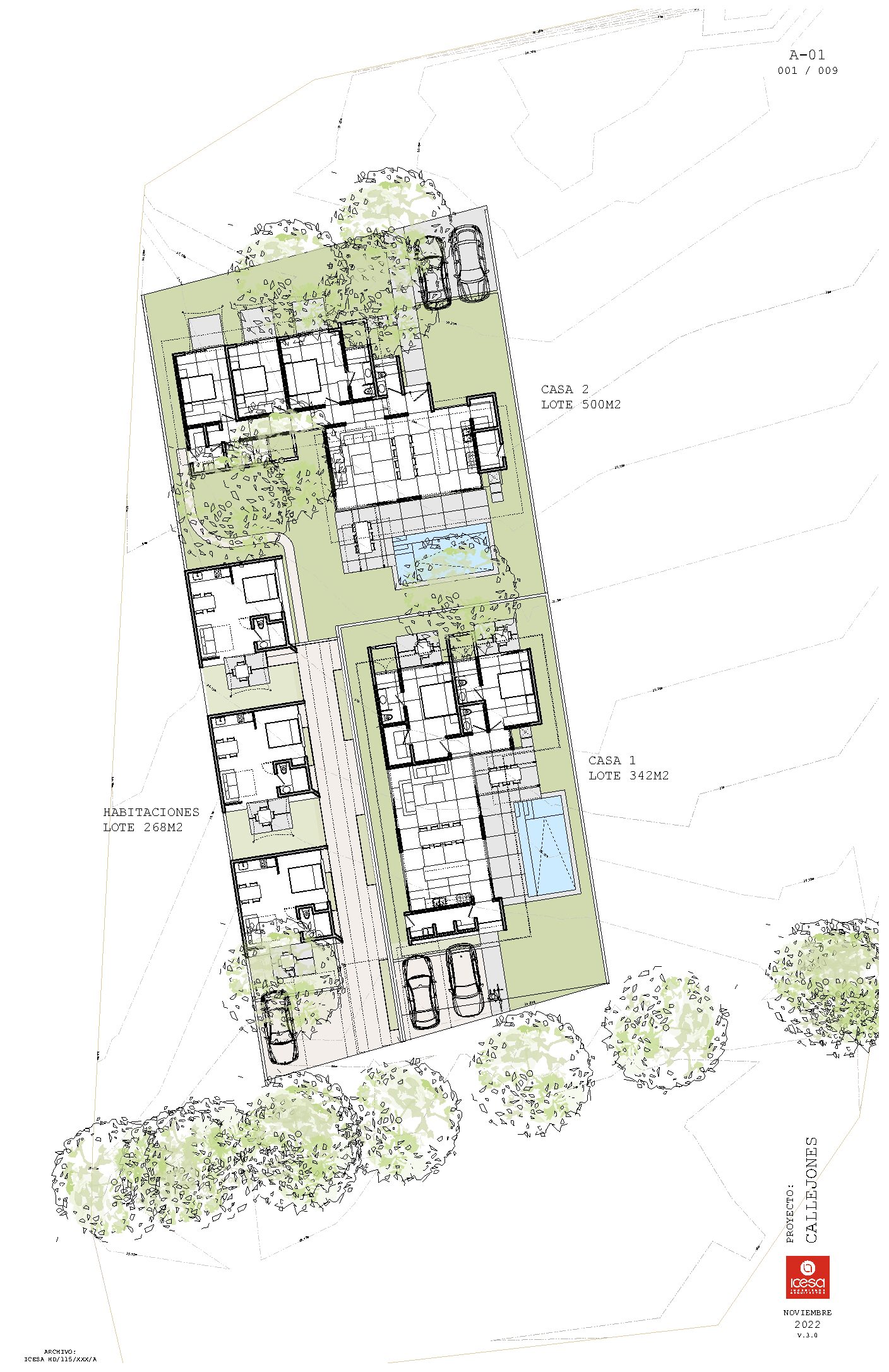
Callejones Beach Community is a small coastal tourism development near Playa Callejones, Guanacaste, consisting of two houses and three villas on a quiet fishing beach. The project explores a consistent architectural language across all five units, adapted to the intense heat and light of the Guanacaste dry tropical coast.
Each structure opens completely along its parallel facades, dissolving the boundary between interior and exterior through large operable fronts that promote cross-ventilation and connect the living spaces directly to the outdoors. Large overhangs protect the interior from direct sun while keeping the spaces open to the breeze. White walls and polished concrete floors establish a neutral base, while exposed teak wood ceilings add warmth to the social areas. A continuous glazed strip separating walls from roofs runs along the perimeter, introducing a band of diffuse light between the solid and the cover — a device that dematerializes the junction and animates the interior with shifting light throughout the day.
Client
Sol Tres Callejones Siete
Project Date
2022
Category
Hospitality · Interior · Masterplanning · Mixed Use · Residential · Urban Design
Oficentro Asebanacio
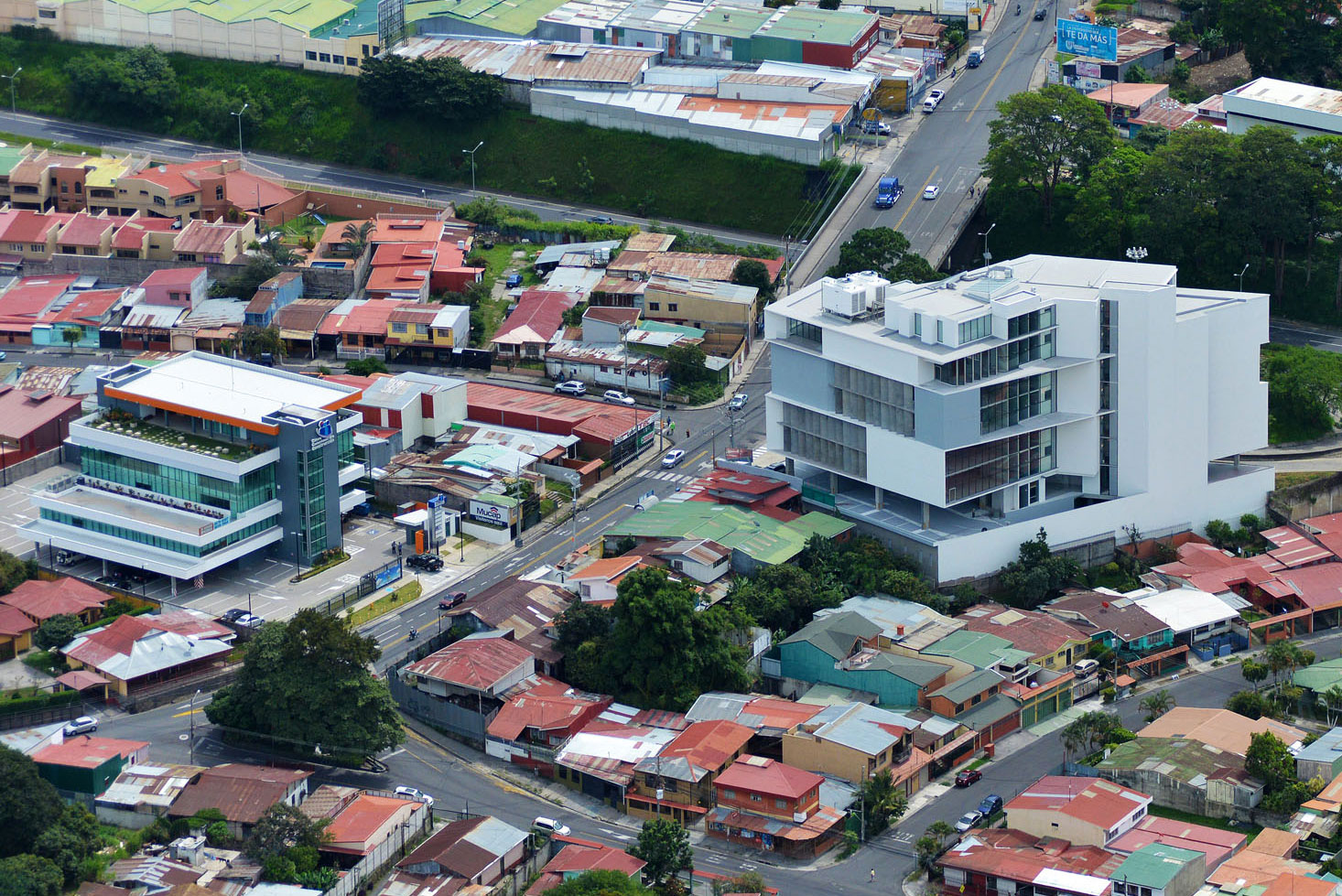
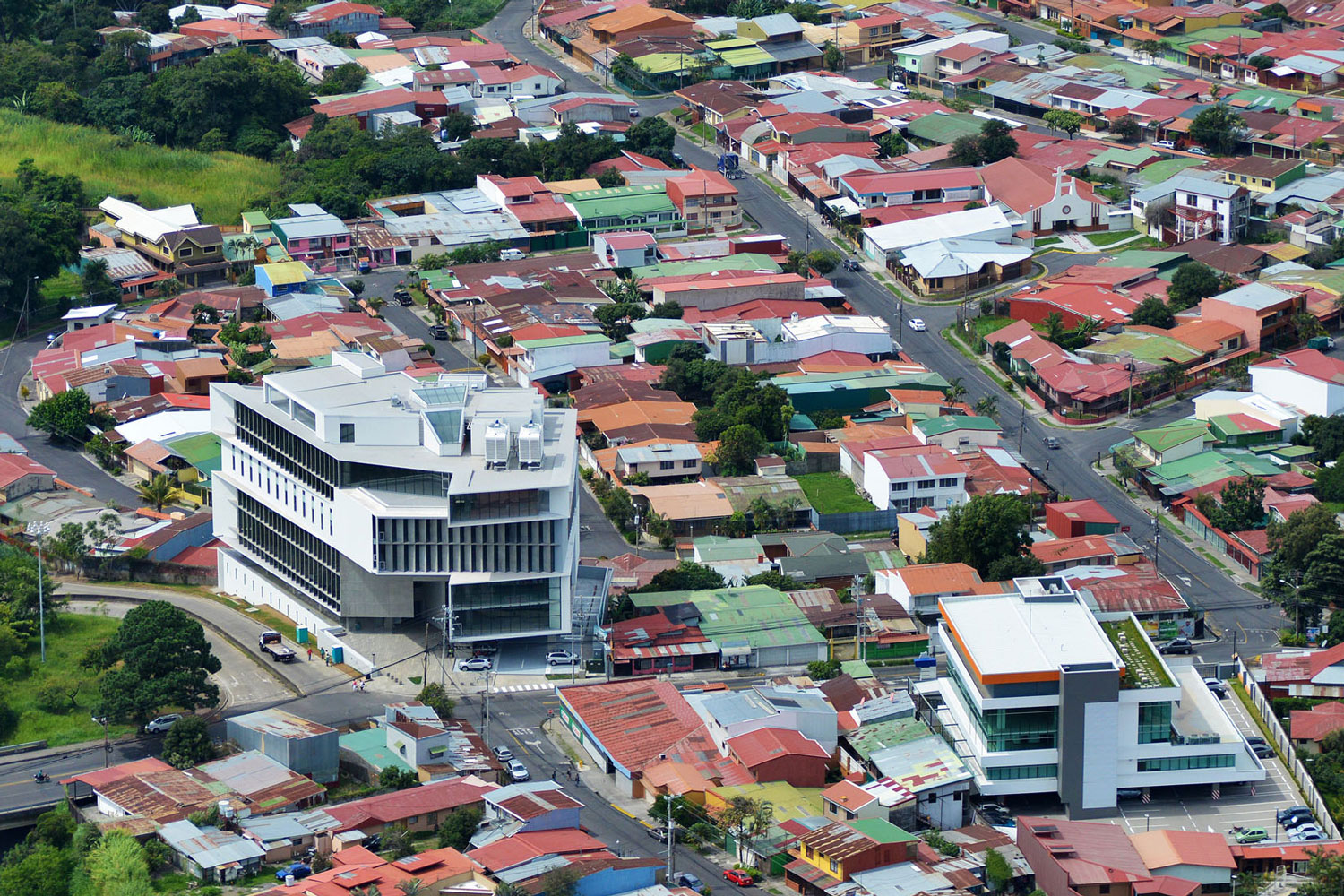
The Employee Solidarity Association of Costa Rica’s largest public bank needed more than a headquarters — they needed a shared roof for institutions with common values. The building in Llorente de Tibás sits on an irregular plot where every boundary tells a different story: a national highway to the east, a gentrifying commercial street to the north, a dispersed residential neighborhood to the south. The architecture answers each condition differently.
Bioclimatic demands complicated the geometry: maximum northern light was needed precisely where the plot is narrowest. The response was a system of precast concrete louvers that filters heat from the east and west while drawing diffuse northern light deep into the floor plates. Where the fourth and fifth floors cantilever over the entry plaza, the louvers give way to a concrete wall functioning as a full-story beam.
Entry happens through a covered plaza — carved from the building’s northeast corner — before the section compresses and then releases into a slender atrium at the center of mass of the irregular footprint. Low-iron, extra-clear glass lines every interior facade and void balustrade, pulling skylight into the working floors below.
The main volume breaks into horizontal two-story bands through cantilevered slabs that both shade the facades and serve as maintenance platforms, connecting the building’s scale to its urban context. Shared programs across all institutions occupy the top floor, ensuring that every employee reaches the building’s best views — and each other.
Ciudad Gobierno San José
CIUDAD GOBIERNO
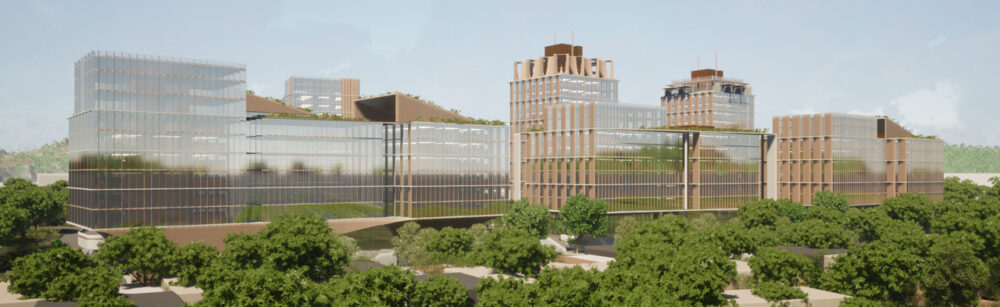
The Costa Rican government sought to consolidate several ministries on MOPT-owned land between Plaza Víquez and the Pacific Station, in a district of southern San José undergoing slow transformation. The scale of the program posed the central design problem: how to absorb that much built area without withdrawing from the city.
The proposal rejects both extremes — full perimeter block and isolated towers in a plaza — in favor of a hybrid. Lower buildings define Avenida 22, maintaining street continuity and pedestrian scale; taller, more punctual volumes address Avenida 20, where the electric train corridor, the farmers’ market, and the heritage buildings of the Liceo de Costa Rica frame a more open condition. Between the two bands, a linear park creates a third urban space — a passage and gathering ground connecting the two streets.
Three urban moves structure the public realm: a biological corridor linking the María Aguilar River to Parque de la Paz through underused infrastructure; the repositioning of the electric train stop east of Plaza Víquez to better distribute pedestrian flow and connect to the city center; and the recovery of the Pacific Station heritage buildings as a cultural and commercial hub, with INCOFER parking relocated to free the historic structure for people rather than vehicles.
Each building follows a consistent vertical logic in three sectors. The first two floors — shared canteens, auditoriums, meeting rooms, and street-facing commercial space — belong equally to the ministries and the public, animating the three urban frontages beyond office hours. The middle floors are purely operational: efficient, flexible, high-performance workspace. The top two floors shift in height, angle, and material, housing shared programs and inter-ministerial spaces, and entering into a formal dialogue with the ground level that gives each building its civic expression.
The buildings rotate off the urban grid to place glazed facades in optimal north-south orientation, resolving natural light on the difficult east and west exposures while creating rhythm and porosity along the street edges. Green roofs, solar panels, permeable surfaces, and laminated timber partitions reduce the thermal and environmental load of what would otherwise be a concrete island in the middle of the city.
Client
Proyectos Completos
Project Date
2017
Category
Institutional · Masterplanning · Mixed Use · Residential · Urban Design
The River-Park Community
RIVER-PARK COMMUNITY
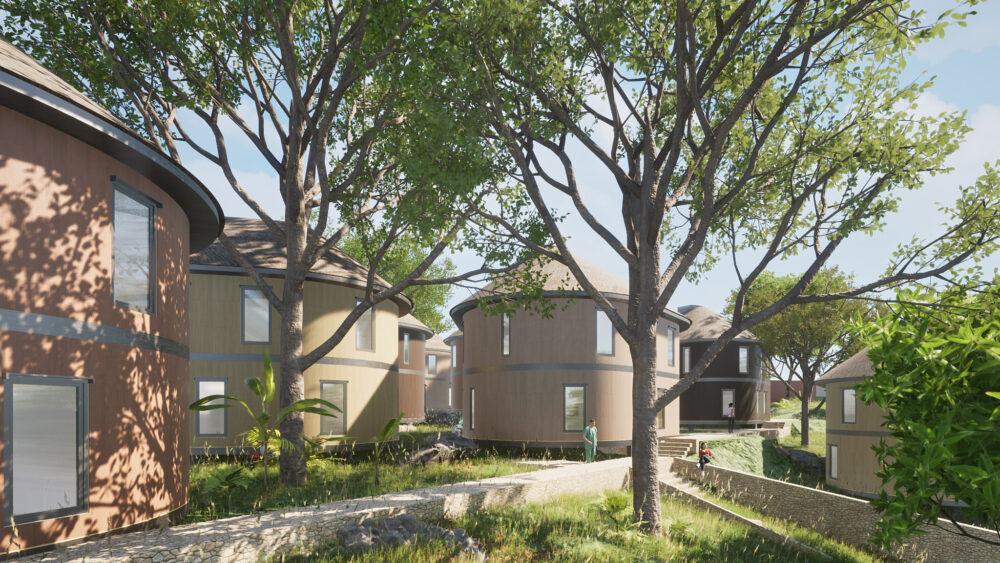
River-Park is a social housing and urban regeneration proposal for Cinco Esquinas, Tibás — a dense, low-income district of San José where green space is scarce and the Torres River bank has historically been occupied by informal settlements. The project works with two soil disposal sites, converting them into a community park and a prototype for affordable housing.
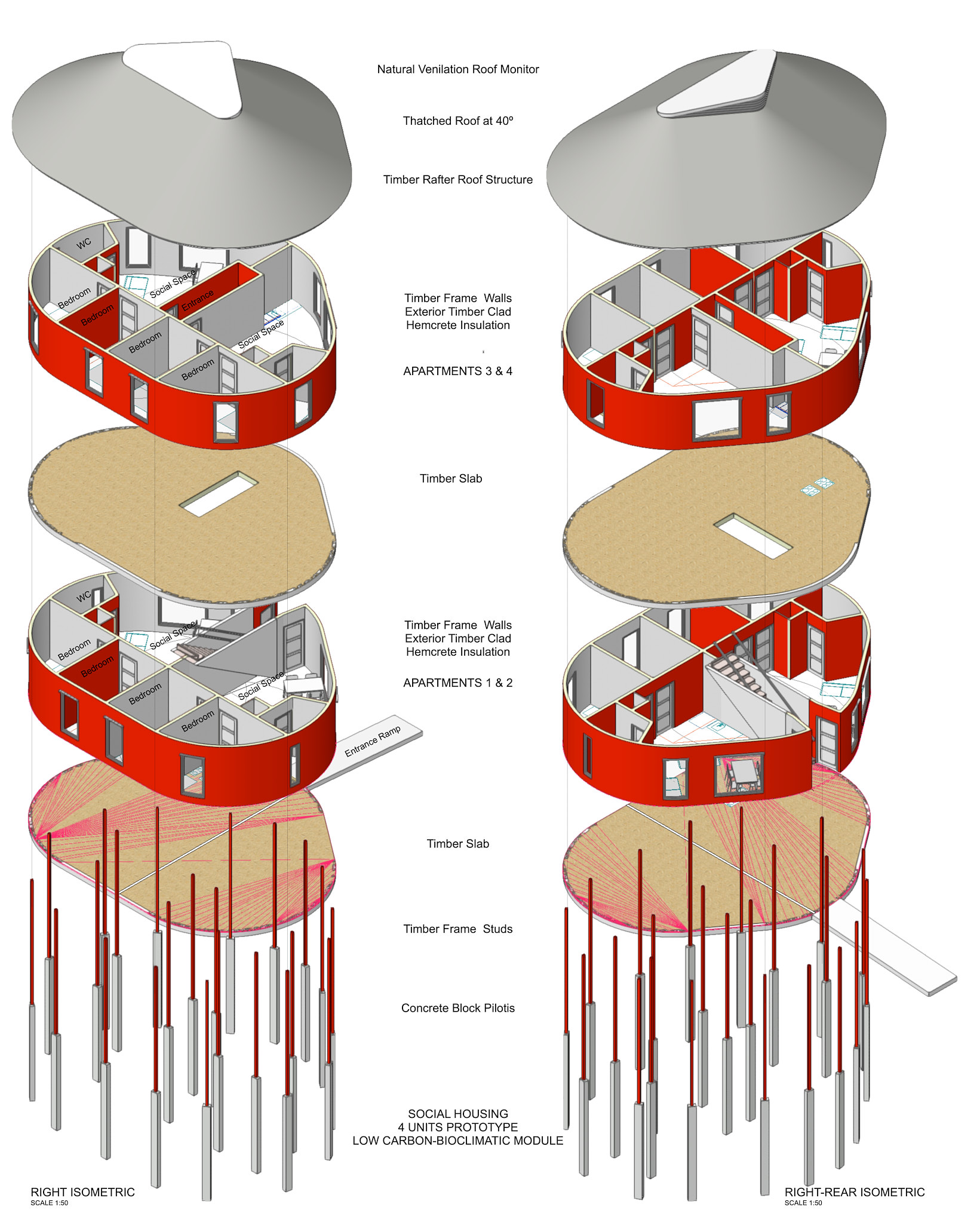
The housing units group four dwellings across two stories, a configuration chosen to keep structural systems simple and construction costs within the range of urban plot prices in the area. The building footprint is ovaloid, a geometry that maximizes green space between buildings and encourages interaction along the perimeter rather than isolating units behind walls. Lightweight construction in timber and palm — local, renewable materials — allows two-and-a-half-story buildings on plots that conventional concrete construction would make economically unviable.
The project preserves existing trees on the site and reintroduces native species along the river bank, treating landscape recovery as inseparable from the housing intervention. Bioclimatic strategies — natural ventilation, thermal insulation through straw and hempcrete, minimal mechanical systems — reduce operating costs for residents who cannot absorb high utility expenses.
The proposal is explicitly designed as an alternative to the gated condominium typology that dominates affordable housing delivery in Costa Rica, prioritizing street-facing, community-oriented space over security perimeters. Connecting the river edge to the surrounding neighborhood — rather than treating it as a boundary — is the project’s central urban argument.
Client
Proyectos Completos
Project Date
2017
Category
Interior · Masterplanning · Mixed Use · Residential · Urban Design
Selva Oculta Agrotourism
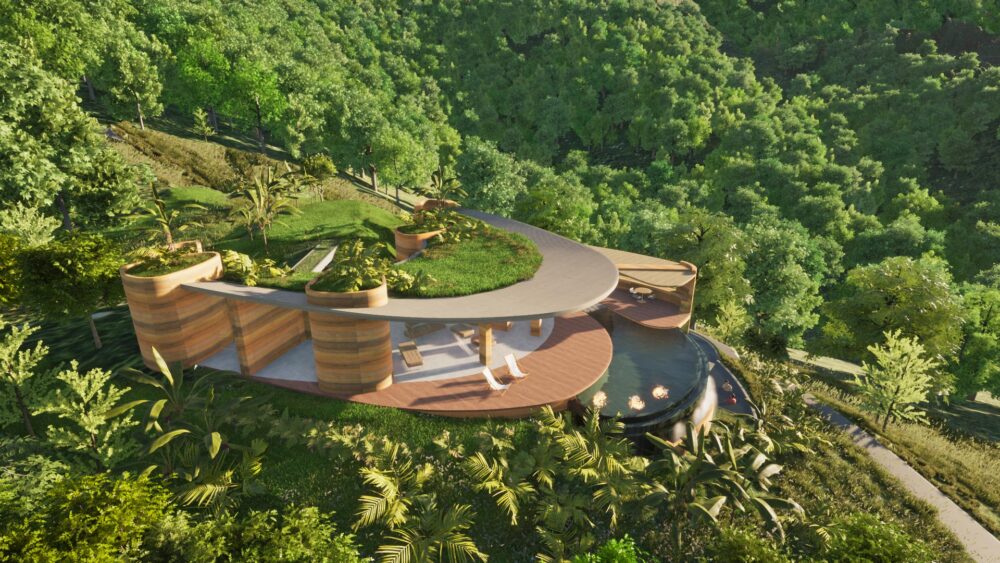
Pumas Malas House & Selva Oculta Agricultural Development Center
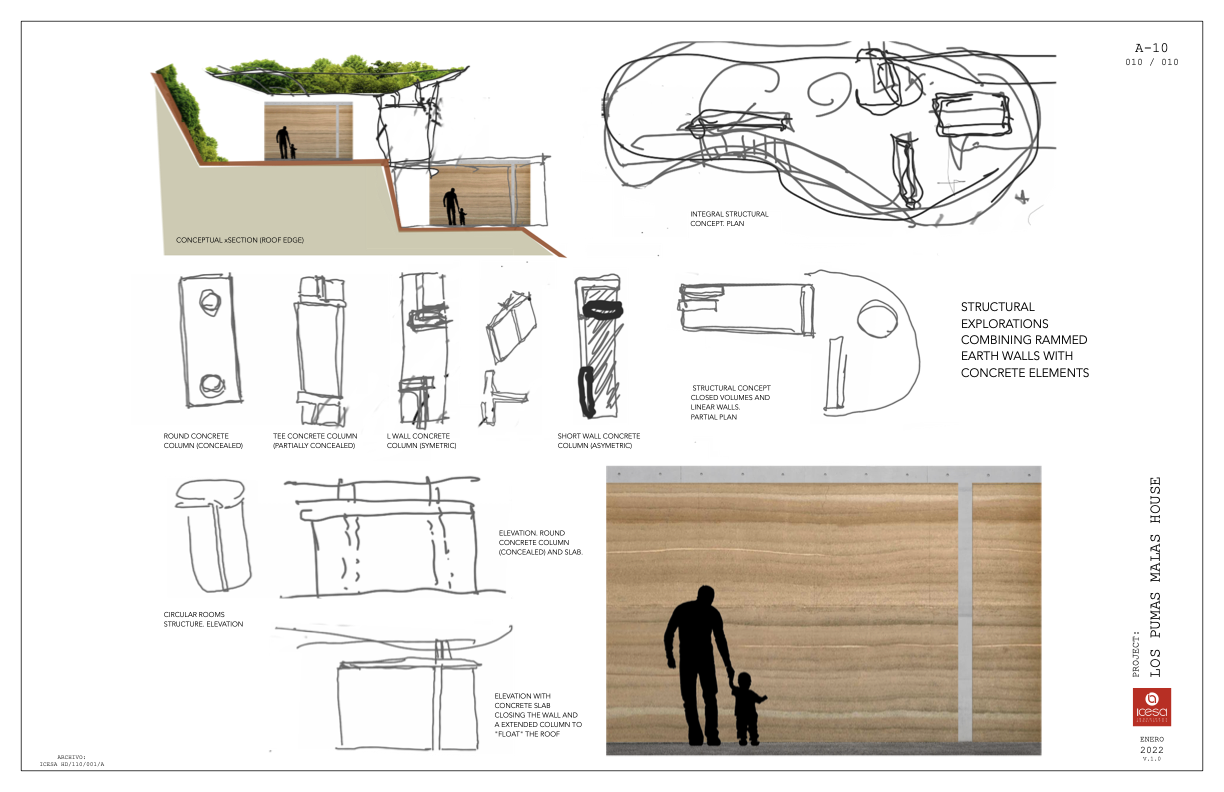
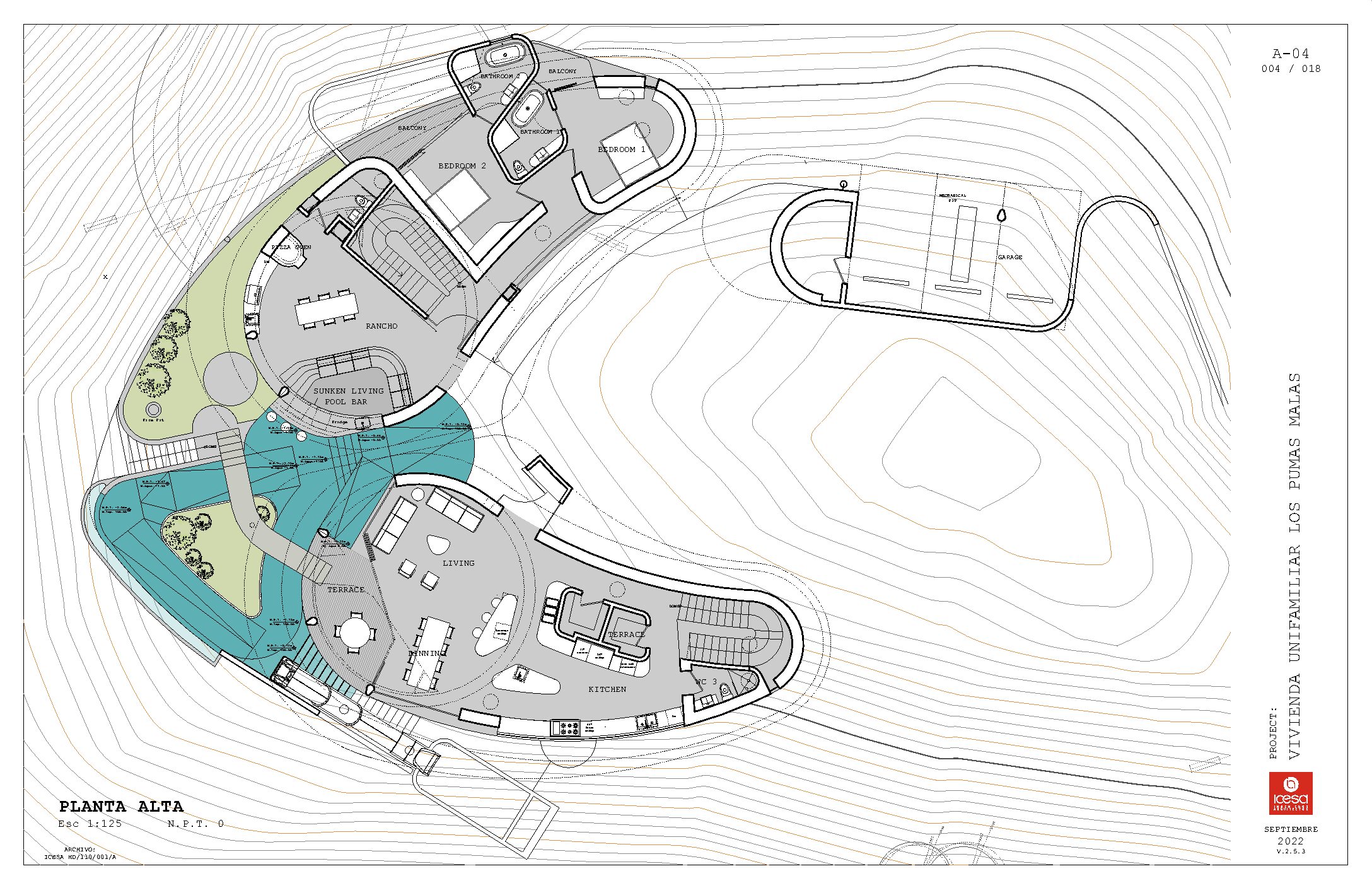
Intended as a research center for alternative agricultural and building technologies, this house is the first building to be develop on-site. It includes the research of Rammed Earth used as a sustainable material for walls, high tech concretes that resist the corrosion in the tropics, and off the grid services.
A fish culture and agriculture is part of the landscape and experience of the house. Regenerative strategies will be part of the architecture, management and design of the center that will take advantage of the full cycle of most byproducts.
1st. Prize – Design Competition. In Development
Bahía Ballena, Uvita, Puntarenas, Costa Rica.
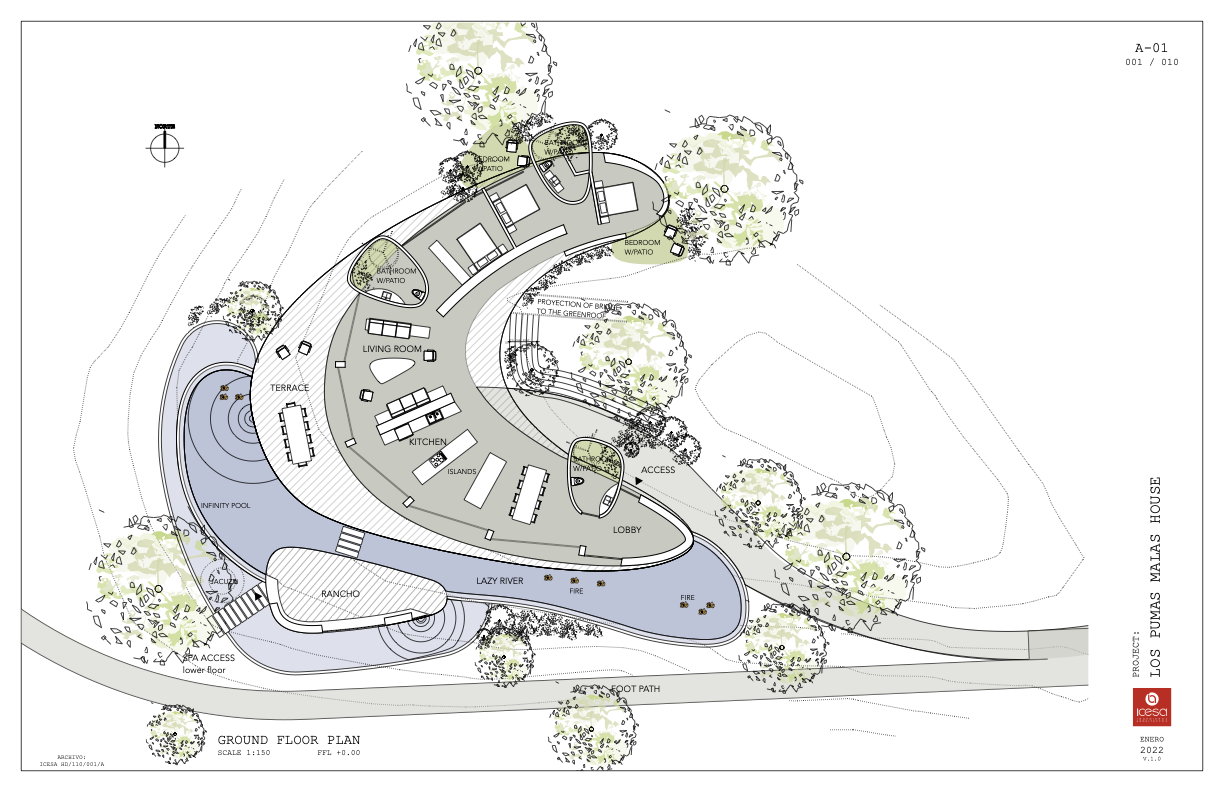
The design incorporates the sustainable and regenerative strategies promoted by the client within an organic and tropical architecture. Green Roof, lazy river, infinity pool rammed earth walls, forest and ocean views
Client
Selva Oculta de Sueños
Project Date
2022
Category
Featured · Hospitality · Interior · Masterplanning · Residential
Centro de Visitantes – Isla San Lucas
Centro de Visitantes- Isla San Lucas
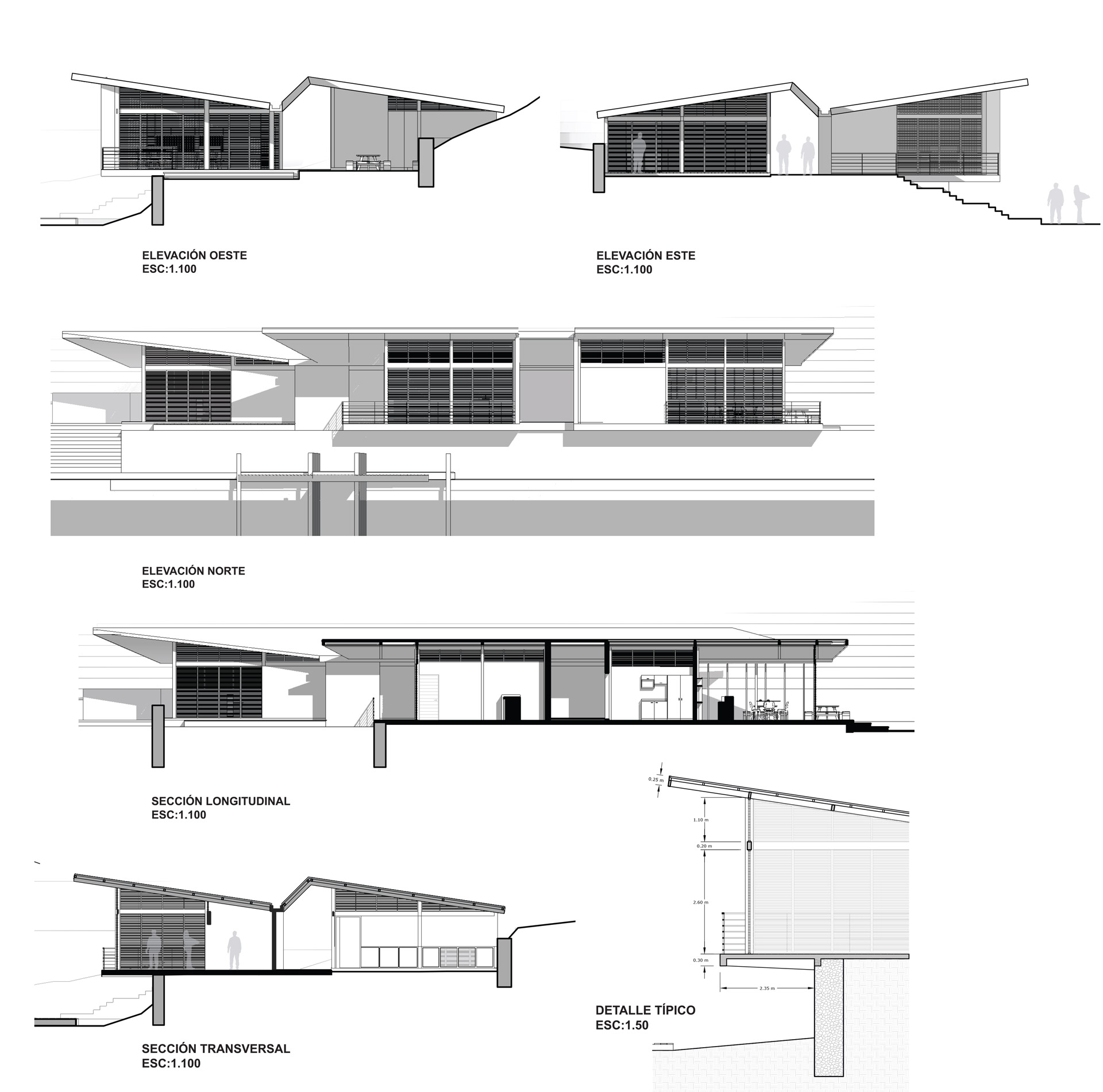
San Lucas Island carries more than landscape — it holds national history, myth, and the memory of human suffering. The visitor center is a small-scale intervention, calibrated to the municipality’s low-impact tourism framework, that serves as the arrival and departure point for the island’s visitors.
The program organizes along a single clear axis, giving visitors immediate orientation and ensuring universal accessibility. The volumes shift slightly off one another along this axis — enough to open views to the sea between them, draw natural light and ventilation into each space, and create a sequence of alternating openings on both sides of the path. Rainwater collected from the roofs accompanies the route. The rooflines unify the composition, tilting toward the ocean and amplifying the presence of the main facades.
Every space has movable facades inside and out, allowing each room to respond independently to bioclimatic conditions, connect to adjacent spaces, or modulate its light quality. The structure is a simple lightweight frame system sitting on gabion walls built from local stone — eliminating concrete from the base entirely and making the foundation a continuation of the immediate natural and constructed landscape.
Western light enters filtered through wooden screens, a device from Costa Rican vernacular architecture reread here in a contemporary tropical language. Wood contrasts with stone and finished painted surfaces, and contributes to the project’s commitment to renewable materials with low carbon footprint.
Small plazas at the beginning and end of the sequence extend the program outward, strengthening the civic character of the center and anchoring the key moments of arrival, the shop, and the café. The café closes the route at the far end, where the view opens differently than at entry — a small discovery that rewards the full walk. The center can be accessed from the northwest as the primary entrance, or from the northeast as part of an exit route connecting back to the existing infirmary building.
Client
Proyectos Completos
Project Date
2017
Category
Tigresa Hangar
Tigresa Hangar Development
At the heart of Bahía Ballena, Puntarenas, Costa Rica, our Tigresa Hangar project nestles into the scenic landscape. Two beach houses and a hangar constitute this project, each with an architecture style uniquely celebrating the surrounding environment.
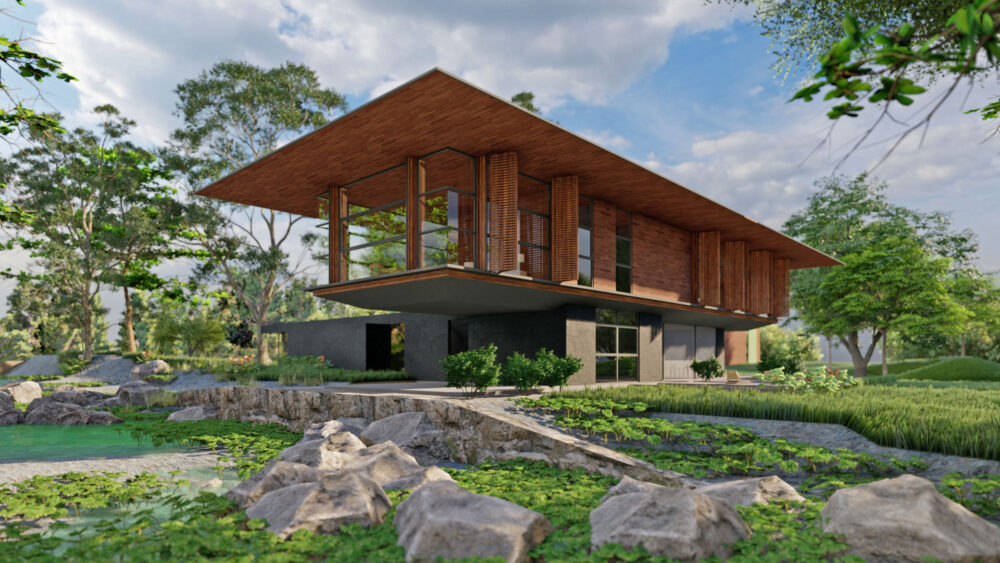
The primary residence, featuring a timber structure with operable skin, draws eyes to its cantilevered second floor. This floor extends from a service volume built of stone, providing panoramic views and creating a feeling of openness.
Prominent in the design is an expansive overhang, a shield against the harsh sun and seasonal rain. This architectural element not only bolsters comfort but also integrates with the overall aesthetic seamlessly.
To ensure durability and enhance visual appeal, we chose materials such as stone and polished concrete. A commitment to respect and enhance the natural surroundings led us to preserve all existing trees on the site, and plans to add new ones are in place. This decision aims to regenerate the landscape, thus striking a balance between the built form and nature.
Client
KCC LLC
Project Date
2021
Category
Hospitality · Interior · Masterplanning · Mixed Use · Residential
DENT
DENT
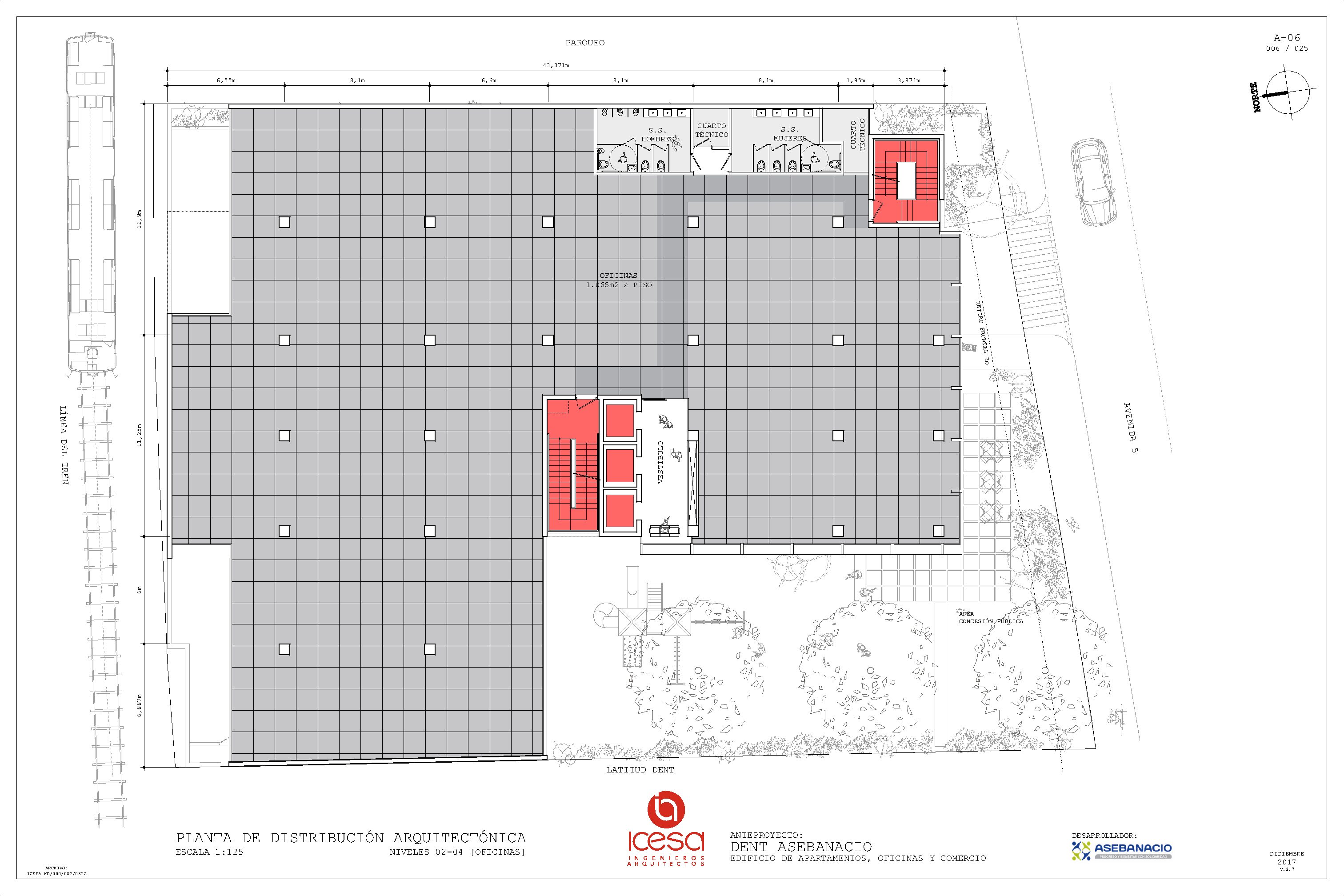
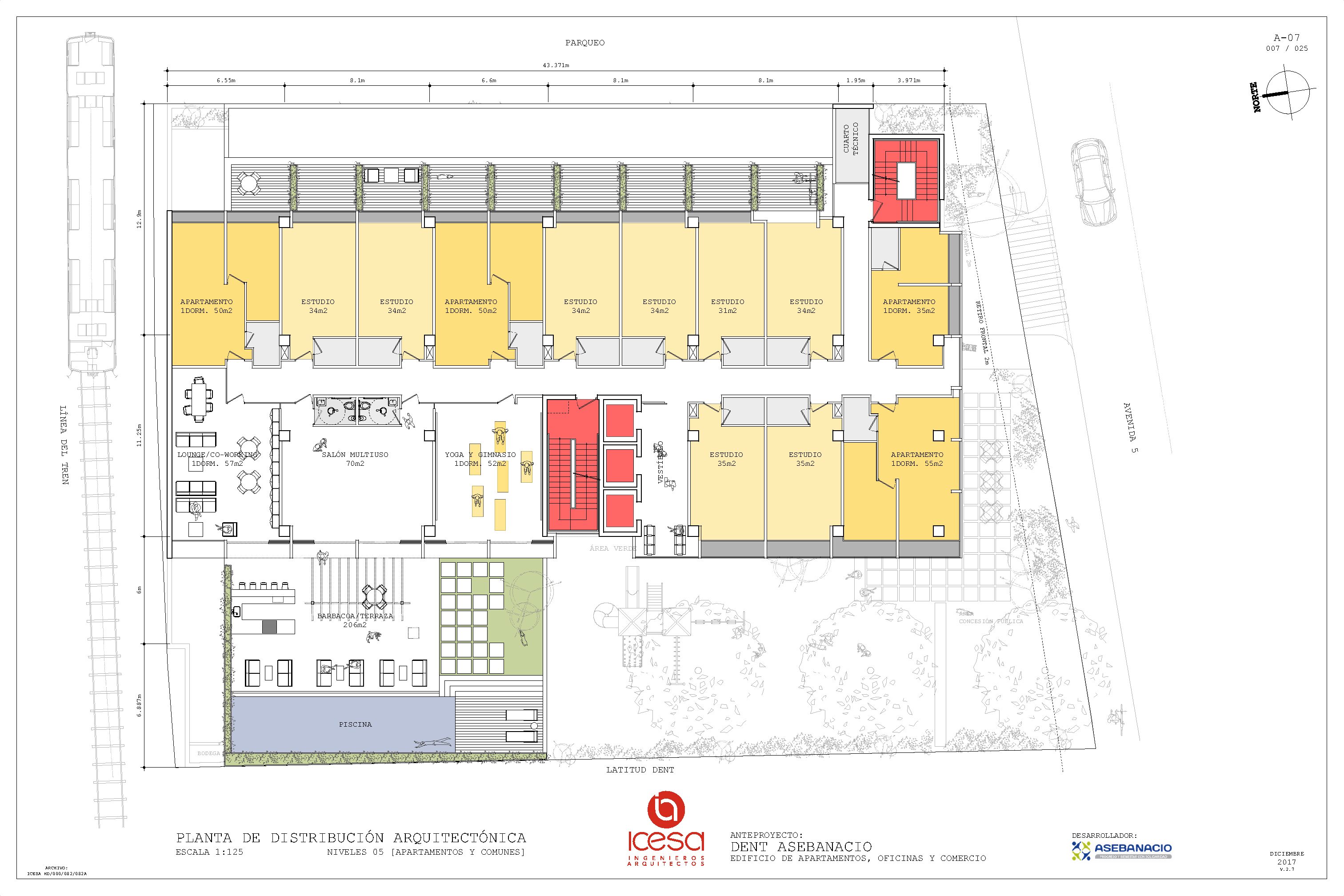
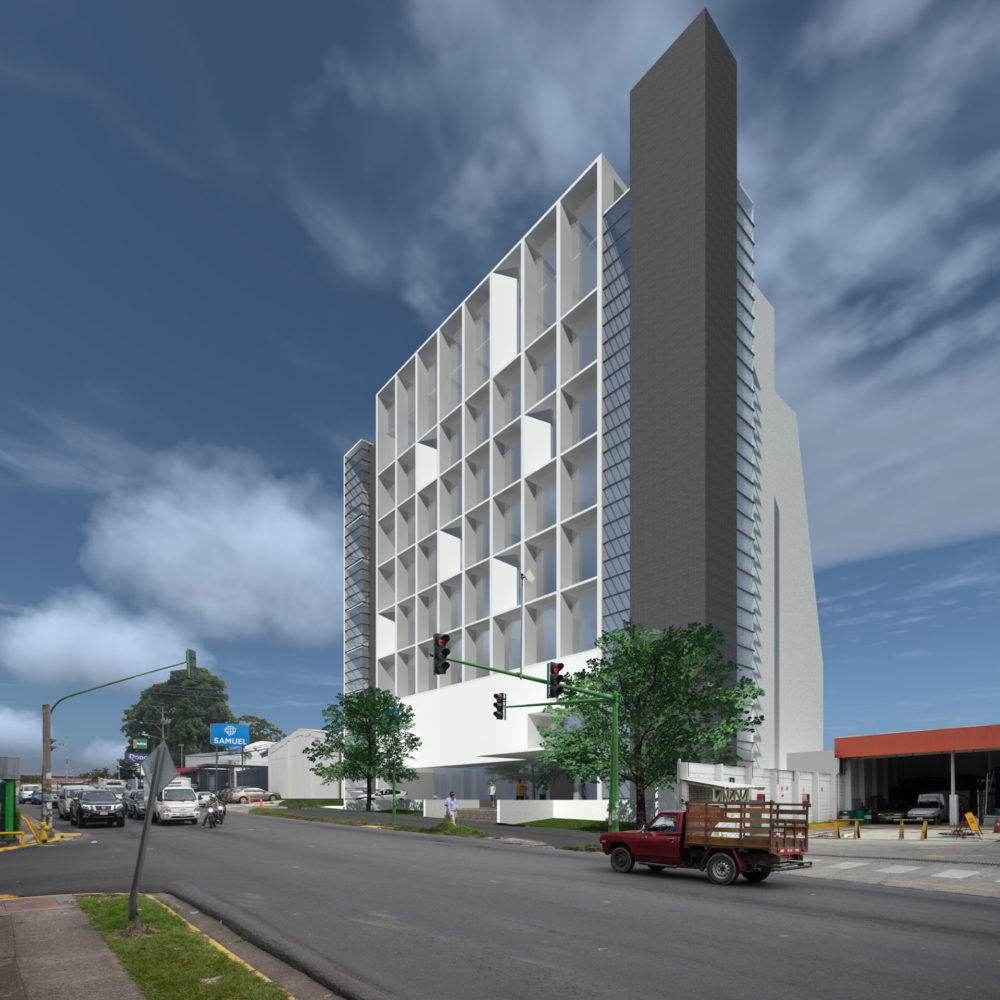
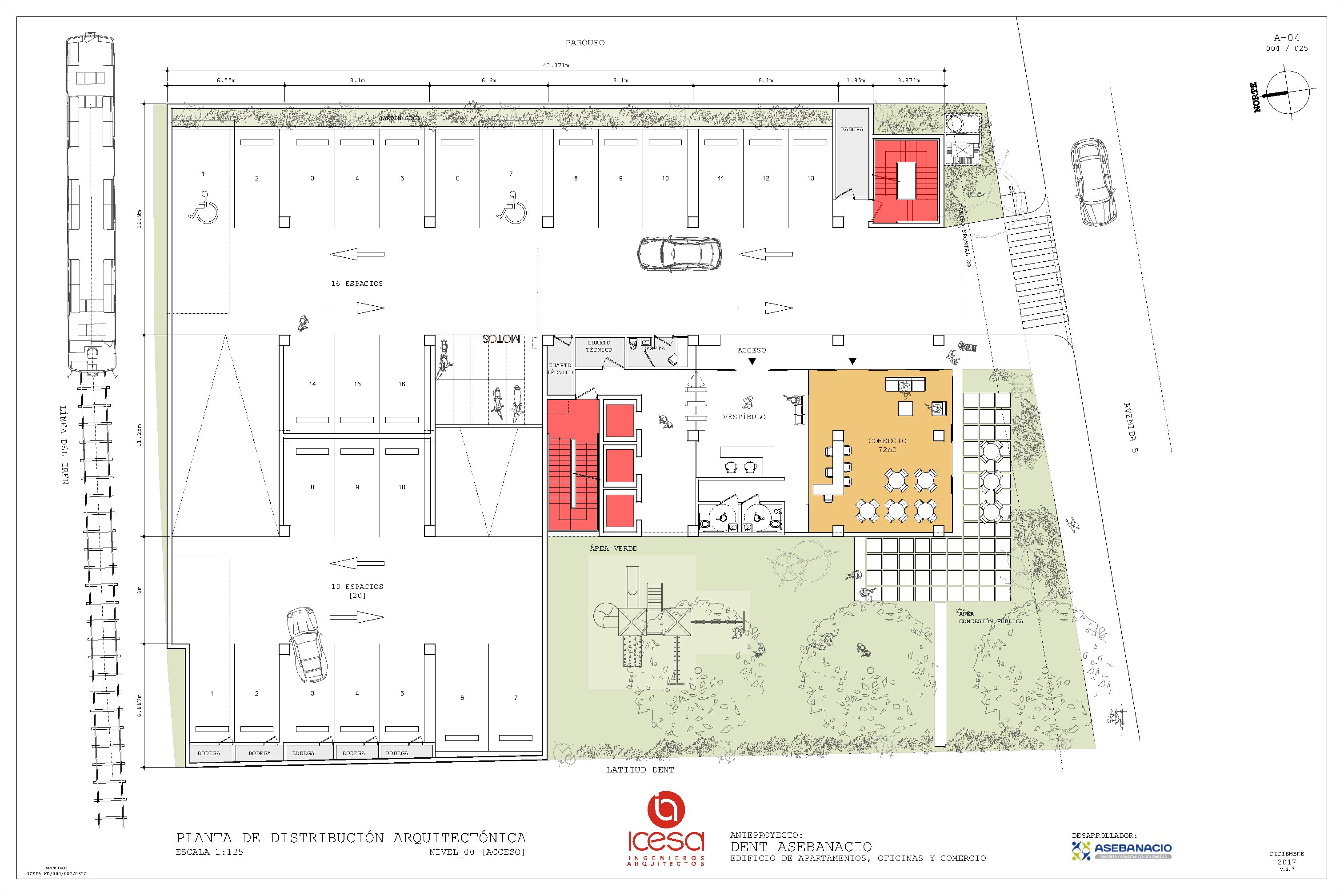
In the heart of DENT, San Pedro, Costa Rica, stands a fresh marvel. An 11-story, mixed-use building captures urban design’s essence. Four apartment floors, three office levels, a commerce floor, and three underground parking tiers fill the space.
The edifice stands between Mall San Pedro and Sigma Business Centre. A deep grid facade cloaks the building, guarding the glass beneath. This design feature offers shade, blending function with style.
Giving back to the street, the building creates a public park. Here, children’s laughter fills a dedicated play area. The office levels house more than desks and screens. A pool, gym, and terraces offer relaxation and rejuvenation, nestled under the apartment floors above.
At the top, the structure surprises again. A rooftop jogging track circles the apartment floors, fringed by terraces. Views from this height are a sight to behold.
DENT is more than a building. It’s a vertical city, an urban celebration, and a communal joy. Its architecture embodies unity within a bustling neighborhood. The project stands as a symbol, weaving functional design into the urban fabric.
Client
Asebanacio
Project Date
2019
Category
Institutional · Interior · Masterplanning · Mixed Use · Residential
Apartamentos Vasquez-Evans
Apartamentos Vásquez_Evans
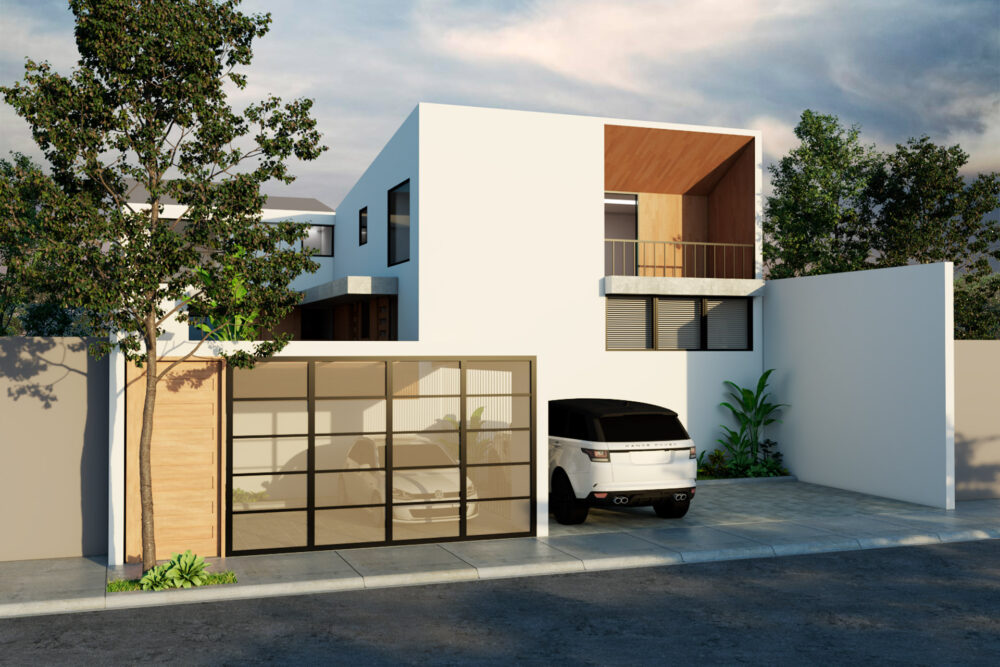
Nestled in the charming region of La Unión de Cartago, this project presents an efficient and contemporary approach to apartment living. The property consists of three apartments, each designed with a blend of modern sensibilities and comfort.
The central apartment serves as a retirement haven for the owner. Its design features an airy central courtyard and a cozy back patio, creating a perfect blend of indoor and outdoor living. The one-bedroom layout is thoughtfully designed to offer a peaceful and intimate space.
Flanking the owner’s residence are two additional one-bedroom apartments. These spaces echo the contemporary design found in the central apartment. Their large open social areas create a fluid and welcoming environment, ideal for entertaining or relaxing. Upstairs, the bedroom offers a private retreat, complete with modern amenities.
What sets this project apart is its facade. A clean, two-story structure with a bold boxy shape is adorned with a significant perforation clad in wood and glass. This architectural feature not only adds visual interest but also allows natural light to flow into the apartments, enhancing their appeal.
The design’s efficiency extends beyond aesthetics. By creating three individual spaces within a compact footprint, the project succeeds in reducing each family’s footprint without compromising on quality or resorting to a multi-story housing approach. The blend of shared and private spaces ensures that each apartment maintains its unique character, while the consistent use of materials like white stucco and wood brings cohesion to the project.
Whether it’s the owner’s thoughtful retirement space or the additional modern apartments, this project in La Unión de Cartago exemplifies a thoughtful approach to design that prioritizes efficiency, comfort, and style. It represents a unique opportunity for those seeking a modern living experience that’s grounded in community and sustainability.
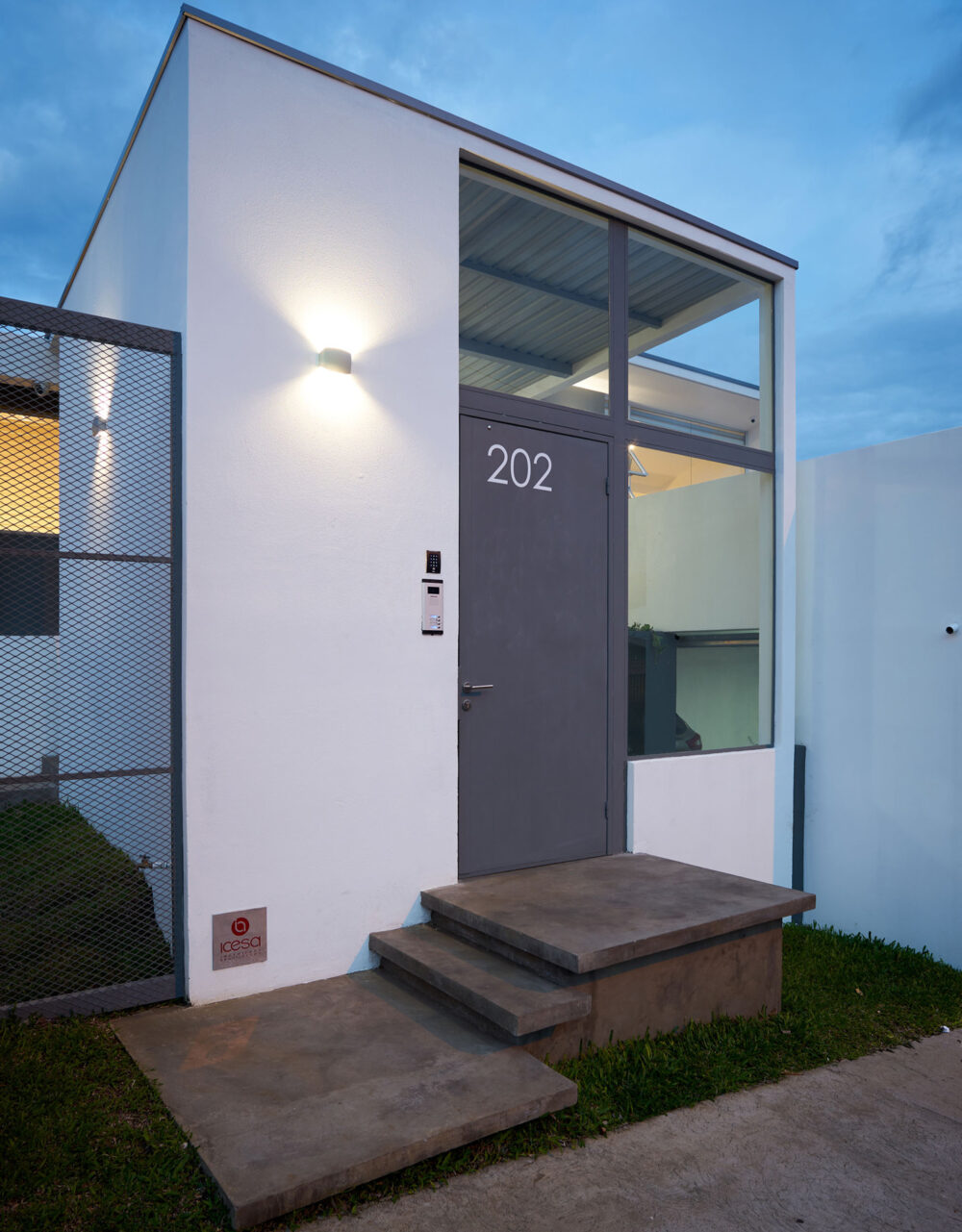
Explore ICESA other low density urban apartment solutions like 202
Palacio Municipal de Alajuela
Gallery Notice : Images have either not been selected or couldn't be found
Client
Palacio Municipal de Alajuela
Project Date
2021
Category
Frowein House
Frowein House
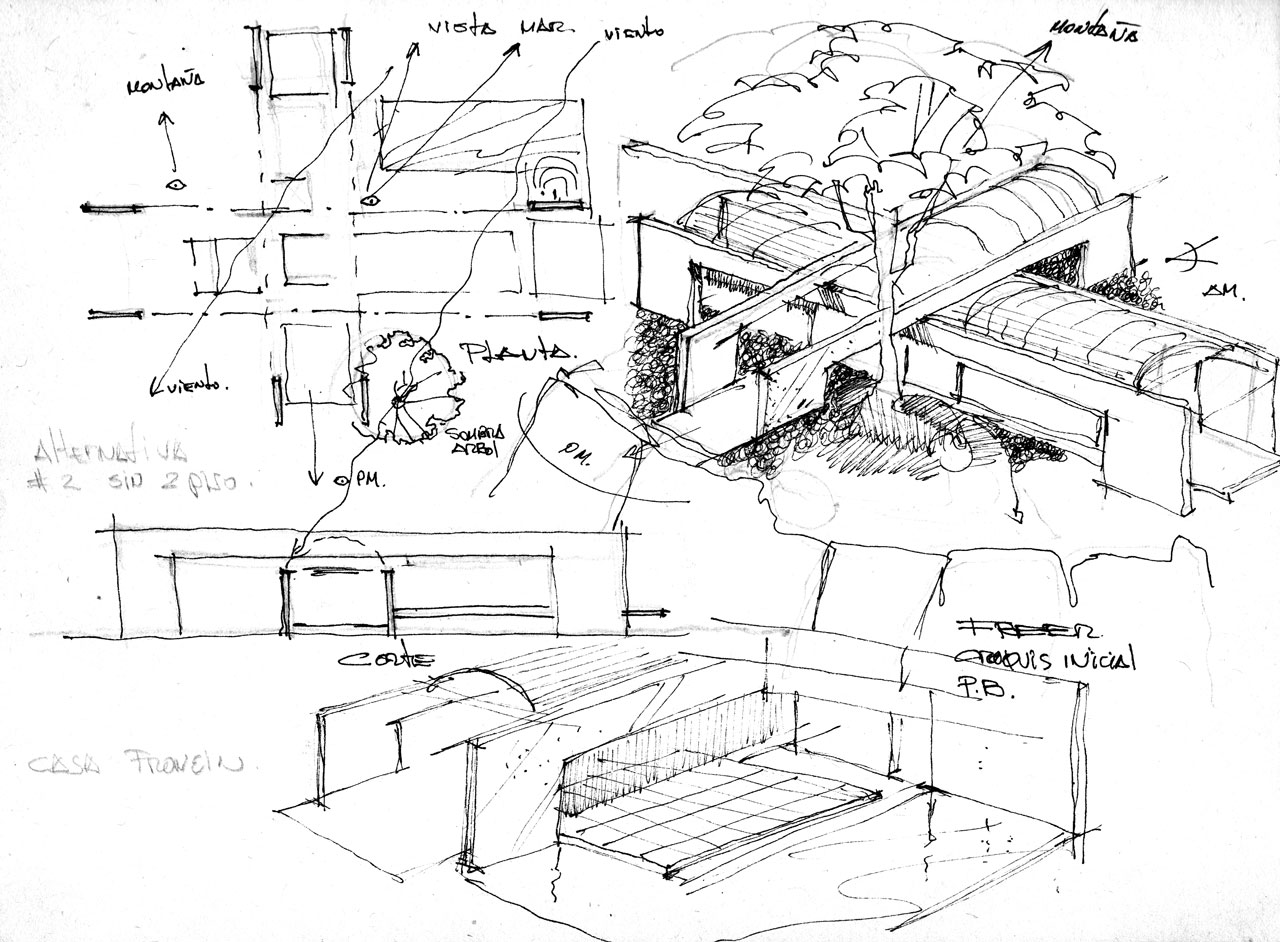
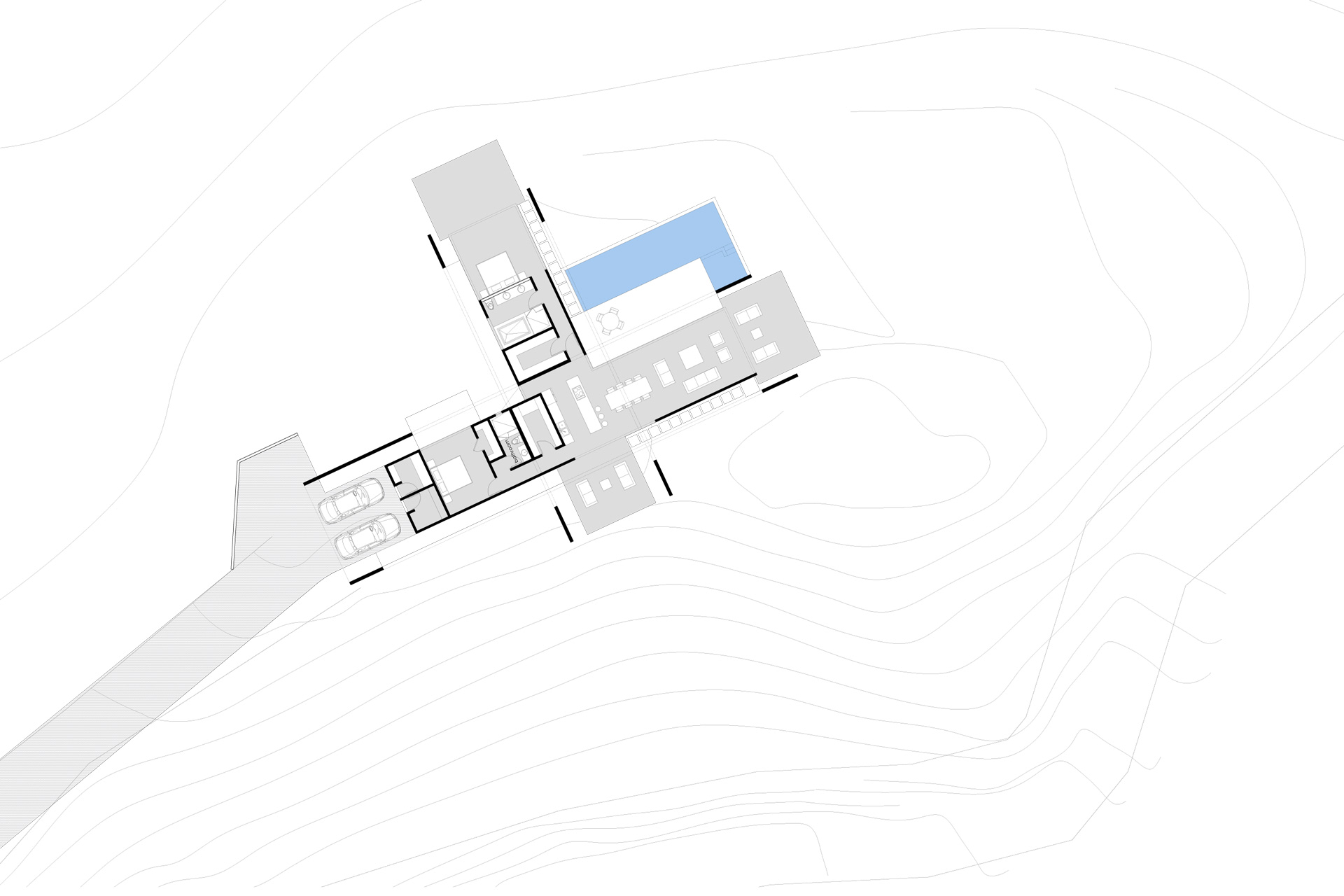
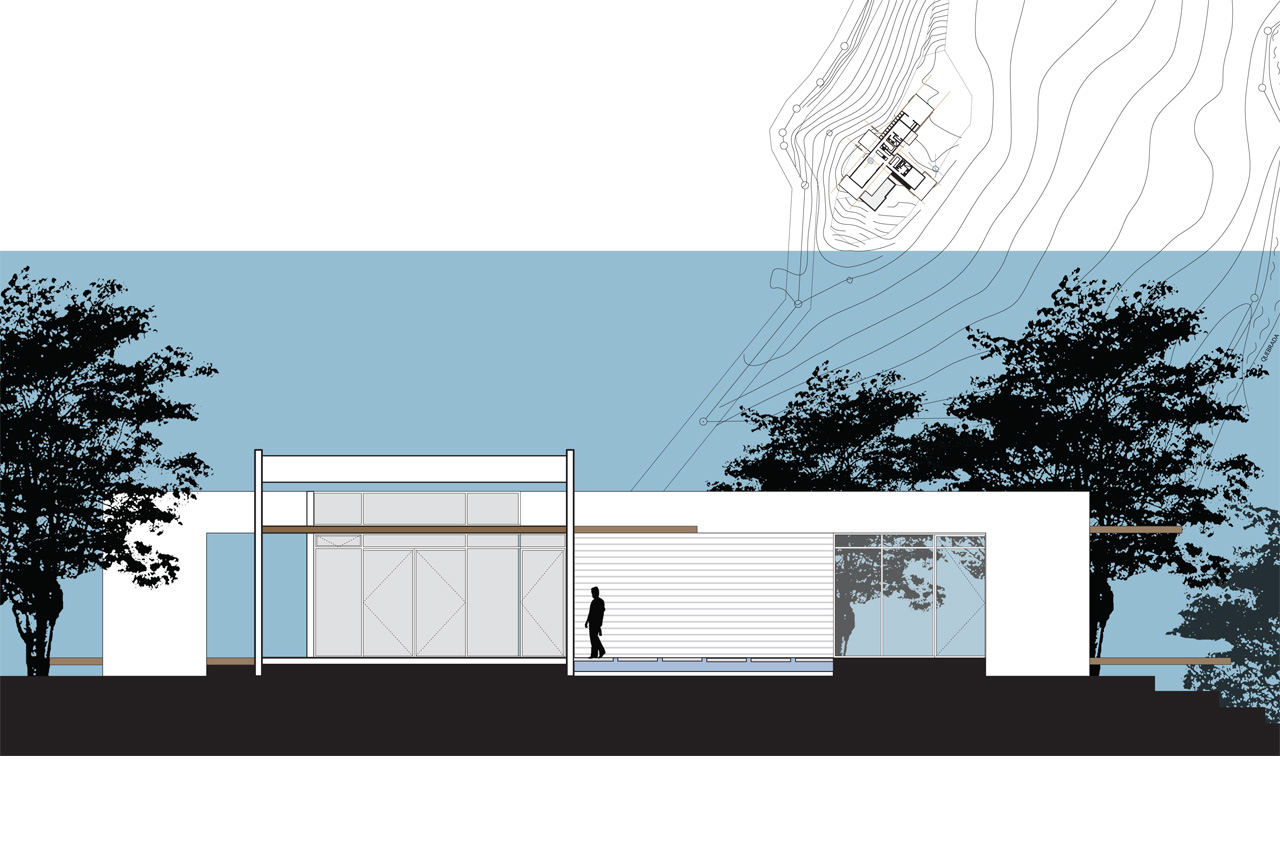
Butterfly House sits on a hilltop in the mountains of Bahía Ballena, canton of Osa, surrounded by panoramic views in every direction. The site had already been partially intervened, creating a dominant plateau where a single significant tree had been preserved near the building area. From this landscape four primary experiences were identified — ocean view, forest, the site tree, and the western light at dusk — and these four became the organizing logic of the house.
The plan is a cross. Each arm of the cross reaches toward one of the four landscape experiences, terminating in a framed view that defines its character. Each arm is built from two parallel white walls along its long sides — independent of one another, perforated to create landscape frames — with a continuous transparent inner skin and a solid outer skin that supports and encloses. Between these two skins, an intermediate space buffers the intense sun and rain of the ventanera season, mediating between the interior climate and the exterior conditions.
The two naves share an almost identical formal language, which allows them to intersect without collision — one rises slightly higher than the other at the crossing point. At the crucero sits the kitchen, the place where the house’s inhabitants most naturally converge.
Small as it is, the house produces a spatially complex experience. Walking its perimeter, the relationship between the two naves shifts constantly — from total transparency through both wings simultaneously, revealing multiple programmatic depths at once, to sudden enclosure where the solid outer frames focus a single, precise moment in the landscape. The single-level disposition extends the linear sequence of spaces along the full length of the building, ensuring every room opens to at least two exterior facades — an arrangement that serves both natural cross-ventilation and varied daylighting throughout the day. The horizontal scale allows the house to relate to its natural context while its white lines and straight geometry provide counterpoint and reference within the landscape.
Photographer in Photos 1-4 Louis Lemaire Insidehomepage
Other Photos courtesy of Murillo+Sanabria
Location: Uvita, Puntarenas, Costa Rica
Area: 350m2
Status: Built
Client
Sirena Tropical S.A.
Project Date
2008
Category
SJO Airport Hotel
SJO Airport Hotel
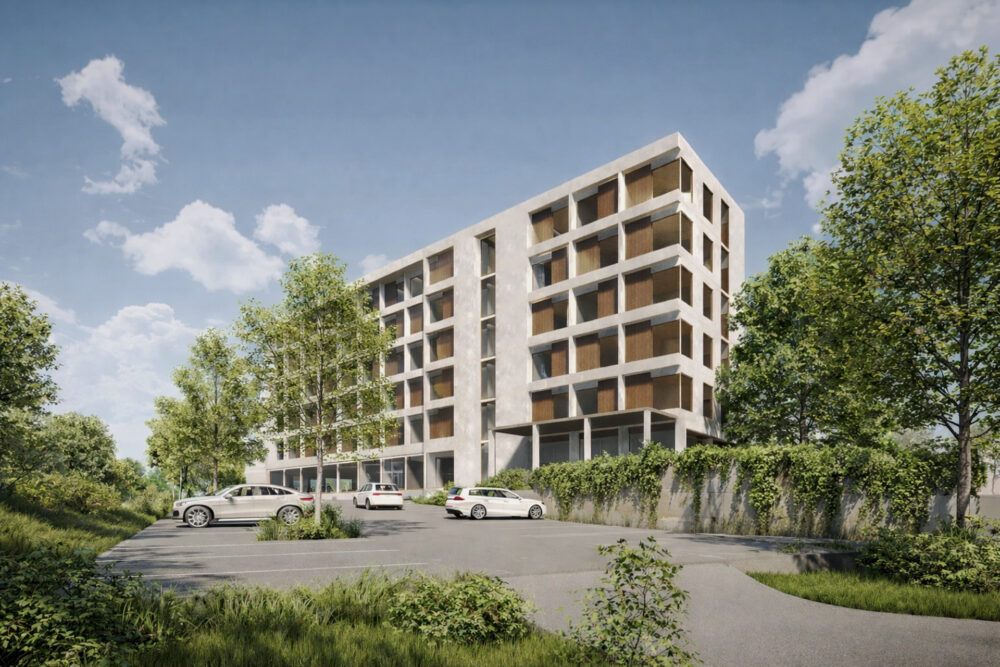
SJO Airport Hotel, situated in front of Juan Santamaría International Airport, is an embodiment of urban revitalization and environmental awareness in Costa Rica.
Located on a site that formerly hosted a gas station, the project commenced with an essential decontamination process. This transformation from a polluted space into the location for a 110-room select services hotel highlights an innovative approach to remediation and land use.
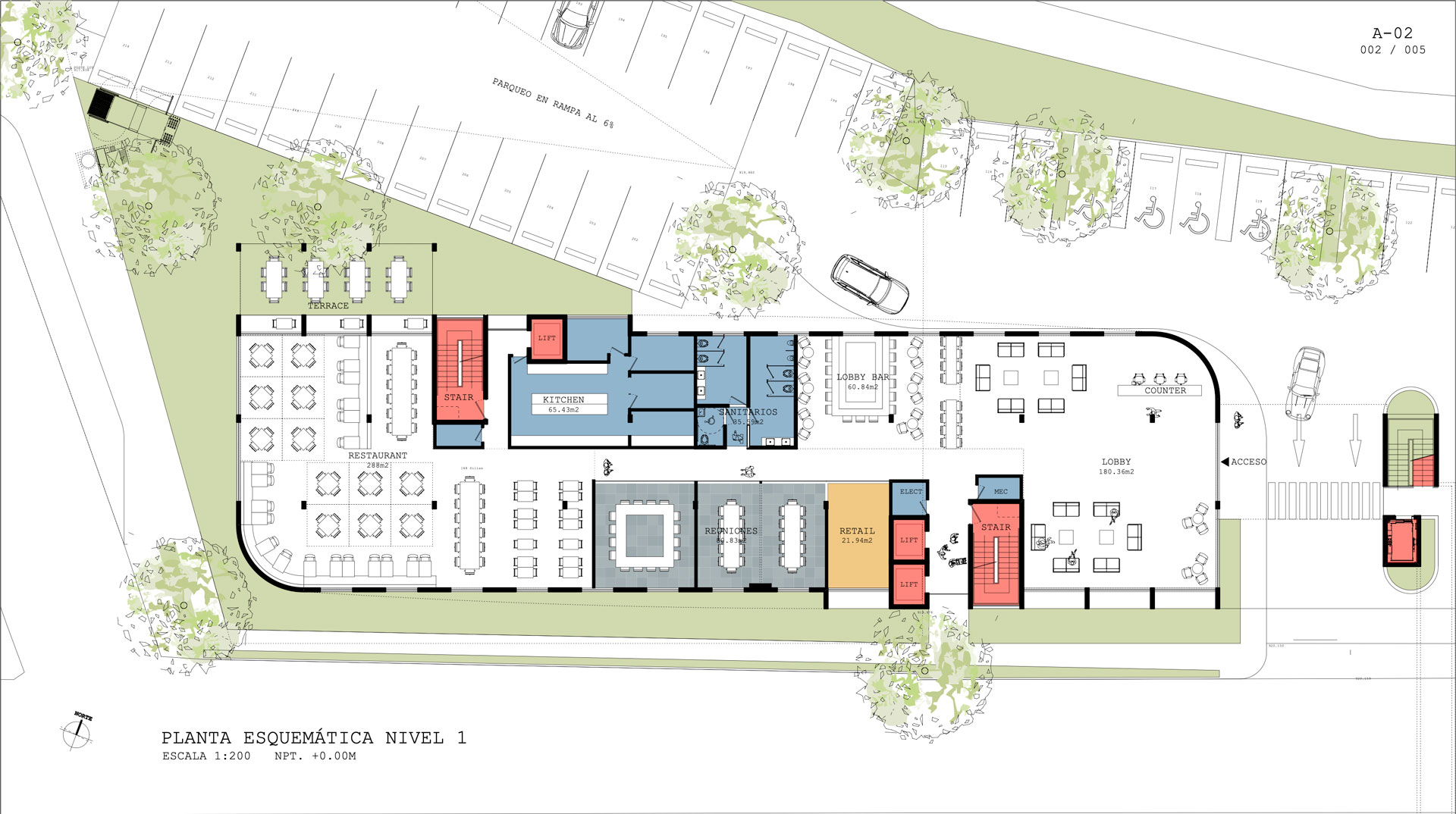
The ground floor, adjacent to the General Cañas Highway, offers a welcoming space with a restaurant, bar, lounges, and store. The design ensures a seamless transition from travel to relaxation.
Moreover, the project includes trees and green areas, replacing what was previously an all-asphalt parking lot. This addition of greenery contributes to the visual appeal and underscores a commitment to sustainability.
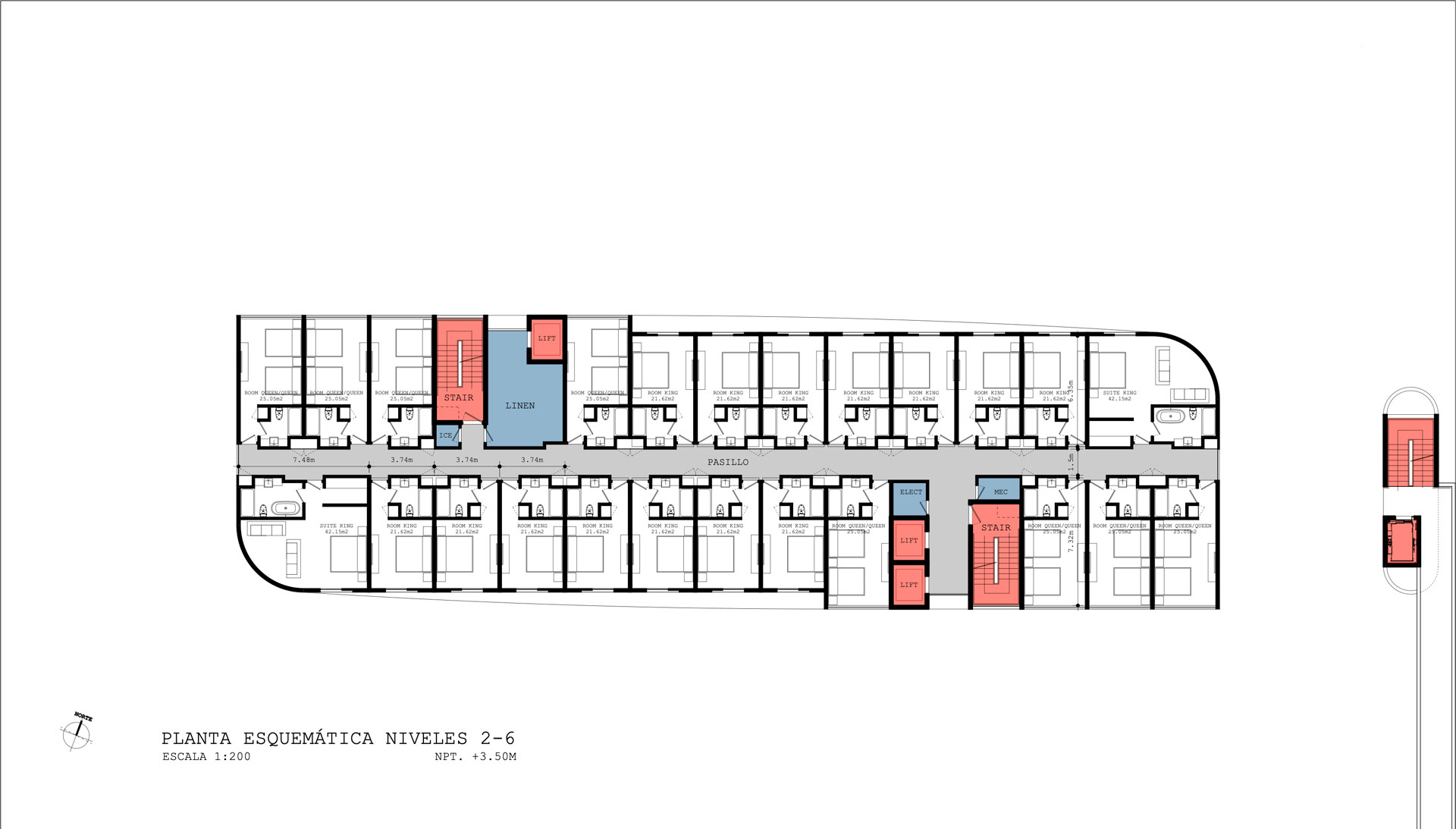
The underground level accommodates a gym, administration, and BOH services. Levels 2 to 6 house bedrooms that provide vistas of the Alajuela Mountains, artfully designed to offer comfort and elegance.
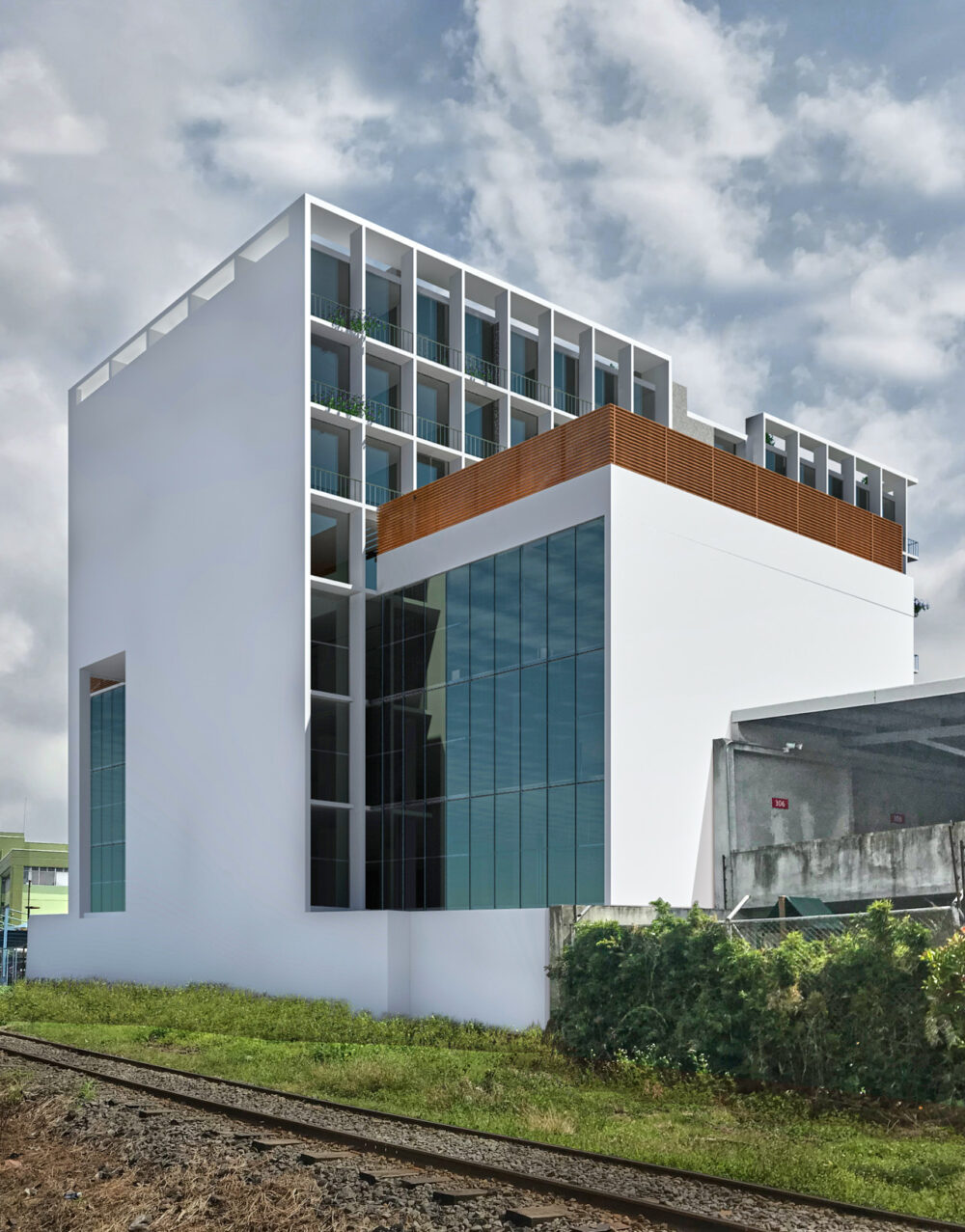
The facade consists of a beige stucco grid, accented with seated-back checkered wood and glass panels, and rounded corners, symbolizing a harmony of efficiency and grace.
SJO Airport Hotel represents an efficient design that blends proportion and quality with an environmental ethos. Through the integration of decontamination efforts and green spaces, the project exemplifies modern architectural principles.
This carefully planned undertaking, with its appealing views and unique features, marks a thoughtful approach to hotel architecture. By merging aesthetic considerations with functional needs, it reflects a dedication to sustainability and urban transformation. The Hospitality Consultant is Grupo Consutur
Musdan Estate
Musdan Estate
Musdam Estate is a low-density rural compound composed of two private houses, a woodworking workshop, forest paths, and equestrian health facilities (healinghorsescr), including a stable and round pen. The project is nestled at the edge of the protected Zurquí area, with long-distance views toward the Turrialba Volcano, the surrounding preserved forest, and the Greater Metropolitan Area (GAM). Conceived as more than a residential development, the estate integrates domestic, productive, and equestrian programs into a single, coherent landscape system.
A central objective of the project is environmental restoration. The developer is implementing an active reforestation strategy focused on increasing the diversity of native tree species, strengthening ecological resilience, and reinforcing the transition between built areas and the protected forest. Infrastructure decisions support this approach: all water is harvested from rain and treated for human consumption, while photovoltaic systems supply approximately 50% of the estate’s energy demand.
Materiality plays a defining role in anchoring the architecture to its context. Stone and wood are used extensively, both structurally and atmospherically. In the interiors, these materials provide warmth and tactile richness within a contemporary spatial language. Externally, they allow the buildings to blend into the wooded landscape, reinforcing a sense of permanence and continuity with the site.
The main social spaces are organized around dual orientations. One side opens to expansive, distant views across the valley, while the opposite side engages a more intimate garden condition. This deliberate contrast balances openness and enclosure, connecting daily life simultaneously to the broader territory and to a protected, personal outdoor realm.
Pumas Two Houses
Pumas Mala Two Houses
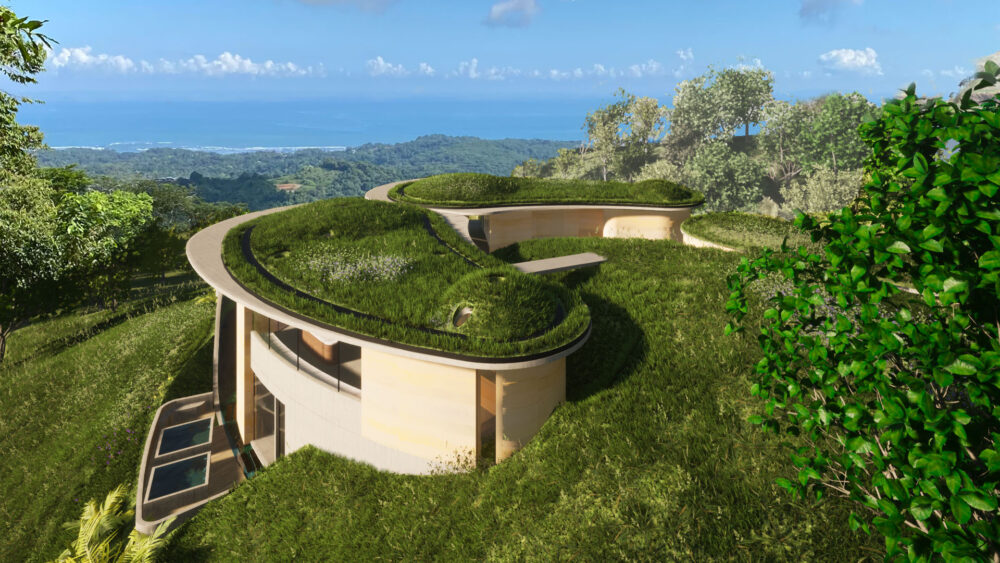
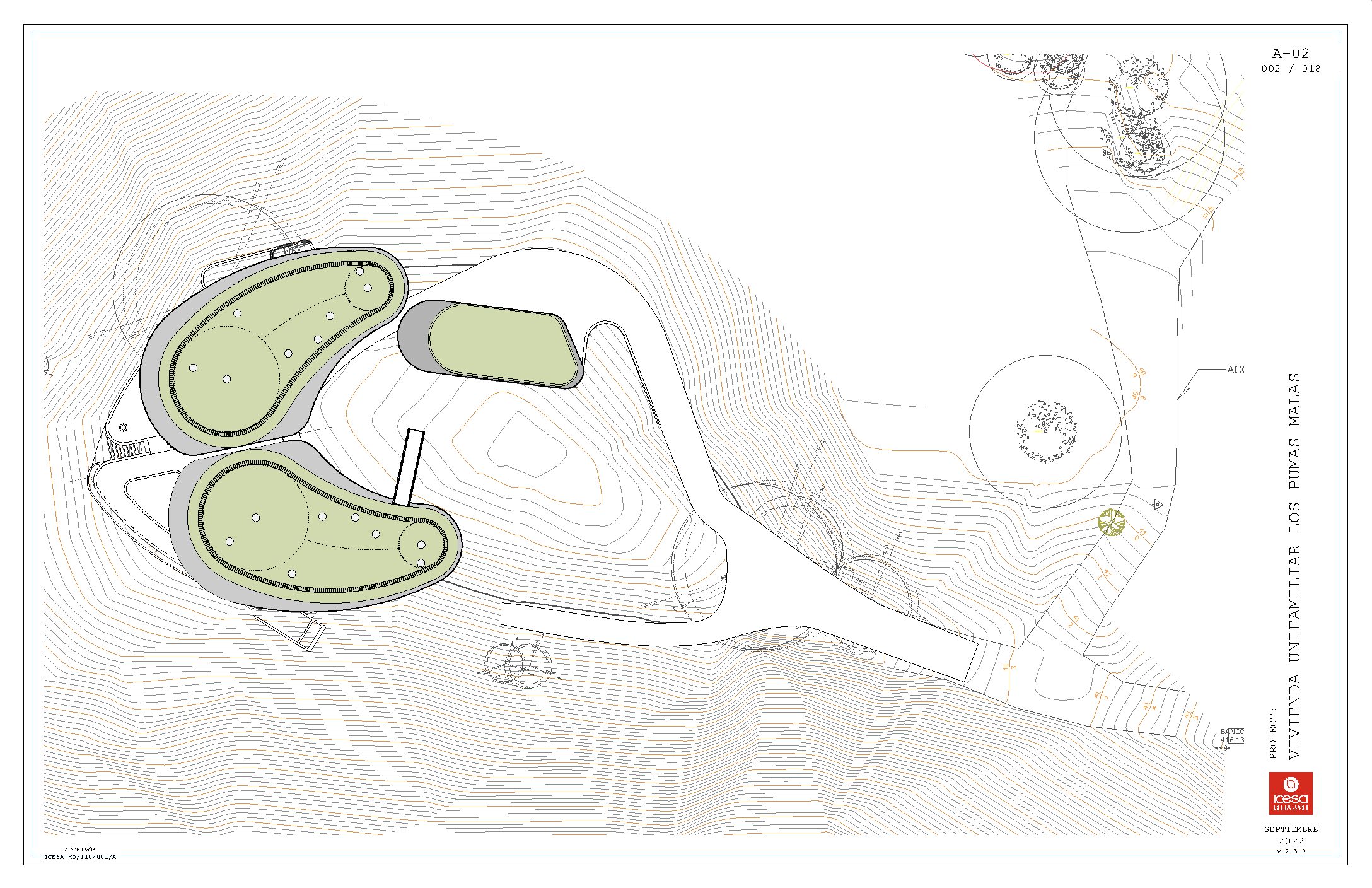
The Pumas Malas Two Houses project presents two distinctive spatial experiences nestled within the tropical haven of Bahía Ballena, Uvita, Puntarenas, Costa Rica. The first experience unfolds in the interstitial space, a vibrant outdoor area boasting a wealth of amenities, where inhabitants can soak up the refreshing ambience. The second unfolds under the protective cover of a domed green roof, offering serene views towards the majestic Bahía Ballena Beach.
Sustainability is ingrained in the project’s DNA, manifesting through the utilization of Rammed Earth walls. This technique, while a technical challenge in Costa Rica, bestows a unique aesthetic quality and color to the structure, significantly augmenting its sustainability profile.
The design ethos aligns with the client’s vision of sustainable and regenerative strategies, organically woven into tropical architecture. The project’s key features include a green roof, which aids in energy efficiency and thermal regulation, a lazy river, and an infinity pool, effortlessly blending the built environment with nature’s bounty. Rammed Earth walls not only ensure a sustainable construction but also enhance the aesthetic value of the houses, providing an earthy contrast to the surrounding forest and ocean views.
Client
Selva Oculta de Sueños
Project Date
2022
Category
Featured · Hospitality · Interior · Masterplanning · Residential
Casa Arias
Casa Arias
Sustainable house in San Antonio, Escazú as part of a family cluster.
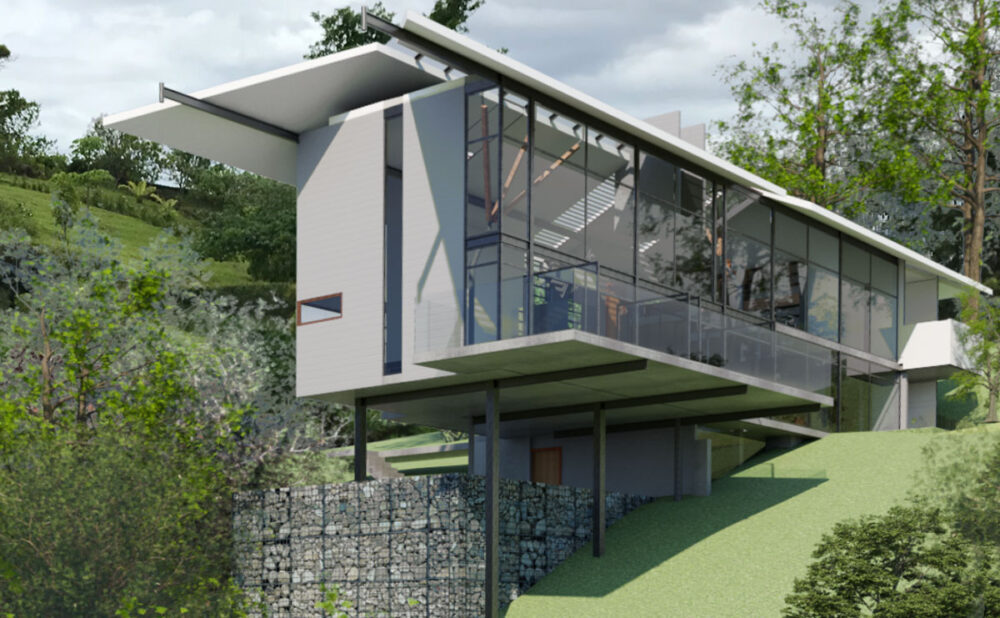
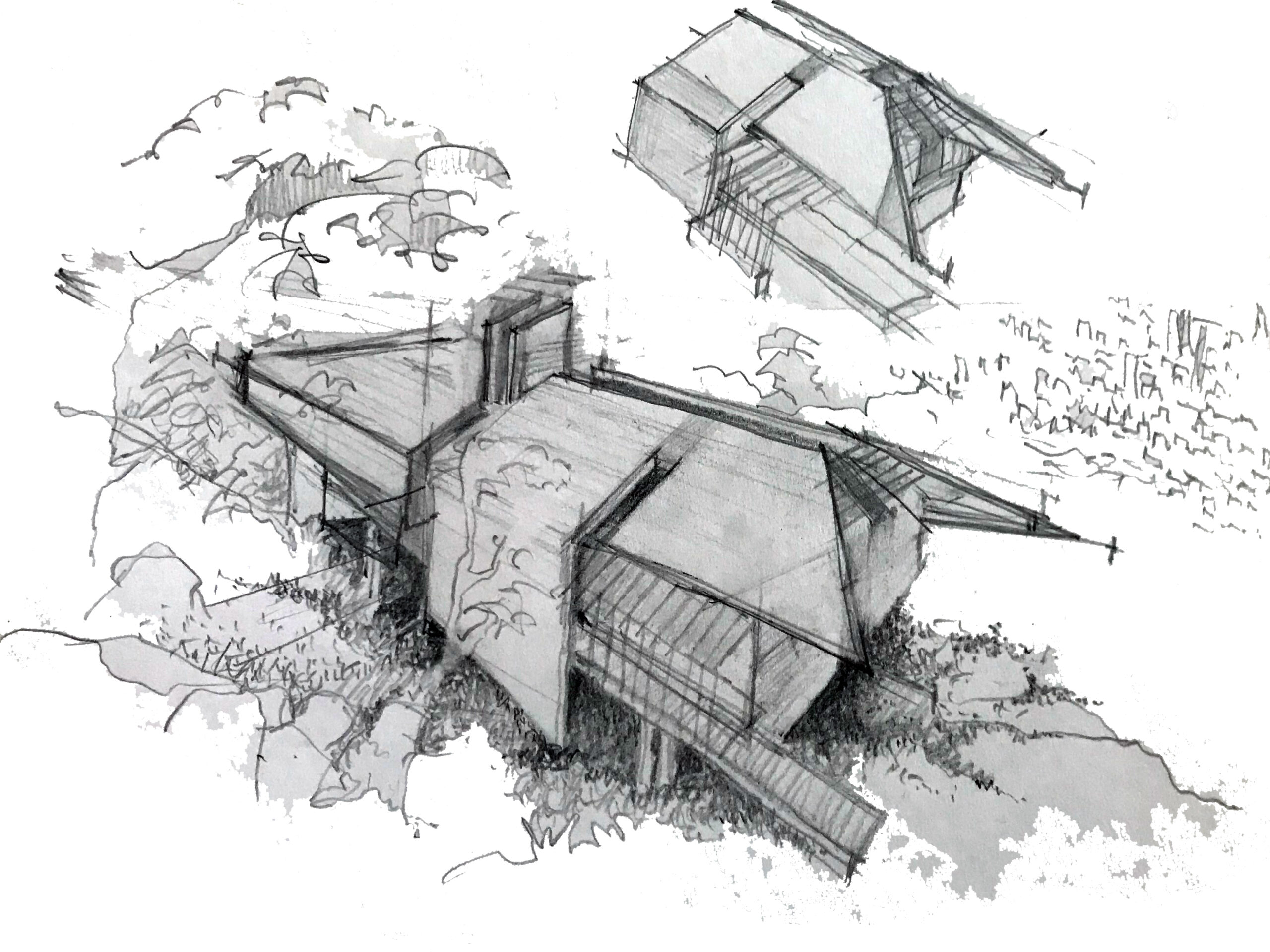
Casa Arias is conceived as a lightweight, elevated residence that negotiates a steep terrain while maintaining continuous visual contact with the surrounding forest canopy. The project is organized as a linear wing suspended above the hillside, supported by a combination of gabion retaining walls and slender steel columns that minimize ground impact.
A deep roof structure unifies the composition and provides long eaves for climate protection, while a fully glazed façade opens the main living spaces to the landscape. The house operates as an open, elongated platform—transparent on one side, enclosed on the other—balancing privacy with expansive views. Structural elements, circulation bridges, and cantilevered terraces reinforce the sensation of hovering above the topography.
The result is a residence that integrates structure, climate response, and site geometry into a coherent architectural gesture, emphasizing connection to the land without resting heavily upon it.
Santa Teresa Boutique Hotel
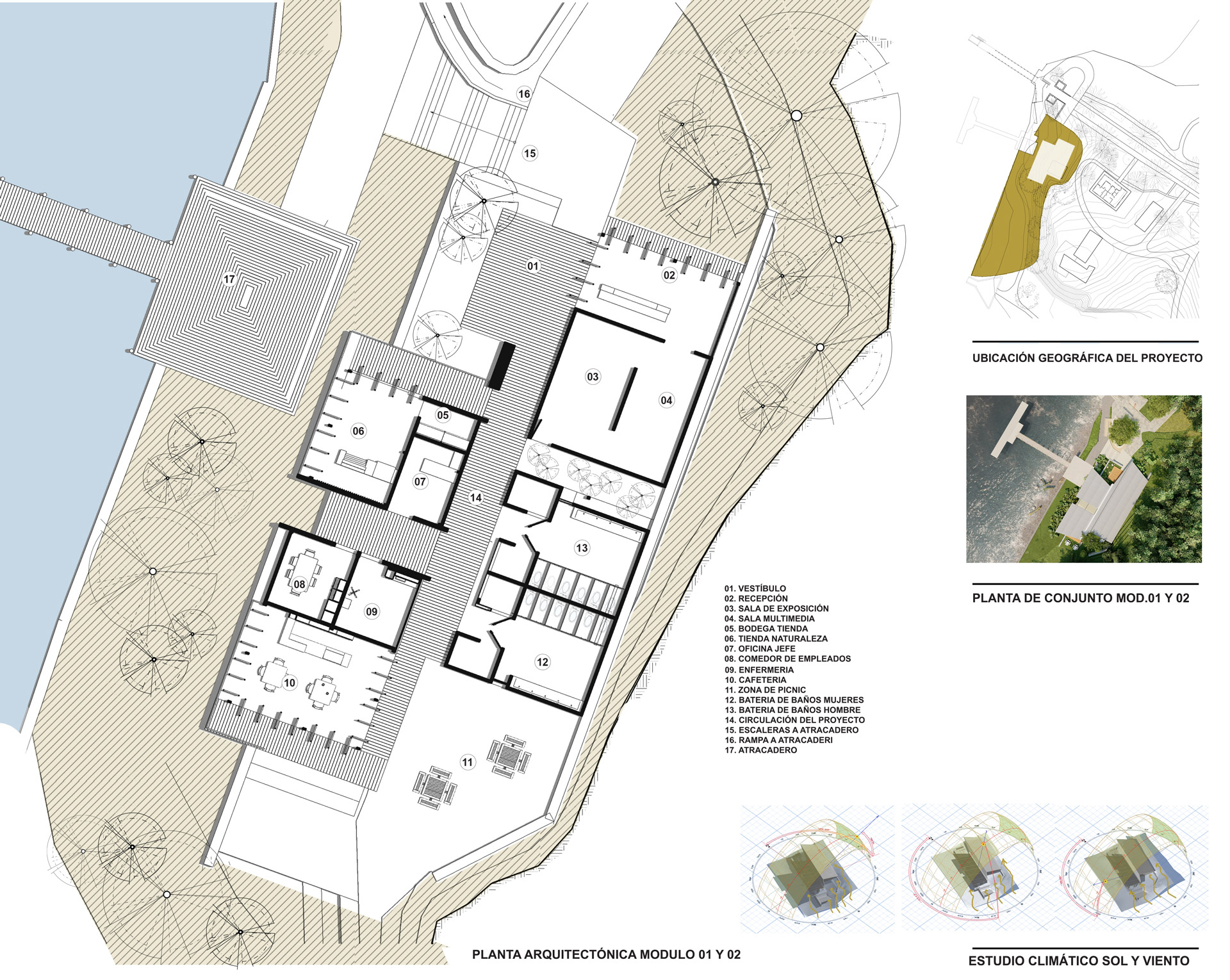
Nestled in Santa Teresa, Cóbano, Puntarenas, one of Costa Rica’s rapidly evolving landscapes defined by its natural beauty and secluded rural charm, is our boutique hotel project. It spans a narrow private finca, perfectly embodying the context’s verdant richness and vibrant cultural life.
The Santa Teresa Boutique Hotel complex is composed of three detached two-story buildings housing the hotel apartments, complemented by a central clubhouse. These are elegantly interconnected structures, featuring cantilevered terraces and expressive outdoor staircases that celebrate the joy of vertical movement in a tropical setting.
The design language blends modern and traditional elements, featuring a clever mix of wooden walls and louvers alongside crisp white walls. The hipped roofs, a nod to vernacular architecture, are thoughtfully separated from the walls. This gap allows for natural light and air to infuse each space, creating a harmonious dialogue between the built form and its surroundings.
With its unique mix of spatial experiences and thoughtful architectural responses to the tropical climate, the Santa Teresa Boutique Hotel is designed to provide guests a comfortable and immersive stay in the heart of Costa Rica.
Gallery Notice : Images have either not been selected or couldn't be found
Client
Green Group
Project Date
2010
Category
Hospitality · Interior · Masterplanning · Mixed Use · Residential
202
202
For over five years ICESA searched for a property that matched a specific set of constraints: central location, family budget, and a commitment to reducing environmental footprint. The area around La Sabana had undergone heavy speculation following mid-rise development — new flats too small or too expensive for families, with the default alternative being gated communities on greenfield land further out. Neither was acceptable to the client.
The solution was an investment model built around an abandoned house: convert it into four apartments, one for the owners, the rest as rentals whose income offsets the cost of staying central. Shared occupancy also improves security. The house had no architectural value and had suffered years of deterioration and theft, but the brief was self-imposed and clear — work within the existing footprint or reduce it, reuse whatever could be saved, and improve natural light and ventilation where the original building failed.
The result is four apartments across one, two, and three-bedroom configurations. All but one receive natural light from two cardinal directions; all but one have high wooden ceilings with roof clerestories. Original wall and floor tiles were kept wherever intact, and a neutral palette in new finishes — tiles, render, furniture — was chosen to work with the existing variety rather than override it.
The largest apartment, Cuatro, fits three bedrooms into what was the original kitchen plus a small new mezzanine above it, accessed by a steel stair behind salvaged corrugated polycarbonate. The main bedroom opens to a terrace with views to the mountains and the street; the living area gains a side patio and a more permeable facade toward the backyard. Most of Cuatro’s furniture is reused, including restored solid wood pieces by local architects Franz Beer and Jorge Bertheau — the former also a principal at ICESA.
At street level, the original retaining walls had failed under soil pressure and root growth. The replacement wall was set back under the building facade rather than at the property line, raising the facade, improving seismic performance, and opening the transition from sidewalk to entrance.
Gallery Notice : Images have either not been selected or couldn't be found
Casa Beer Fuscaldo I
Casa Beer Fuscaldo
Casa Beer Fuscaldo I is a weekend house on the Central Pacific coast, designed by the architect for himself — as designer, client, and builder. The view of the Herradura mountains meeting the Pacific horizon could have been ambition enough. It isn’t. The house builds memory through sensory experiences that unfold gradually as you move through it. It is also the project where Beer’s four recurring architectural ideas converge most clearly: landscape emergence, tactile-sensory space, the tropical patio as spatial heart, and intuitive geometric field.
The plan organizes around a square central patio, its column grid making the structural rhythm legible at every turn. The social area divides into three successive stages. At the center of the house sits the dining room — simultaneously the patio itself, filled with vegetation, the sound of water, and light falling from above. Beyond it, the living area opens under high coffered timber ceilings, an antechamber to the exterior terrace where the architecture reduces itself to shelter for contemplating the landscape. The three stages connect through a continuous thread of water: a small internal fountain that widens as it collects rainwater, flows to the pool, and extends visually toward the sea.
The connection to the mountain from which the house emerges is built through material: river stone paving, exposed concrete block columns and beams, clay block walls. Each material — exposed or finished — forms planes of color and texture that detach from the main volume and recur throughout the house, accumulating into a coherent sensory whole reinforced by custom timber furniture that adds weight and warmth to the experience.
Visited across its eighteen years, the house remains in constant transformation — always unfinished, adjusting, seeking a balance between the immediate experience and the memories it leaves behind.
Location: Herradura, Puntarenas, Costa Rica
Area: 900m2
Status: Built


![A-10-N_9 [Azotea]](https://icesa.cr/wp-content/uploads/2021/09/A-10-N_9-Azotea-pdf.jpg)